

Some Kiwi households and businesses are "walking an economic tightrope", according to credit bureau Centrix.
In the firm's latest monthly Credit Indicator Report, Centrix managing director Keith McLaughlin said since the start of this year "we’ve seen a degree of uncertainty and yo-yoing across a number of our credit indicators".
"But the clear takeaway is arrears are rising."
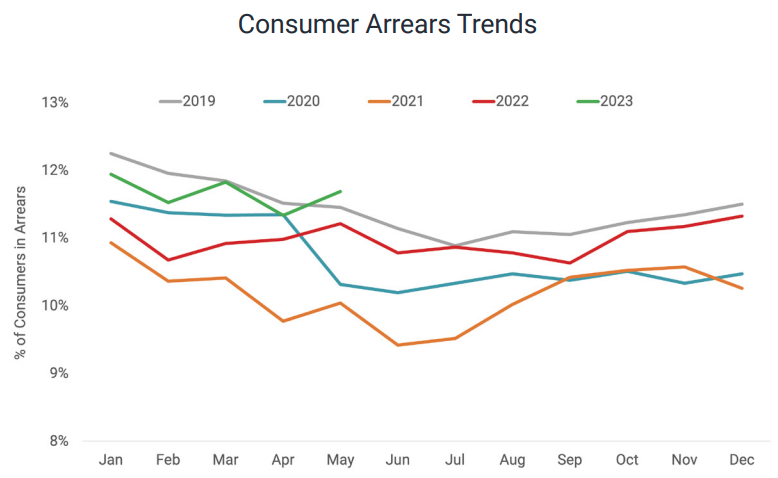
He said in the latest month overall consumer arrears exceeded levels last seen in 2019 for the first time with 11.7% of the active credit population behind on repayments.
"This includes double digit arrears for both unsecured personal loans (10%) and Buy Now Pay Later accounts (10.4%) as people continue to feel the pinch of the current economic climate.
"Furthermore, mortgage delinquencies rose to 1.32% - the highest level reported since March 2020 with 19,500 mortgage accounts reported past due."
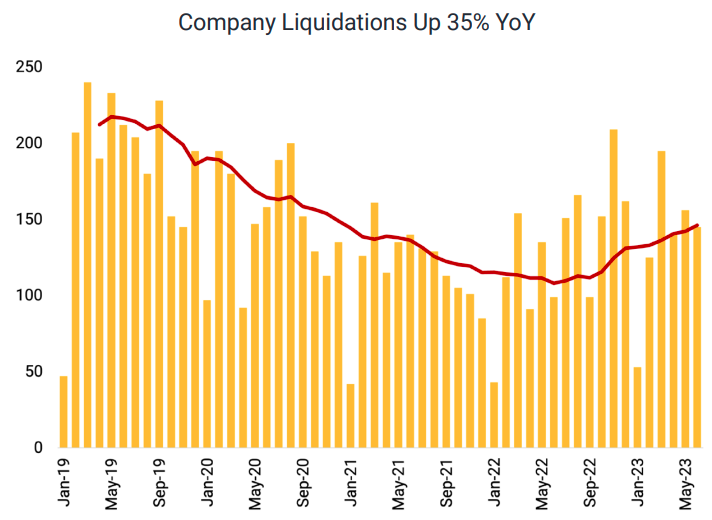
In terms of the business sector, McLaughlin said a climb in credit defaults was seen across several sectors, including the property/rental industry, hospitality, retail trade and construction. Overall company liquidations were also up 35% year-on-year.
"There’s no question some Kiwi households and businesses are walking an economic tightrope," McLaughlin said.
"While homeowners contend with rising mortgage interest rates and the financial squeeze, business owners are grappling with downturned activity and spending."
McLaughlin said "it’s no secret" a recession was the Reserve Bank’s goal to help curb spending.
"What remains to be seen is how the rest of 2023 plays out for consumers and businesses on the front line."
And he had some advice:
"Falling behind on repayments now can cause headaches in the long term for both consumers and businesses alike. Credit checking potential customers and suppliers, for example, can help reduce the possibility of accruing bad debt. And if you’re at risk of falling behind on repayments, speak with your creditors to come to an agreement to avoid becoming considered a lending risk in the future."
In terms of some of the detailed figures referred to above, Centrix says consumer arrears rose to 11.7% of the active credit population in May – up from 11.3% in April 2023 and marking a return to pre-pandemic levels. Arrears in May 2023 were up 4% year-on-year with the number of people behind on repayments rising to 426,000. This is up 15,000 month-on-month (411,000 in April 2023).
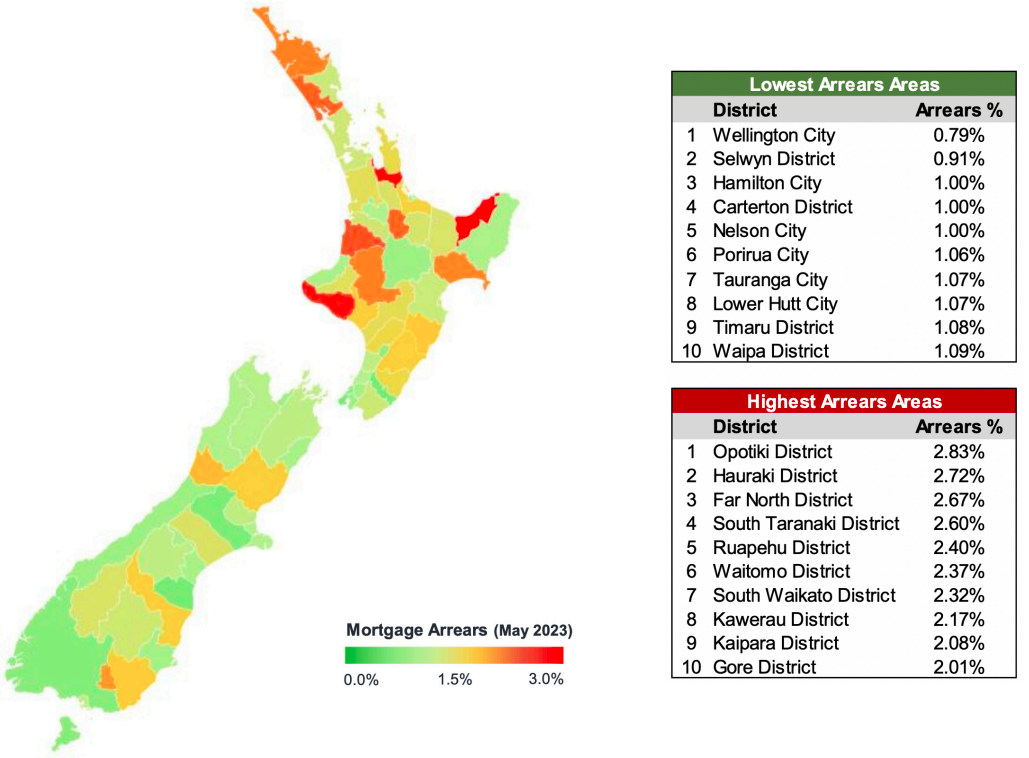
Looking to home loan arrears, mortgage delinquencies rose to 1.32% - the highest level reported since March 2020. There are 19,500 mortgage accounts past due, which is up 34% on a year-on-year basis, as more consumers face the challenges of rising interest rates and the current economic climate. The highest mortgage arrears were recorded in the Opotiki district (2.83%), followed by the Hauraki district (2.72%) and the Far North district (2.67%).
Business credit demand remains up 3% year-on-year in June 2023, improving for the transport, financial and support services sectors. However, credit defaults increased almost universally as the property/rental industry saw defaults up 22% year-on-year. Additionally, both hospitality and retail trade saw credit defaults up 17% year-on-year, and 16% year-on-year for construction.
"It is Important to note that a credit default is a lag indicator – the arrears position occurs several months prior to a default being lodged. Furthermore, company liquidations are up 35% year-on-year," Centrix says.
We welcome your comments below. If you are not already registered, please register to comment
Remember we welcome robust, respectful and insightful debate. We don't welcome abusive or defamatory comments and will de-register those repeatedly making such comments. Our current comment policy is here.