

The Government has decided to help and enable a lending model that appears to rely on some borrowers not being able to repay their loans. Or, for borrowers who default, operators of this model apparently need to charge higher fees than other lenders are allowed to by law.
It emerged last week that Cabinet, on advice from the Ministry of Business, Innovation & Employment (MBIE), has decided to exempt New Zealand's three surviving fintech buy now, pay later (BNPL) service providers from default fee provisions in the Credit Contracts and Consumer Finance Act (CCCFA).
MBIE says because the BNPL business model differs from that of traditional lenders, it questions whether the CCCFA fee provisions should apply to BNPL in the same way they apply to other lenders. That's because the provisions were written for credit/debt products charging both interest and fees.
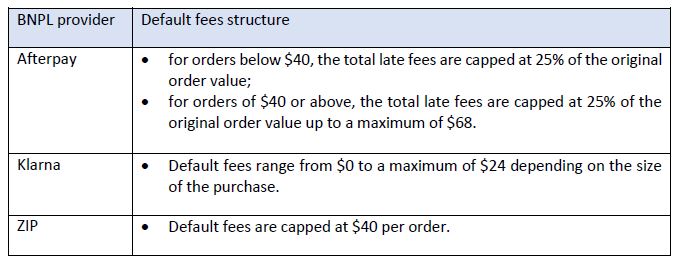
BNPL services allow consumers to purchase and obtain goods and services in-store or online immediately, but pay through installments over time. While there are no interest charges, there are penalty fees for late payments when a consumer is late or misses a payment instalment. A BNPL provider can charge a flat fee such as $10, or a fee based on a percentage of the transaction value.
"The unintended impacts of the application of the CCCFA default fees provisions could reduce access for consumers to BNPL," MBIE says.
"If BNPL business models are no longer viable under the CCCFA fee provisions, they might all exit the market. This would either restrict access to short-term and small-amount loans to New Zealanders or make these loans more expensive, where the borrower moves to an interest charging product, e.g. credit card, short-term personal loan."
Commerce and Consumer Affairs Minister Andrew Bayly told Cabinet he'd heard concerns from BNPL providers that complying with the CCCFA’s default fee provisions would constrain how they calculate and charge customers' default fees to an extent that could put their businesses in jeopardy.
What's at fault?
A question worth considering is; what's at fault here, the regulation designed to protect borrowers from excessive fees, or the BNPL fintech business model?
MBIE describes BNPL as an "innovative" form of short-term, unsecured credit that costs consumers nothing if they make repayments on time. BNPL has been "highly successful since it entered the market, disrupting more traditional forms of credit," MBIE adds.
But how innovative and successful is it really?
BNPL services, in one form or another, have been around for centuries. As a child I remember buying stuff from my local stationery shop on laybuy, which meant I paid in installments. The modern twist is going fintech, by putting an app on a phone, and hey presto, unregulated credit!
Yes, it has taken debt away from the likes of credit cards. But the first downturn fintech BNPL faced has seen it swaying like a punch drunk boxer with a series of companies, most recently Laybuy, which after sinking into receivership is being bought by Klarna, unable to cope. Others to go from the NZ market include Genoapay, Openpay and Humm's BNPL operations.
As Grant Halverson, CEO of retail banking and payments consultancy McLean Roche, explained in our Of Interest podcast in March 2023, a key problem was the rising interest rate environment significantly increasing the BNPL service providers' funding costs.
"If you're giving a consumer $100 and it's "free," someone is paying for that and you have to borrow money to fund that debt," Halverson said.
The BNPL service operators must pay the merchants at the point of sale, and then collect money from the consumer making the purchase. And there's a funding gap while the installments play out, plus any bad debts to cover.
"Funding rates have gone up. If you go back 18 months they were paying less than 1%. Today they're paying between 5.5% and 18% to borrow," Halverson said in March 2023.
Additionally the spectre of regulation has loomed for some time. As long ago as 2019 Australian firm Afterpay threatened to pull out of New Zealand if it was hauled under the CCCFA.
Whilst the previous Labour government did drag BNPL under the regulatory umbrella, it decided to exempt BNPL loans from affordability and suitability assessments saying these would be "too onerous for these short term, low value, interest-free loans." Instead Labour decided BNPL lenders would be required to complete comprehensive credit reporting when customers sign up or increase their credit limit.
Now, the Coalition Government is exempting them from the CCCFA default fee provisions. MBIE and Bayly recommended doing so conditional on compliance with a "reasonable cross-subsidisation" of total credit losses through default fees to prevent BNPL providers from "over-recovering total credit costs and losses incurred by defaulting borrowers through default fees." Placing conditions on the exemption would establish "bespoke protections against excessive default fees and future-proofing against potential unreasonable fee increases by BNPL providers."
However, Cabinet decided for an exemption with no conditions attached, as advocated by (De)Regulation Minister David Seymour, noting this will; "provide BNPL lenders with more flexibility in setting their default fees."
Thus, unlike other credit/debt providers, the BNPL providers don't need to comply with the following CCCFA provisions;
A consumer credit contract must not provide for a credit fee or a default fee that is unreasonable.
And;
(1) In determining whether a default fee is unreasonable, the court must have regard to, in relation to the matter giving rise to the fee, whether the fee reasonably compensates the creditor for the following:
(a) any cost incurred by the creditor:
(b) a reasonable estimate of any loss incurred by the creditor as a result of the debtor’s acts or omissions.
(2) In determining whether the fee reasonably compensates the creditor for any cost and loss referred to in subsection (1), the court must have regard to reasonable standards of commercial practice.
What about merchant fees?
As MBIE sets out, however, an even more important revenue source for BNPL fintech providers is merchant service fees, charged to the merchant usually as a percentage of the transaction value or as a fixed fee. It suggests merchants are generally compensated for these fees because BNPL is "very attractive to consumers and tends to increase sales."
As the Commerce Commission notes, merchant service fees processed by BNPL providers can be up to 5%, compared to the average merchant service fee of about 1%.
The Commission's looking to reduce interchange fees, primarily paid by banks, for accepting Mastercard and Visa cards, which are a key component of merchant service fees. Whilst BNPL won't be directly impacted by interchange fee regulation, the Commission is monitoring the sector as part of its retail payments oversight.
Figures from credit bureau Centrix show BNPL credit demand up 11.1% in the June year, higher than the other consumer credit categories it monitors. At the same time, 8.3% of active BNPL customers were in arrears, the lowest level since November 2023. In comparison, about 5.6% of vehicle loans, 4.1% of credit cards, and 8.6% of personal loans were in arrears in June. And BNPL borrowers are more likely than those other types of borrowers to be in arrears for more than 90 days, with 6.7% of BNPL accounts in arrears having been in default for at least 90 days, based on Centrix data.
MBIE notes banks and the Commerce Commission suggest the default fee compliance exemption for BNPL could set a precedent in the application of different rules for different consumer credit contracts, thus creating an uneven playing field among lenders offering small value and short-term loans.
The question is whether the fintech BNPL sector, requiring some borrowers to default to stay in business which is arguably predatory lending, is really worth and deserving of special treatment.
*This article was first published in our email for paying subscribers. See here for more details and how to subscribe.
We welcome your comments below. If you are not already registered, please register to comment
Remember we welcome robust, respectful and insightful debate. We don't welcome abusive or defamatory comments and will de-register those repeatedly making such comments. Our current comment policy is here.