

Just over a week ago, we noted that pressure was building for some fixed home loan rate rises because we were watching swap rates starting to rise rather sharply.
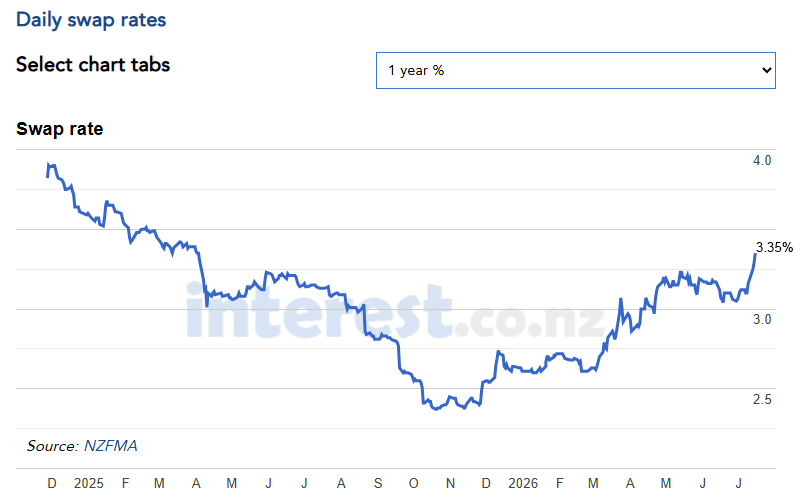
Although there has been little movement in retail rates in the interim, things have got more pointed since then. This is what that same swap rate chart looks like now. That is a +10 bps rise in just ten days to 3.45% The two year has risen to 3.81%, in an even sharper move (+16 bps).
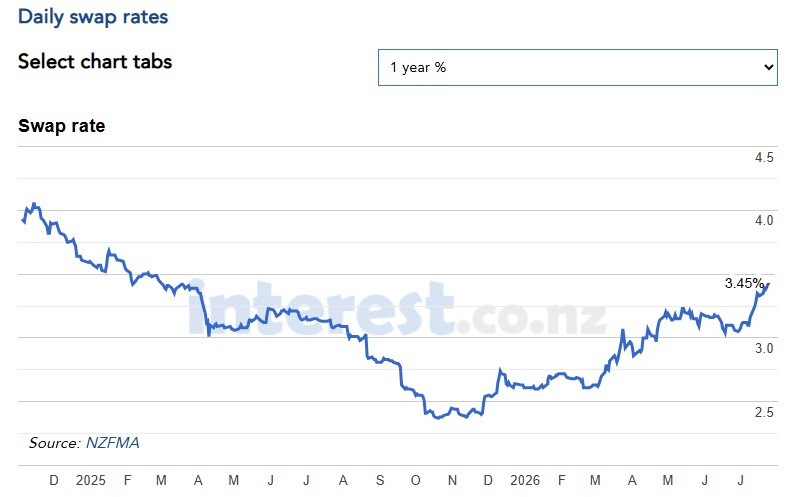
When one year swap rates were last at 3.45% in February 2025, the one year fixed home loan rate was 5.50%. That is +75 bps higher than the ~4.75% it is today.
When the two year swap rate was last at 3.80% in September 2024, the two year fixed mortgage rates was at 5.80% which is +55 bps higher than currently..
We suspect there will be some substantial movements up in fixed rates in the coming days and weeks.
What about savers?
Then there is the question of term deposit rates. If wholesale costs rise and fixed rates rise, then you might expect TD rates to rise as well.
But that will depend on loan demand as much as wholesale cost. Why raise more funds if you can't lend them?
Savers have been moving funds into TDs quickly recently. But much of that movement has been just shifting from zero rate transaction accounts or low rate savings accounts rather than from growth in household deposits.
If banks can't lend those funds to a growing set of borrowers, they will be reluctant to compete for more TD funding with higher rates. Given auction transactions are at their lowest point in three years, that indicates housing market demand is low. Savers may have to wait until the spring (in at least six weeks) and hope housing demand turns higher in the normal way.
But are times normal?
Obviously, the force moving these background wholesale rates up is 'risk', principally of higher global inflation ahead, and the expected global monetary responses to check its rise. Geopolitical uncertainty is a key driver of the higher inflation risk.
You can also see this clearly in a long perspective of the benchmark long bond yield that the 30 year trend of lower rates turned after the US elected Trump first. We now seem to be in a new long trend of rising rates. Investors want to be paid for the elevated Trump risk, and even after he fades the issues he leaves behind will still be there, magnified.
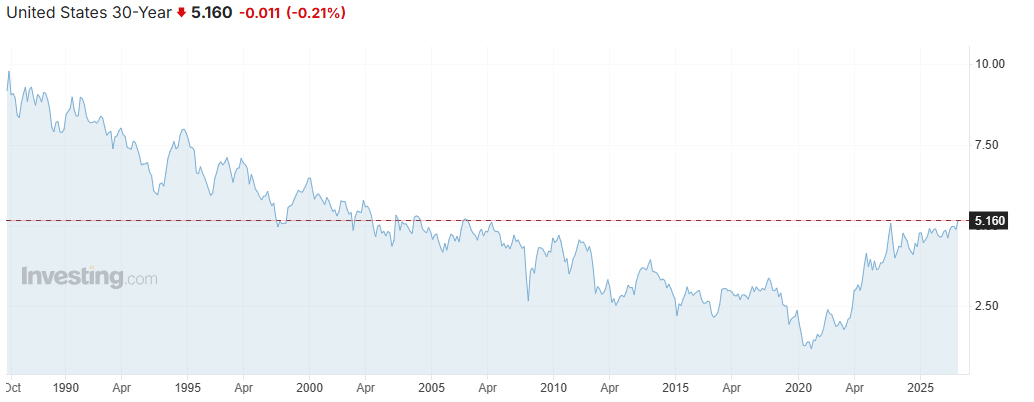
Rates for shorter terms than the 30 year one above display more volatile and bumpy outcomes over the same timeframe, but the overall tends are roughly the same. We are in a new long-run uptrend.
And yes, the New Zealand equivalents are different again. But we can't escape the US trends for two reasons. They are the world's largest capital market and by far. And secondly, New Zealand is a net debtor nation and we are consigned to taking what the world offers. To send capital our way, we have to provide returns higher than the core benchmarks.
Back to a more short-term perspective, if you are a borrower with a fixed rate, you need to ask yourself whether it is worth waiting for 'spring' and the anticipated competition that often arrives in the more elevated real estate selling season. Is that likely to happen again in 2026?
Fixed mortgage rates
Select chart tabs
Daily swap rates
Select chart tabs
We welcome your comments below. If you are not already registered, please register to comment
Remember we welcome robust, respectful and insightful debate. We don't welcome abusive or defamatory comments and will de-register those repeatedly making such comments. Our current comment policy is here.