
By Amanda Morrall
1) Irregular income advantage
Any big decision in life typically comes with a healthy dose of self doubt. I should know.
Having made so many bold reconfigurations in my life, self doubt has taken up permanent residency in my suitcase.
One might expect I'd have kicked self doubt half way to China given my travels. No siree. Even yogis - and the most hardened rational journalists - can question whether the path they have chosen is the right one.
Self doubt and questioning isn't a bad thing necessarily. In fact, I would argue that it's a good thing because it forces you think very carefully about a major decision before you make the leap. It becomes a bad thing when it becomes paralysing and mentally circuitous; when you keeping turning each thought over and over again examining it from every possible angle and then trying to find new ones when you've done the full rotation.
Here's a little secret I've learned: It's not much a secret I suppose because you'll find it written about extensively. When you find yourself locked in thought and unable to move forward, ask yourself this one little but significant question to break that log jam of indecision; "What is the worse thing that can come of (insert quandary here) and can I live with the outcome?"
In my case, walking away from the security of a full-time well paid job was no trifling matter. Not as a single mother with two in my care.
I tossed and turned that one over in my head for months until I forced myself to stop making excuses for my indecision by answering the question above. Because I had the luxury of a comfortable savings fund to catch my fall, I was able to take a leap of faith without fear of ending up the proverbial poor house, at least not for some time.
While I'm still finding my footing and there's been plenty of visits from my old friend self doubt, I've learned to keep him at a comfortable arms length distance. The bad thing about self doubt is that in large doses it can hold you back from realising your full potential.
To me, that is one of the greatest tragedies in this very short life. In being open to new possibilities, staying positive in mind and also taking concrete steps to welcome in more of the people, opportunities and processes that you and heart desire, you consciously and unconsciously invite the change you seek. It may not always go as planned, in fact you can count on it not being linear. What you can bet on is transformation and growth.
A good friend of mine who took a similar plunge into the unknown and often murky waters of freelance journalism informed me the other day that they are now earning more than they ever did as a paid employee and wouldn't trade their flexibility and diversity of work for all the tea (or in his case) coffee in Brazil. One of the biggest challenges financially for those who move in this direction is dealing with an irregular income. It's a shock to the system not having that regular pay cheque but as usual, it pays to look on the bright side of such an equation.
Here's a reminder why, from a guest blogger posting on tacklingourdebt.com
2) Spring cleaning
As the northern hemisphere inches towards a thaw and a seasonal warming, personal finance junkies over there are in spring cleaning mode. Don't wait for a change in the season to review and recalibrate. When the mood strikes, hop to it and if it doesn't, mark a date on the calendar. Some tips from squirrelers.com herein.
3) Savings scarcity
More warning bells are being sounded about New Zealanders saving scarcity situation.
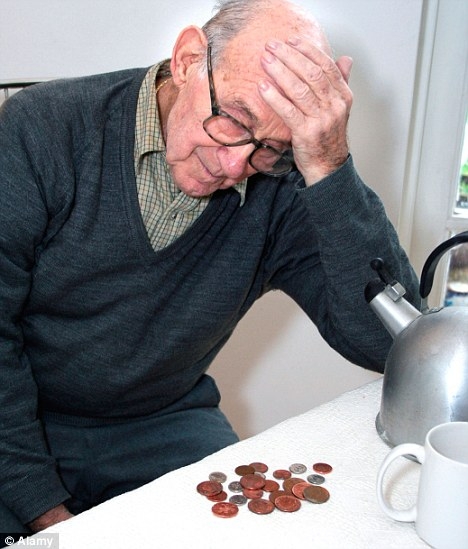
The latest from the Financial Services Council (FSC), the professional body representing the saving industry, comes on the heels of research findings that only 9% of Kiwis believe that NZ Superannuation alone will be enough to support them in old age once they stop working. The majority of those polled, 65%, admitted $439 a week (for an individual) and $537 a week (for a couple) wouldn't be enough to comfortably live off.
FSC chief executive Peter Neilson said that New Zealanders had a "well-founded lack of optimism" about their financial position in retirement. Neilson said even those who felt they were prepared should take a closer look at their savings. According to previous research contracted by the FSC, New Zealanders calculated that they needed double the amount offered by NZS to get by in old age.
The FSC estimates that Kiwis who start saving 10% of gross income from the time they start working will be sufficiently prepared for retirement. That's a grim outlook for those who are 10 years away from retirement saving only 4%, which changes to 6% next month (3+3 employee and employer contributions for KiwiSaver.)
So are the 9% who are not worried deluding themselves? Apparently that demographic is comfortable it can get by on less because it's used to.
"If we look closely at the profile of those people that make up the 9 per cent who feel NZ superannuation is sufficient we find that they are more likely to already be living on a low personal income that is close to the level of NZ superannuation (less than $30,000 per annum). In other words they are not a group that is representative of the majority of retired New Zealanders,” said Neilson.
4) Marriage stress
If finances aren't looking so hot for upcoming retirees, neither is peace on the home front. Recent research out of the U.S. found that 8 out of 10 couples living in retirement had no shared interests with which to spend their idle time. Sad. On the upside the majority of couples surveyed were optimistic they'd be able to iron out any compatibility kinks. Maybe you stop caring less in old age about how you spend your time?
The take home message was that planning for retirement (across all sectors of it) was a very important part of growing old together with one's chosen life partner.
5) Money matters
For more on all these themes and to read about some fascinating case studies in personal finance, I invite you to check out my new book Money Matters. Here's how to order your very own copy today.
And for more exciting updates, news and analysis and fun stuff in personal finance, follow me on Twitter @amandamorrall or check out my new blog and yoga teaching schedule at www.amandamorrall.com.
We welcome your comments below. If you are not already registered, please register to comment
Remember we welcome robust, respectful and insightful debate. We don't welcome abusive or defamatory comments and will de-register those repeatedly making such comments. Our current comment policy is here.