
By Shyamal Maharaj and David Norman*
The debate over greenfield expansion versus brownfield intensification has long occupied the minds of planners, urban designers, economists, and governments.
Intensification is the redevelopment of existing urban areas to accommodate more housing, usually through terraced housing, apartments or smaller sections. An advantage of intensification is that it can accommodate growth in existing urban areas, overcoming challenges that greenfield development tends to face.
These greenfield challenges include proximity to work and amenities, and the eye-watering cost of new infrastructure for development in new areas.
Infrastructure is not only very expensive; it is also incredibly difficult to fund. And funding issues aside, the actual construction of infrastructure is constrained by time and capacity. Moreover, the negative externalities that arise from added congestion, pollution and environmental degradation add further costs to sub-optimal greenfield development.
Why the UP increased density options
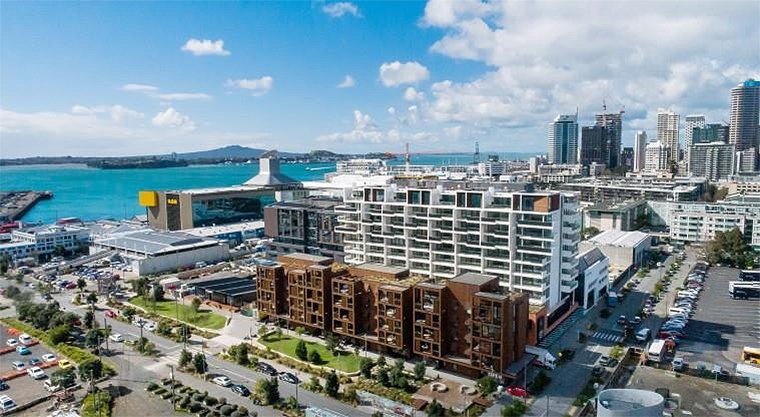
As a result of these concerns about the ability to develop expansively without unmanageable financial and external costs, Auckland’s Unitary Plan (UP) allowed for up to two million new dwellings in existing urban areas, in addition to capacity for greenfield expansion. This brownfield development capacity would effectively allow the number of dwellings in Auckland to more than quadruple.
And the focus of new development opportunities is around town centres and rapid transit nodes, so as to prioritise access to jobs and amenities.
Since these changes, Auckland has since seen a dramatic shift in the number of terraced houses and even more dramatically, apartments consented. Multi-unit dwellings consented now represent around 52% of total dwellings consented.
Mistakes of the past
But it hasn’t always been this way.
The appetite for apartment building and living in Auckland has been tough to satisfy. One major reason for this is a boom in apartment building for a transient population (overseas students) in the early 2000s. This led to a considerable stock of undesirable “shoe box” dwellings being built in the city centre. When New Zealand’s export education sector experienced a downturn and the size of the overseas student population plummeted, the value of these shoe boxes plunged commensurately, burning banks and investors.
Worse than that, from the city’s perspective, this bad experience and the common view that the shoe boxes were ugly and poor quality turned Aucklanders away from apartment construction for a decade of missed opportunities to get more apartments built closer to where jobs and study options are downtown. You could argue that the Global Financial Crisis also played a role, but the figures show the apartment ship had sailed long before that hit.
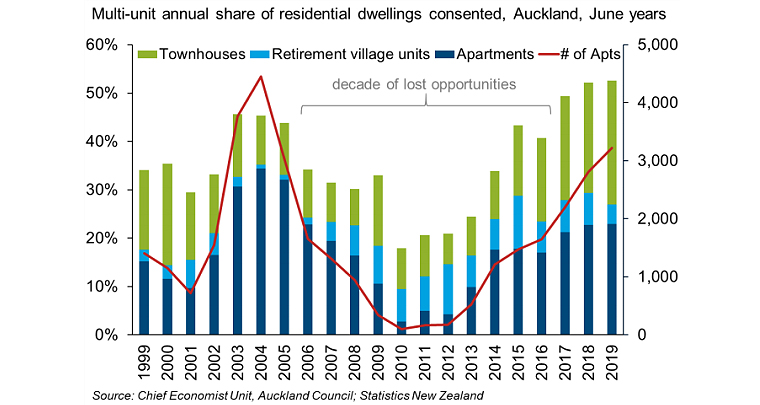
The problem was that we were building the type of apartments only attractive for a certain type of transient investment, rather than for a long-term resident population.
But that wasn’t even the first time, or the worst example of how our city lost an opportunity to build more intensively close to jobs and amenities. As we pointed out in this paper, when cars became more popular, we chose to rip out Auckland’s comprehensive tram network and under-invest in public transport infrastructure.
In many ways, the Unitary Plan is trying to undo decades of those kinds of decisions by encouraging more intensification around town centres and public transport nodes. And only now, with a more regulated approach to apartment building that is preventing the construction of more of those poor quality early 2000s-style shoe boxes, and with surging demand, are we seeing more widespread apartment construction again.
The typology shift we have seen in recent years, however, is evidence that the market is coming to terms with the necessity to build up more than out.
Intensification’s link to a stronger economy
Intensification is not without its challenges. But it does offer many benefits. Chief amongst them is the better use and allocation of resources. As a city intensifies, it opens the door to greater economic activity through higher productivity, better mobility and more diversity of goods and services as a larger resident population can be housed.
Intensification also allows more efficient use of assets, such as retail space. Many Auckland retailers close shop at the end of the business day, whereas city centres around the world continue to provide goods and services beyond for longer hours, using their expensive city properties more efficiently, allowing the same retail footprint to service more people across the day.
Population, priorities and preferences
Auckland is a unique place; it attracts a diverse range of people with diverse preferences that influence preferences for housing types and locations. In recent years, migration has surged, and the source of migrants has changed from our “traditional” source countries toward China, the Philippines, India and South Africa.
Demand for housing continues to surge, on the back of this strong population growth. But this population is different, ethnically and demographically. Not only is Auckland’s changing face culturally different, with different views on housing, but a greater number of the millennial generation, for instance, are beginning to make housing choices. Yet the current housing stock mostly serves markedly different priorities. Many younger people feel locked out because of a mismatch between preferences and housing. The quarter acre dream is unattainable as land prices have surged.
Although serviceability is better than it has been for over five years, it is well off where it was even eight years ago. This is not to say that first home buyers aren’t in the market and sacrificing the proverbial avocado on toast to save every penny for a deposit. Rather, the ability to save a 20% deposit on a median priced house is around $170K (and around $130K for a lower quartile priced house).
The lack of suitable housing choices that is only now beginning to be addressed is having a considerable impact on the priorities of younger generations.
The median age for marriage continues to rise, more women are building careers in professional services (up 70% in nine years) and other higher-paying industries, and people are delaying starting families. This creates more interim demand for smaller dwellings such as apartments.
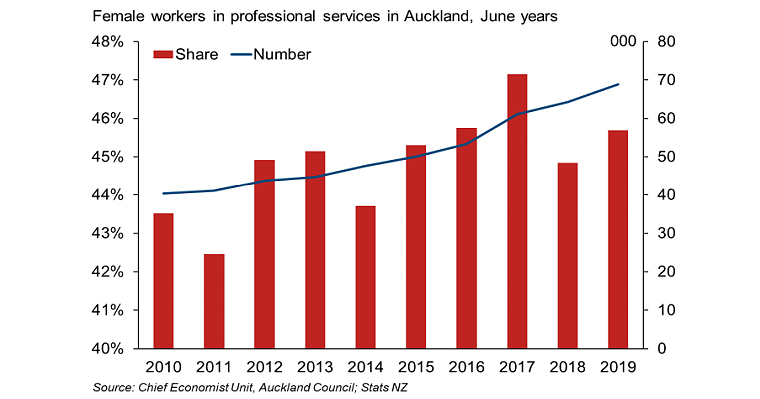
But the changing of the guard in terms of culture and age means changing preferences too. More people who want to live, work and play in a central location. Backyard maintenance and long commutes are traded for smaller properties near recreation, retail and hospitality options.
The intensification we are seeing now is beginning to provide for these different preferences. Unlike the build of the early 2000s, we’re now building multi-units including apartments for people who actually live here permanently, who have different priorities and preferences. There is a way to go yet.
* Shyamal Maharaj is an economist, David Norman is chief economist, both at the Auckland Council. This article was first published here.
We welcome your comments below. If you are not already registered, please register to comment
Remember we welcome robust, respectful and insightful debate. We don't welcome abusive or defamatory comments and will de-register those repeatedly making such comments. Our current comment policy is here.