
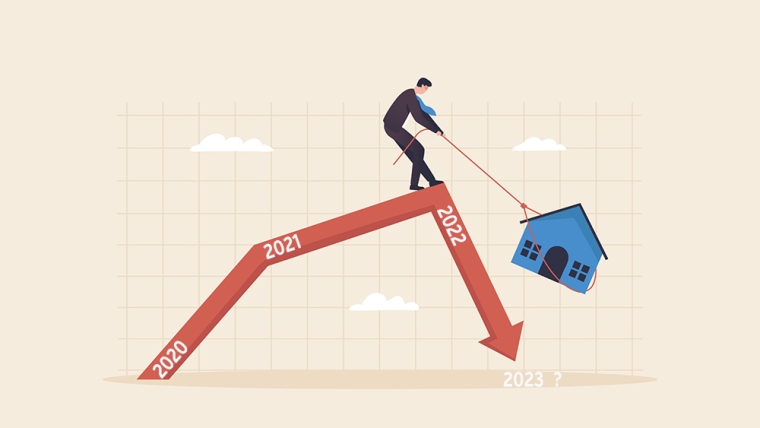
The crazy run-up in house prices in 2021 and 2022 is now unwinding.
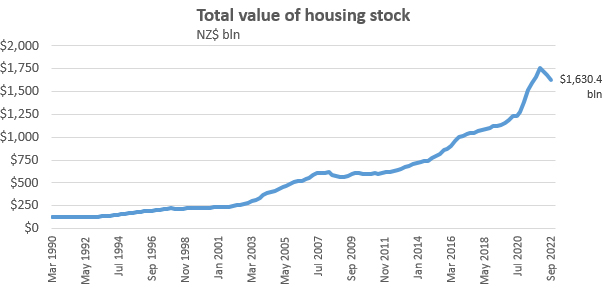
In 2020, the value of all residential housing (owner occupied and rented, combined) rose by +$194 bln to $1.386 tln. That was a +16.6% rise.
In 2021, that same value rose by another +$377 bln to $1.763 tln and a massive +27% rise.
But now those crazy animal spirits have vanished.
For the period to September 2022, it has been all downhill. And at an increasing speed.
In those nine months, data just released by the RBNZ (M10) shows -$132 bln has been erased from this 'value'.
-$40 bln went in the first ninety days, -$42 bln in the next 90 days to June, and -$51 bln went in the 90 days to September.
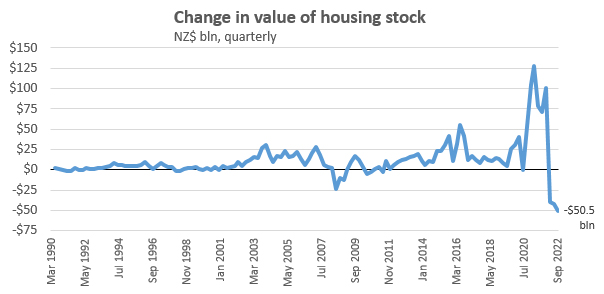
All up, that is a -7.5% retreat. It is small compared to the run-up since 2020. But it is the largest reversal in the history of New Zealand housing.
And don't forget, this overall 'value' retreat comes even though we are adding new housing stock at its biggest quantum ever. So the value-per-dwelling is going down faster than -7.5%.
There is a reasonable chance that the December quarter will have seen little change. The REINZ median house price data changed little, Barfoot selling price data didn't fall in the period either, and CoreLogic saw a "decreasing rate of house price falls" as 2022 wrapped up.
But these overall 'values' are all based on re-sales transactions, and those have been withering, especially in Q4-2022. The RBNZ's housing stock valuation is marked to market. The fact that sellers can't or won't sell on a falling market isn't accounted for.
CoreLogic noted that in these circumstances, the market may be at a "false dawn".
Rising interest rates, the prospect of a 2023 recession, and tax rules that are biting property investors, all count as depressing influences on house 'values'.
Further, new builds are adding to the housing stock, and probably at a rate faster than overall natural demand is growing. But these will sell at construction costs plus a margin, and those prices may be rising faster than overall market values. It is an unusual situation, probably unprecedented.
The situation of low demand weighing on house prices can probably only be 'rescued' by re-opened borders. But that may not 'solve' the declining-price problem either, because current prices are now at the limits of affordability, and affordability is getting tougher as mortgage interest rates rise. Returning Kiwis or new migrants will battle affordability too, and for them the issue will seem a steep one given few other global markets have prices as high as here.
We will only know we are making progress on housing affordability when house prices undergo a sustained fall, and faster than after-tax, after-inflation incomes.
This whole thing started in 2003 when the Clark/Cullen Government moved to institute a 39% top income tax rate. That proved to be at a level that incentivised a rush to shelter income, and the tax-free gains from rising housing values became a fad that could be accessed by 'anyone'.
But just to revert to December 2019 levels, the vale of all housing probably needs to fall by another -$440 bln and taking the realignment down by a total of -$½ tln. Then we might have more affordable housing. The chances? Unlikely you would assume, because it is an election year and there are probably few votes in it for the proposition. Far more likely are political parties responding to the impact of the negative wealth effect on those voters who do vote.
We welcome your comments below. If you are not already registered, please register to comment
Remember we welcome robust, respectful and insightful debate. We don't welcome abusive or defamatory comments and will de-register those repeatedly making such comments. Our current comment policy is here.