

Moving up the property ladder into a better home is probably still a realistic prospect for most existing home owners, despite the decline in property values that's occurred since the peak in 2021.
As well as tracking affordability for first home buyers in our Home Loan Affordability Reports, interest.co.nz also tracks how affordable it would be for them to move up into a more expensive home after 10 years of first home ownership.
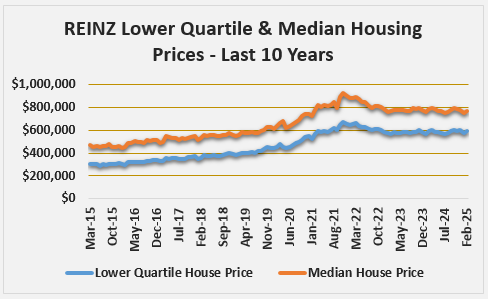
Ten years ago, in February 2015, the Real Estate Institute of New Zealand's national lower quartile price was $292,000, while the national median price was $430,000, a difference of $132,000.
Or put another way, the median-priced home was 45% more expensive than a lower quartile-priced one.
Ten years on, in February 2025, the REINZ's lower quartile price has increased to $595,000, while the median price has increased to $772,000.
In dollar terms the difference between the lower quartile and median price has increased to $177,000, but in percentage terms it has decreased to 30%. The graph below shows the trend over the last 10 years.
So how achievable would it be for a couple who purchased their first home at the lower quartile price 10 years ago, to now move up to a home at the current median price?
The figures suggest it should be very achievable.
If they sold their first home at the current lower quartile price of $595,000, interest.co.nz estimates they would be left with equity of $384,515 in cash to put towards a new home purchased at the current median price of $772,000. That gives them a deposit of 50%. (See the note at the bottom of this article which explains how that was calculated).
It also means they would need a new mortgage of $387,485 to purchase their new home for $772,000.
At the current average two year fixed rate of 5.09%, and assuming the new mortgage was for a 30 year term,* the weekly mortgage payments would be around $485 a week.
Based on the median rates of pay for couples aged 35-49, our second home buyers would take home around $2413 a week between them, after tax.
Which means the mortgage payments on their new home would eat up just 20% of their take home pay.
That's affordable in anyone's language, and helps to explain why moving up the property ladder is such an important part of this country's housing market.
So while some potential movers may be hesitant about trading their existing property for a more expensive one because of the slump in property values over the last few years, the above figures suggest the numbers still stack up for them to make the move.
It should also leave them with enough free cash to consider a few other financial options, such as reducing the term of their mortgage or making lump sum payments against the principal, setting some cash to put towards other types of investments, or blowing the lot on Champagne and travel.
Perhaps a little bit of each.
The comment stream on this article is now closed.
Note regarding equity calculation. This assumes the property was purchased with a 20% deposit at the the lower quartile price of $292,000 in February 2015 and sold at the 2025 lower quartile price of $595,000. The equity is the amount left over after deducting selling costs such as agent's fees, and repaying the outstanding amount on the mortgage. That assumes the mortgage had remained at the two year fixed rate throughout the last 10 years (30 year term) and no lump sum payments had been made.
*Mortgage term. A 30 year term has been used is the mortgage payment calculation because it gives the borrower the flexibility that comes with lower regular payments, while allowing them to make lump sum payments. However, borrowers should also consider shorter terms if/when they are able to afford them.
*This article was first published in our email for paying subscribers. See here for more details and how to subscribe.
We welcome your comments below. If you are not already registered, please register to comment
Remember we welcome robust, respectful and insightful debate. We don't welcome abusive or defamatory comments and will de-register those repeatedly making such comments. Our current comment policy is here.