
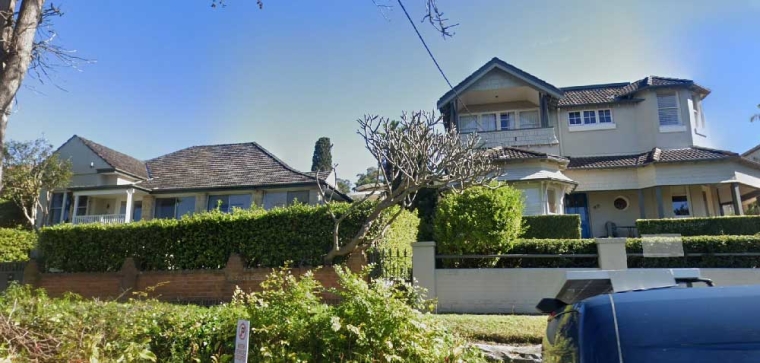
The last six years have seen very different trajectories for house prices in Australia and New Zealand. Both markets saw remarkable gains after the onset of the Covid-19 pandemic followed by a marked downturn. However, in the last two years the Australian market has recovered those losses and is again at an all-time high while the kiwi market continues to languish.
The latest data from Cotality for the period to the end of October show that house price growth in Australia is now accelerating at the fastest pace in two years. Prices jumped nationally by 1.1% in October alone taking the annual growth rate to over 6%.
Some capital cities are experiencing even higher growth rates. In the three months to 31 October house prices in Perth and Darwin jumped by a remarkable 5.4% while those in Brisbane were not far behind, up 4.9%.
Cotality Home Value Index for the quarter to 31 October 2025
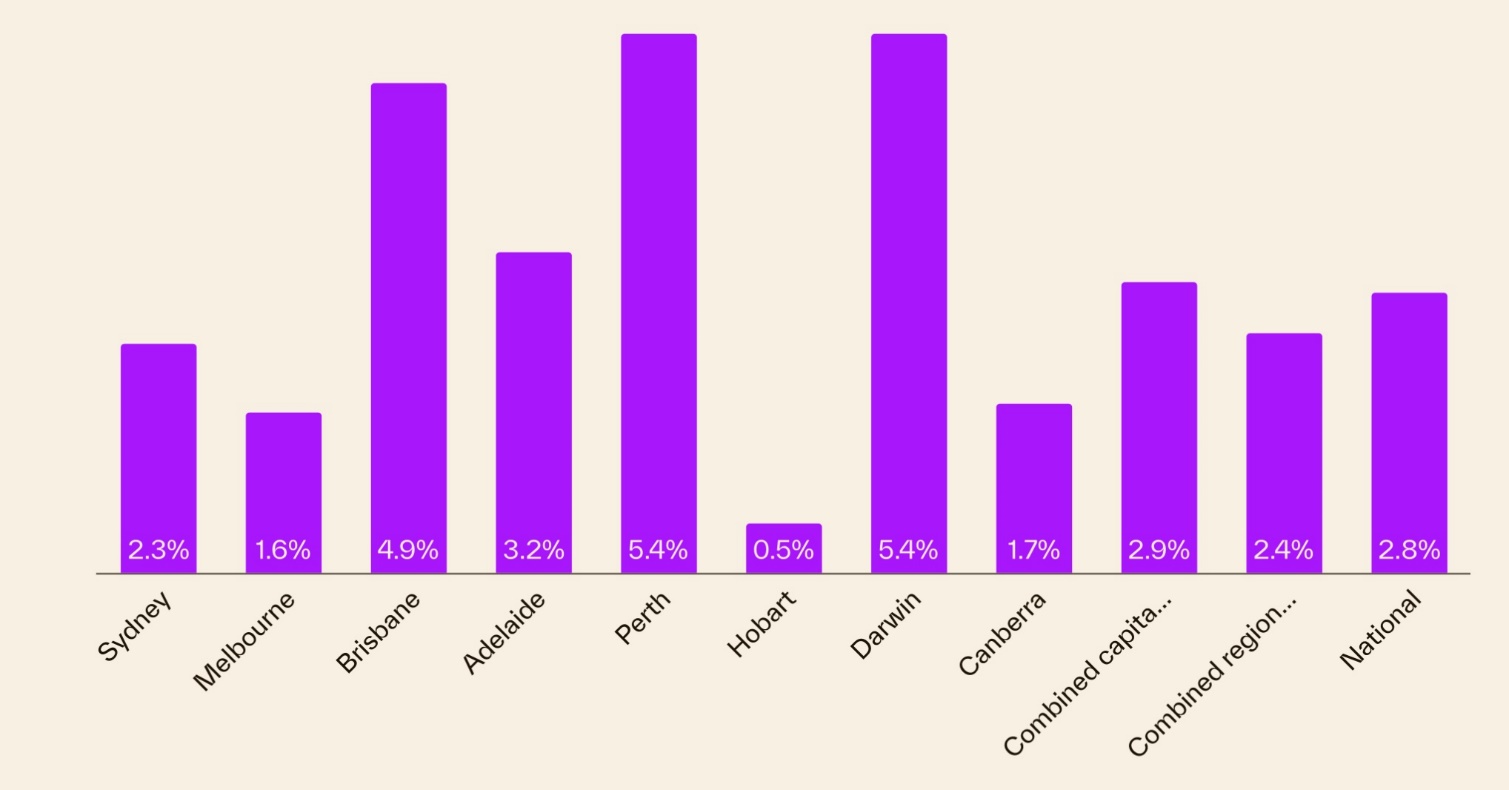
Source: Cotality
What’s causing this strength in the residential property market? Probably the single biggest contributor is the Reserve Bank of Australia cutting interest rates. The cash rate was 4.35% from the end of 2023 until the beginning of 2025. In February the RBA made the first of three 25 basis point cuts that have now taken the rate to the current 3.6%.
The federal government has also contributed to the surge in house prices, but not in a good way. Politicians in Australia of all persuasions are constantly saying that house prices are too high. Of course, they don’t really mean that, particularly when they’re in government. The last thing they want to do is upset voters who already own a home by overseeing a decline in property values. That’s both politically dangerous and bad for consumer confidence.
The impossible challenge for governments is to reconcile the preferences of existing homeowners and those still trying to get on the property ladder. The obvious answer is to increase the supply of new housing to meet demand, but the Australian federal government (like governments in NZ) seems incapable of doing that.
Rather than increasing supply, the response of both the federal government and the state governments is all too often to provide subsidies to first home buyers in the form of cash grants or stamp duty relief. This is an attempt to win the votes of first home buyers without upsetting existing homeowners. Politics aside, the problem is that it stimulates demand without addressing supply and therefore further inflates prices.
The latest such stunt is called the ‘Australian Government 5% deposit scheme’. In a nutshell, it enables a first home buyer to buy a house with a deposit of just 5% rather than the 20% that is usually required by lenders to get a home loan. Housing Australia provides a guarantee to the lender to make up the difference.
The scheme commenced on 1 October. According to some real estate agents, property investors have been buying houses in the lower price range favoured by first home buyers in anticipation of the scheme pushing up demand, and prices, in that range.
Investors are no doubt also encouraged by historically low vacancy rates for rental property and the corresponding lift in rents. According to the latest rental data from Cotality, ‘continued strength in rental demand has pushed the national vacancy rate to a new record low of 1.47%— less than half the pre-COVID decade average of 3.3%’.
In Sydney the vacancy rate for units has reached a record low of just 1.35%. This represents a chronic shortage of rental accommodation in a city that has a high population of foreign university students and new migrants. It translates into very high rents.
One of the biggest obstacles to increasing the supply of housing is undoubtedly the scarcity of suitable residential development sites in Australia’s capital cities. That’s often a result of both excessive regulation and rampant NIMBYism.
One politician determined to reduce that scarcity is the Labor Premier of New South Wales, Chris Minns. He’s on something of a crusade to increase housing density in Sydney. His government has made significant changes to planning laws to allow more low- and mid-rise housing near major transport links and town centers. Unsurprisingly, that has been met with considerable opposition, especially in some of Sydney’s wealthiest suburbs.
Woollahra in Sydney’s east is a classic example. The Premier is pursuing the resurrection of a train station in that suburb that was built but never operated. He wants to open the station, rezone the surrounding land, and build 10,000 new homes, including some ‘affordable housing’. Many locals in what is one of Australia’s wealthiest postcodes are horrified.
A similar story is unfolding across the habour in Mosman, a suburb with a median house price of around A$6 million. Locals are up in arms over a proposal to build a six-storey apartment block under the new planning laws. That case is on its way to court.
Part of the Premier’s argument is that Sydney’s wealthy eastern suburbs and the so-called ‘leafy’ North Shore have not done their share of the ‘heavy lifting’ required to meet the city’s pressing need for new housing. He sees no reason why they should not play a part in solving the housing crisis.
As house prices take off again in Australia, and the Premier emerges as the politician most focused on addressing the supply side of the housing crisis, he may be onto a winner.
*Ross Stitt is a freelance writer with a PhD in political science. He is a New Zealander based in Sydney. His articles are part of our 'Understanding Australia' series.
We welcome your comments below. If you are not already registered, please register to comment
Remember we welcome robust, respectful and insightful debate. We don't welcome abusive or defamatory comments and will de-register those repeatedly making such comments. Our current comment policy is here.