
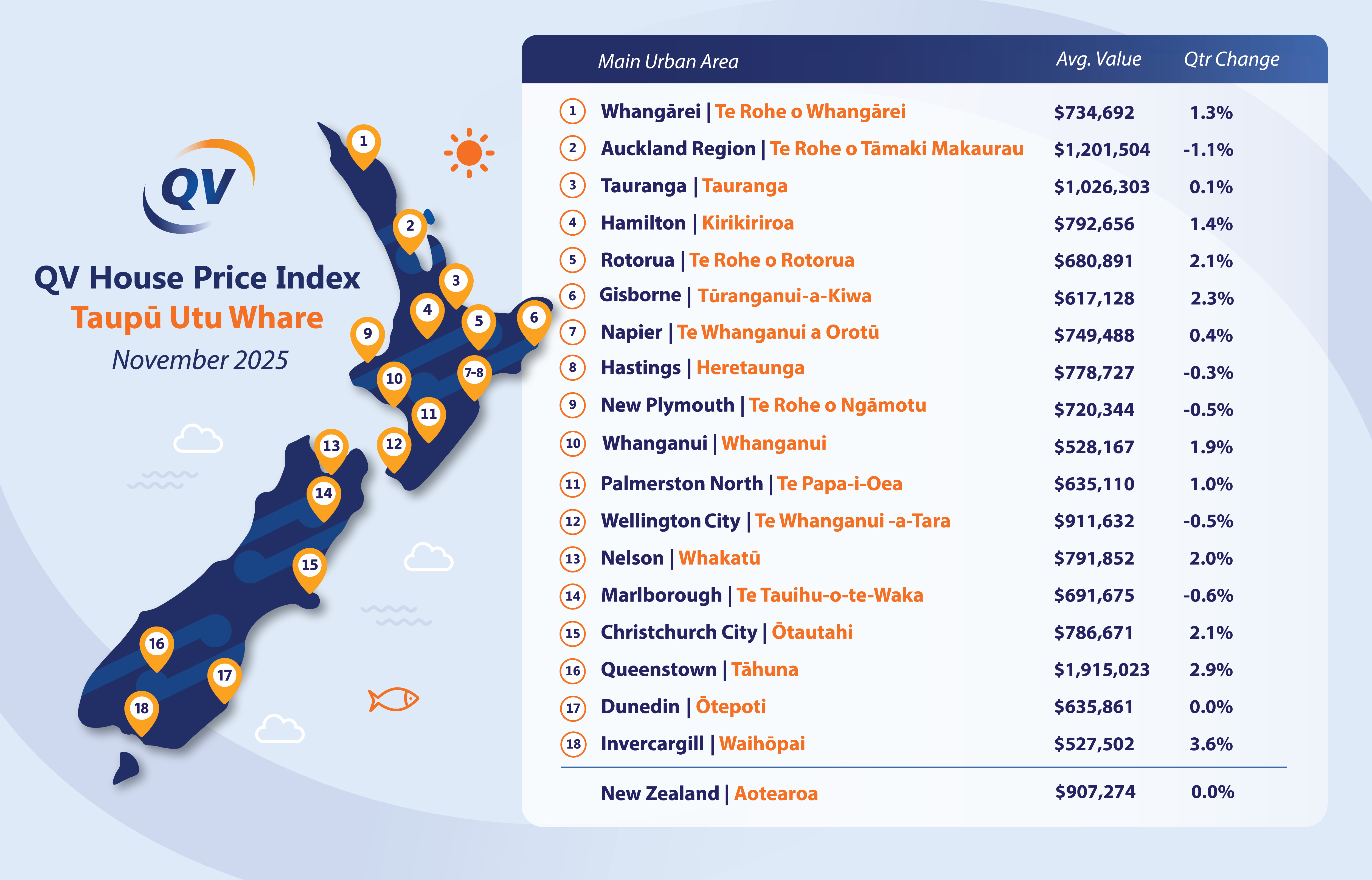
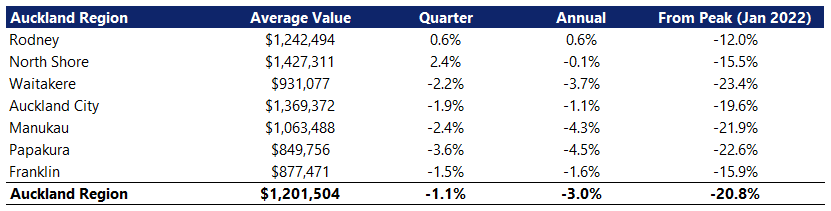
Nationwide residential property values remain flat overall but are still in decline in most parts of Auckland, according to the QV House Price Index for the three months to the end of November.
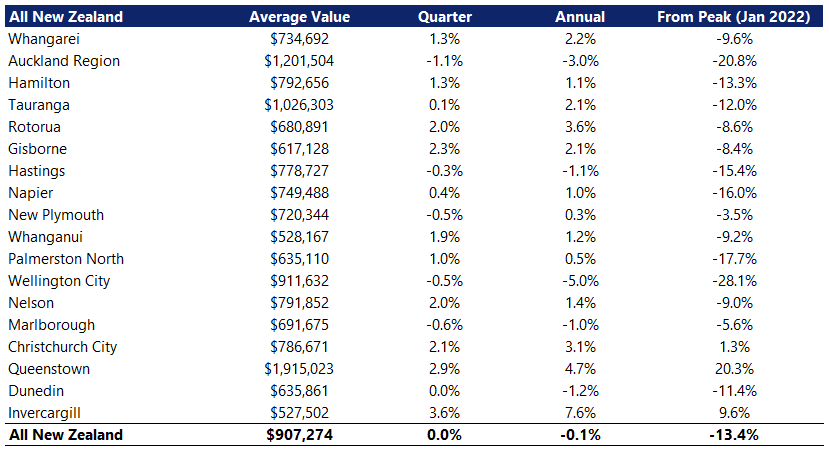
The average value of New Zealand dwellings was $907,274 at the end of November, almost unchanged, being up just 0.03% from the previous quarter, and down 0.1% from the same period of last year.
The average dwelling value remains $139,858 lower (-13.4%) compared to its peak of $1,047,132 in January 2022.
Around the country there were considerable variations in value trends, with the biggest quarterly declines recorded in Auckland -1.1% and Marlborough -0.6%, followed by Wellington City and New Plymouth, both -0.5%.
The biggest quarterly increases were in Invercargill, +3.6%, Queenstown +2.9% and Gisborne +2.3%. See the tables below for the detailed figures covering most major urban areas.
QV spokesperson Andrea Rush said residential property values across the country had entered a phase of consolidation.
"While this stability might suggest a pause in the market, the picture underneath is far more varied," Rush said.
"At a regional level, growth and decline diverge sharply - some are seeing value gains... while the greater Auckland region has recorded a further decline, continuing a run of recent months that exerts downward pressure on the national average, she said.
"And for many households, ongoing affordability and cost of living pressures remain acute."
"Over the past five years the cost of living as measured by CPI inflation, has increased by around 21%, placing additional pressure on household budgets," she said.
"Wages in many sectors have not kept pace with inflation meaning many households now have less real income available to save for a deposit or to comfortably service a mortgage," she said.
Rush said financial pressures were also being felt by existing home owners.
"The cost of owning and maintaining a property has increased, with rises in council rates, insurance premiums, trades and building costs, renovation expenses and development contributions," she said.
"These ongoing expenses mean many households are having to prioritise carefully, with some deferring improvements or considering downsizing as they get older."
Rush said these factors point to a shift in this country's residential landscape.
"Values are no longer rising rapidly but the cost of entering or remaining in the housing market remains high," she said.
"For prospective buyers, property continues to represent a considerable financial commitment - for homeowners, maintenance and ongoing costs continue to bite."
"For the residential sector, we may be entering a period in which affordability, economic pressures and regional differences play a larger role than headline value growth," Rush said.
The comment stream on this article is now closed.
 |
|
|

We welcome your comments below. If you are not already registered, please register to comment
Remember we welcome robust, respectful and insightful debate. We don't welcome abusive or defamatory comments and will de-register those repeatedly making such comments. Our current comment policy is here.