
sign up log in
Want to go ad-free? Find out how, here.

Cotality Home Value Index shows housing values have been largely flat overall for more than a year

Property / news
Cotality Home Value Index shows housing values have been largely flat overall for more than a year
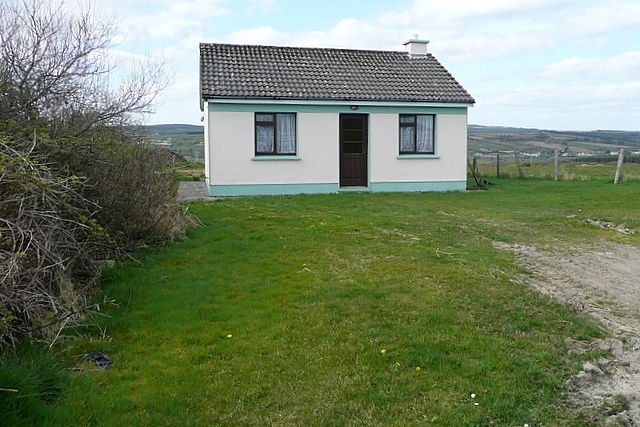
Small house
Photo: Graham Horn

Housing values have been flat overall so far this year, according to property data company Cotality's latest Home Value Index (HVI) figures.

The national median residential property value was $806,697 in February, according to the HVI. That's up 0.2% compared to January, which in turn was down 0.1% compared to December.

Looking back over the longer term, February's median price was down 0.1% compared to three months ago, and down 1.2% compared to 12 months ago.

That suggests property values have now been largely flat for more than a year, although the median value remains 17.3% down from its peak in early 2022.

Around the regions, value changes over the year to February ranged from a 3.2% loss of value in Auckland to a 5.7% gain in Southland.

"A modest lift in national property values in a single month in February is nothing to get carried away about," Cotality NZ Chief Property Economist Kelvin Davidson said.

"Given the cautious attitude that still prevails among both buyers and sellers, we'd need to see at least two to three more monthly increases before calling it a trend," Davidson said.

"Moreover, even if that upswing does begin in earnest this year, values are still down more than 17% from their peak, with conditions remaining pretty favourable for first home buyers and those investors looking to start or expand a portfolio."

"On the flipside, many vendors will be getting prices below what they expected a few years ago," Davidson said.

The HVI table below shows the latest median dwelling values and their recent movements in all districts throughout the country.

The comment stream on this article is now closed.

Cotality Home Value Index
February 2026
Region/District Median Residential Value Change 1 month Change 3 months Change 12 months
All of Aotearoa $806,697 0.2% -0.1% -1.2%
Northland Region $703,035 0.0% -1.0% -2.0%
Far North District $656,643 -0.6% -2.3% -3.0%
Whangarei District $717,833 0.1% -0.9% -1.7%
Kaipara District $762,298 0.7% 1.6% -1.6%
Auckland Region $1,040,913 0.1% -0.8% -3.2%
Auckland - Rodney $1,194,695 0.0% -0.4% -2.0%
Auckland - North Shore $1,283,944 0.1% -0.2% -0.8%
Auckland - Waitakere $917,487 0.0% -0.8% -2.5%
Auckland - Central  $1,104,846 0.0% -1.4% -4.5%
Auckland - Manukau $967,728 0.1% -0.8% -3.9%
Auckland - Papakura $812,347 0.2% 0.3% -3.3%
Auckland - Franklin $918,325 0.1% -0.4% -2.9%
Waikato Region $770,381 0.2% 0.0% -0.8%
Thames-Coromandel District $996,757 -0.1% -0.3% -1.9%
Hauraki District $639,360 0.3% -0.6% -0.7%
Waikato District $928,364 -0.4% -0.4% 1.0%
Matamata-Piako District $724,337 -0.4% -0.7% -0.7%
Hamilton City $711,669 0.9% 0.5% -1.2%
Waipa District $914,509 0.1% -0.1% -1.0%
Otorohanga District $626,474 -0.6% -0.6% -1.3%
South Waikato District $431,014 0.6% 0.8% 0.2%
Waitomo District $448,761 0.9% 0.9% 0.5%
Taupo District $816,035 0.2% 0.8% -0.4%
Bay of Plenty Region $838,779 0.4% 0.3% -0.1%
Western Bay of Plenty District $1,017,760 0.4% 0.2% -2.7%
Tauranga City $930,470 0.5% 0.6% 1.1%
Rotorua District $629,451 -0.1% 0.0% -0.2%
Whakatane District $691,362 0.2% -0.5% -1.8%
Kawerau District $415,541 0.6% 0.6% 2.4%
Opotiki District $593,635 0.7% 0.5% -1.6%
Gisborne Region $623,830 0.9% 1.1% 4.3%
Gisborne District $623,830 0.9% 1.1% 4.3%
Hawke's Bay Region $694,110 0.3% -0.7% -0.5%
Wairoa District $444,058 1.3% 0.7% 8.4%
Hastings District $712,171 0.2% -1.8% -1.2%
Napier City $703,516 0.4% 0.4% -0.3%
Central Hawke's Bay District $595,225 0.5% 0.3% 0.4%
Taranaki Region $637,919 -0.2% -0.4% -0.3%
New Plymouth District $701,113 -0.1% -0.4% -0.8%
Stratford District $535,150 -0.1% -0.5% 2.5%
South Taranaki District $463,280 -0.2% -0.4% 1.5%
Manawatu-Whanganui Region $548,523 0.0% 0.0% -0.2%
Ruapehu District $386,240 -0.3% 0.1% -1.9%
Whanganui District $521,106 1.2% 1.3% 2.5%
Rangitikei District $434,854 -0.1% -0.5% -1.7%
Manawatu District $611,828 0.1% -1.2% -3.0%
Palmerston North City $607,217 0.0% 0.3% 0.6%
Tararua District $424,504 -0.6% -1.9% -3.4%
Horowhenua District $524,942 -1.0% -0.8% -1.1%
Wellington Region $765,158 0.3% 0.1% -1.8%
Kapiti Coast District $787,008 -0.1% -0.1% -3.5%
Porirua City $719,858 -0.3% -1.4% -3.4%
Upper Hutt City $708,605 -0.1% -0.2% -1.8%
Lower Hutt City $663,635 0.0% -1.0% -2.6%
Wellington City $875,710 0.8% 1.1% -0.3%
Masterton District $559,834 0.0% -0.7% -3.9%
Carterton District $660,806 -0.2% -1.7% -4.2%
South Wairarapa District $755,975 -0.2% -1.6% -3.0%
Tasman Nelson Marlborough Region $750,687 0.3% 0.5% -1.4%
Tasman District $848,725 0.2% 0.8% -0.8%
Nelson City $718,436 0.2% -0.4% -2.2%
Marlborough District $680,783 0.4% 1.3% -1.3%
Kaikoura District $826,520 -0.1% 0.4% 3.4%
West Coast Region $435,040 0.8% 0.9% 3.3%
Buller District $387,181 0.7% 1.2% 3.1%
Grey District $438,761 0.9% 1.1% 3.2%
Westland District $496,559 1.0% 0.5% 4.0%
Canterbury Region $718,551 0.6% 1.0% 2.9%
Hurunui District $715,435 0.2% 1.1% 0.9%
Waimakariri District $788,329 0.7% 1.6% 4.1%
Christchurch City $701,152 0.6% 0.9% 2.8%
Selwyn District $885,886 0.6% 1.3% 2.8%
Ashburton District $567,908 0.7% 1.1% 4.0%
Timaru District $534,754 0.4% 0.5% 0.6%
Mackenzie District $730,801 0.8% 1.7% 2.6%
Waimate District $510,347 0.6% 1.8% 3.0%
Otago Region $703,400 0.5% 0.7% 0.7%
Waitaki District $483,530 0.6% 0.1% -1.9%
Central Otago District $877,449 0.2% 0.4% 2.2%
Queenstown-Lakes District $1,526,975 0.1% 0.3% 0.0%
Dunedin City $619,067 0.9% 1.3% 0.9%
Clutha District $445,866 0.0% -0.4% 3.2%
Southland Region $521,036 1.0% 1.9% 5.7%
Southland District $601,502 0.9% 2.2% 5.2%
Gore District $490,752 1.2% 1.5% 5.1%
Invercargill City $515,067 1.1% 1.9% 6.1%

We welcome your comments below. If you are not already registered, please register to comment

Remember we welcome robust, respectful and insightful debate. We don't welcome abusive or defamatory comments and will de-register those repeatedly making such comments. Our current comment policy is here.

19 Comments

Inflation adjusted house prices graph for the full picture..https://ibb.co/ksS1xvsc

Up
2

And that misses the last quarter.

Several working RE friends report things remain flat at the coal face in their respective areas. Also report here are seller who bought in 21 thereabouts who are definitely in trouble, but not a lot of them.

Up
1

During the negative equity crisis in the UK, banks let people transfer their negative equity to another property (otherwise the entire real estate market would have ground to a stop).     Most  FHBers who bought in NZ at peak could well be locked in their property right now.

Up
4

Can you price it in Gold, it will show R E down over 60%

Up
1

Pretty undeniable that the NZ housing market is a bubble that has burst - the question for me from 2015 - 2021 was whether it was going to burst in nominal terms or real terms. The graph shows it certainly has in real terms now. 

Up
4

Chaos and the risk of endlessly declining property values – Daniel Newman - NZ Herald

Soothing words from politicians who say “this is about enabling capacity in 30 years” offer no relief. Aucklanders are being told to give up their planning protections today, because Bishop appears determined to drive down the price of our homes, and, until now, the Prime Minister has appeared unwilling or incapable of overruling him.

For many Aucklanders, that our biggest capital assets are worth less now than three years ago is symbiotic of a sense that we are poorer and much less financially secure than we used to be. Further, some people appear to have concluded – fairly or unfairly – that the Prime Minister projects like the guy who would fire you.

A housing crisis is not when the price of housing goes up. A housing crisis is when the price of housing goes down, and stressed mortgage holders face the prospect of dwindling capital gain or even the prospect of negative equity.

For the life of me, I cannot understand the apparent war on Aucklanders who own their own home. In voting for Plan Change 120 to go out for consultation, I am not surprised that more than 10,000 submissions have been received because that plan – resplendent with a blue rosette – has become a lightning rod for strident opposition. Good on every Aucklander who took the opportunity to make a submission.

Up
1

The entitlement is next level. NZers truly believe double digit capital gains is an entrenched part of owning a home/investment property. 

Up
5

This planning change will kill the doubles every 7 years belief, suddenly there will be plenty of land zoned = cheapish land.

I am not sure it will cause property prices to fall, BUT it sure as hell will kill plenty of capital gains going forward.


Up
4

Yep. Land with something special like location, views, proximity to transport, school zoning will remain ok. Land with none of that that has been speculated beyond reason should return to where it started.

Up
3

People should, if not already, be thinking about how they will build wealth without relying on simply maintaining their home and leveraging capital gains. Amazing what people say when access to money they never had, for reasons outside their control, dries up. I do however love how the masses are waking up to mass rentierism and the implications of this.

Up
2

I do however love how the masses are waking up to mass rentierism and the implications of this.

Nothing wrong with mass rentierism really if you tweak its meaning. For ex, if you have a mkt with ample supply that renters have a choice set at almost any cost (within reason), that's an ideal scenario. The market becomes 'competitive' and price becomes a key determinant - therefore providing greater value becomes necessary if the supplier wants customers. Prices swing to the customer's favor. And there's an important consequence there - the value of someone's income or savings allocated to shelter becomes more valuable. 

Not quite the same but when Japan went through its lost decades, even though incomes went nowhere or down, purchasing power improved dramatically. Businesses didn't really have a choice - deliver what the mkt can afford or die. The effects of Japan's Ponzi are still felt today. Aotearoa is still debating whether it has a Ponzi or not (while societal decay seems already well set in). We have much to do.       

Up
0

What happened to the 'cost of living crisis' narrative? Here we are watching the biggest expense for most households stabilise and even fall, and people are up in arms. The disgrace is that prices were ever allowed to get so high through supply constraints across the political spectrum. 

Up
4

The only issue with declining house prices is if you are carrying stupid levels of debt, interest only etc etc. If you are....you did it to yourself. Bankers laughing all the way to their bonuses.

Up
4

Once NZers realize that high debt levels are now coming with no cap gains, they will lower there offers, 

Houses are no longer a leveraged superannuation plan.

You are better to offer lower and put the income that was going to go towards your mortgage, into milford or fisher aggressive funds!!!

It will take people a bit to wake up here, most are not that aware of the changed landscape


Up
5

I know many in the Housing Speculaterie Class, who still say that this is just a "Cycle" and the "Cycle will repeat again, with major upswings coming - soon"

Looks very much like they all been conned and totally had by the  "buy investment housing seminars" ticket clippers.....
The are so captured by the last 40 years (pre2021) of perfectly lower and lower interest rate winds and following seas in the NZ housing investment scene, that their investing brains need removal, recycling and resetting.....

Yes the landscape and paradigm changed after 2021 and many remain dummies and cannot see the current lower and lower NZ houseing price trajectory.
Add to this, the massive supply currently and into the future, that will provide lower cost, housing options.


Up
3

Greg and Cotality have specifically told you this is "Nothing To Get Carried Away About!"

Regain your composure, it's a lovely day out there! 🥂🫠

Up
3

Composure is a key skill of the Geckos, how do you think I get so many flies and bugs?
Composure, knowledge and calm skill application.
 
Agree the best two months of the year have just begun!

Much more positively, NZ is entering a period what both rents and house buying costs are falling long-term and much less income with be siphoned out of the real economy, into Speculators/Landlords, money hungry hands.
Enjoy the Autumn Sun:)

Up
5


Cote d'Azur
 

I am reminded of the famous investment guru Warren Buffett quote

"Should you find yourself in a chronically leaking boat, energy devoted to changing vessels is likely to be more productive than energy devoted to patching leaks."

Even The Comb has jumped ship


I suggest you find a bag holder , BE QUICK

Up
6

Cote - don't want to be this guy,   beep beep

Those two units, both in Queensland, were negatively geared when Tom was working but were cash-flow positive when he stopped teaching.

“We never really had enough superannuation … probably less than $300,000, after we cashed some in to fund our house renovation,” says Tom. “We had chosen to invest in property.”

It seemed like the sensible way to build wealth given the tax benefits of negative gearing. A negatively geared investment is one that produces less income than the interest on the loan needed to buy it. The loss on the investment can be deducted from the tax paid on other income.

The tax benefit is useful while you are working, but once you retire your income drops and the strategy becomes less potent.

And if your investment doesn’t have significant capital growth – as was the case with the Crouchers – you are just recycling money from the investment to your lender without making any gain yourself.

Financial advisers say they are witnessing a generation of asset-rich, cash-poor retirees living needlessly frugal lives to protect investments that frequently return less than a term deposit or a high-interest savings account.

Up
2
