

The proportion of first home buyers in the market is continuing to drop in response to the Reserve Bank's 'speed limits' on high loan-to-value lending.
On the QV.co.nz website, data and analytics company CoreLogic has done more research on the proportions of houses sold going to first-timers, following up earlier research in February.
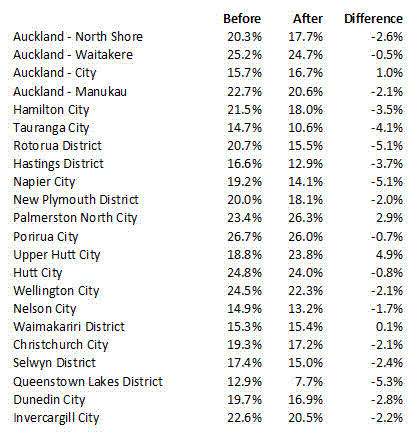
"With an extra month of data to look at, this trend is still evident with first home buyers dropping nationally by another 1.1% and Auckland City being one of the only main centres that hasn’t followed the trend," CoreLogic said.
To measure the change before and after the LVR speed limits were introduced, the company looked at the three months from June to August 2013 as before, and December 2013 to February 2014 as after.
It then compared the average percentage of first home buyers in each of those time periods. (See table below)
"We can see that Queenstown and Tauranga, which already had low percentages of first home buyers, joins Hamilton, Rotorua and Napier as the main cities with the largest drop between the two time periods."
"In February, we reported Wellington City as having one of the largest decreases in first home buyers at -5.4%.
"This has reduced however, now sitting at only -2.1%. Whilst in the surrounding areas, Upper Hutt's increase in first home buyers has continued and Porirua's previous slight increase has now turned into a slight decrease.
"Palmerston North is another area where the increase in first home buyers continued (up 2.9%).
"As well as the hypothesis that the number of first home buyers would decline following the introduction of the LVR speed limits, there was also speculation about whether first home buyers would change their expectations when it came to buying.
"This was especially relevant in Auckland, where demand is still strong."
We welcome your comments below. If you are not already registered, please register to comment
Remember we welcome robust, respectful and insightful debate. We don't welcome abusive or defamatory comments and will de-register those repeatedly making such comments. Our current comment policy is here.