
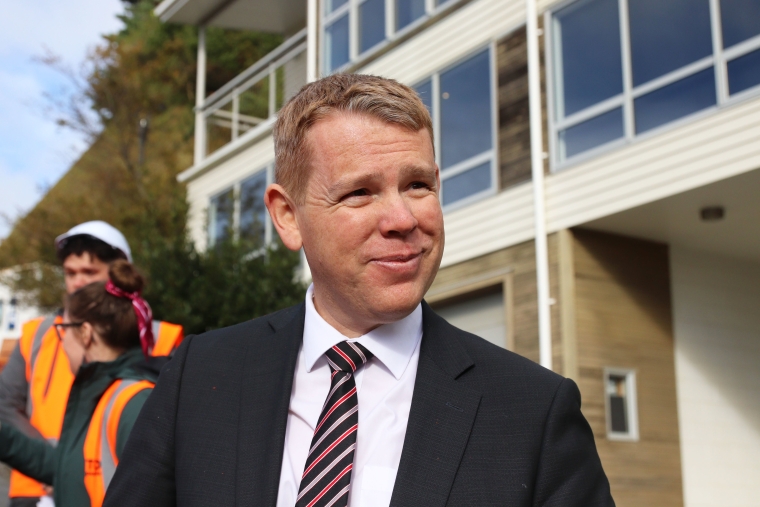
Prime Minister-elect Chris Hipkins has pledged at his first full press conference since the Labour Caucus confirmed he was their sole choice to be Prime Minister to ‘rein in programmes and projects that aren’t essential right now’, appearing to a suggest a tightening of fiscal policy.
He also said the Government’s sole focus was on the economy and dealing with cost of living and inflation issues that had developed globally and here since Covid. He signalled his new cabinet, which he would announce next week, would tighten spending on some projects.
He also indicated he would stop using ‘co-governance’, which he said had become a catchphrase that was misunderstood. He was critical of the use of the phrases ‘transformational,’ which was also a ‘catchphrase’ that had become mis-understood.
He said he wanted his Government to focus on the ‘bread and butter’ issues and said he did not want to do anything to further lower house prices. He named Carmel Sepuloni as his Deputy PM, the first Pacifica Deputy PM, and said Kelvin Davis would contine to be Labour’s Deputy Leader.
“For New Zealanders, covid and the global pandemic created a health crisis, and now it's created an economic one. And that's where my government's focus will be," Hipkins said.
“I know that people are worried about paying the grocery bills and paying their mortgages. The globe is now facing a new challenge, a pandemic of inflation. New Zealand's rate of inflation remains below the OECD average, but high global inflation is biting into Kiwi household budgets. And families are feeling that pinch. My government will bring a strong clarity, sense of purpose and priority to helping New Zealanders through these tough economic times," he said.
Hipkins referred to a 'bread and butter' approach several times.
“Our focus will be on the right now, on the bread and butter issues that people care about. Some people, many people are hurting at the moment and I want them to know that we are on their side," Hipkins said.
"I know that some New Zealanders feel that we aren't doing too much, too fast and I've heard that message. Over the coming week, Cabinet will be making decisions on reining in some programs and projects that aren't essential right now," he said.
“We will be focused on middle and low income New Zealanders and the small businesses that are doing it tough to get by. We'll be making decisions on refocusing on some of the most pressing priorities. Then also getting some new work underway on policies that will make a real difference to Kiwis over the longer term. New Zealanders understand we cannot do everything and we certainly can't do everything all at once.”
He was also asked if he wanted house prices to fall.
“We're working our way through increasing housing supply, and making sure that New Zealanders have an opportunity to get on the housing ladder. Our focus has been on first time buyers, and it will continue to be on first time buyers," he said.
“We've already seen a shift in house prices from the peaks that we were seeing. I guess to reframe your question, we're certainly not going to be doing things that aim to bring house prices down.”
He was also asked if he wanted to be transformational.
“I'm not really interested in those kinds of catchphrases. Basically, we will deliver a very solid government that that is focused on the bread and butter issues that I see that matter to New Zealanders and that are relevant to the times that we're in now. 2017 was five and a half years ago, and quite a lot has happened since then."
Asked if he would drop co-governance, he said: “One of the challenges around co-governance is no one understands what that means because we're talking about quite often quite different things. So if I look at some of the Treaty settlements that have been reached over the last 20 years, they often have co-governance arrangements and and previous governments including the National government.
“The national government probably signed up to more co-governance arrangements through the Treaty settlement process than any other government. But it means a different thing in a different context. So I don't want to get hung up on on what has become a catchphrase. I think there is a an uncertainty in New Zealanders around what we mean when we're talking about drug governance. So I want to make sure that at each context, we're very clear about what we mean. And I acknowledged that that hasn't always been clear.”
Hipkins declined to rule in or out any policies such as Three Waters or a Capital Gains Tax or a fiscal policy tightening. He also would not specify likely cabinet members, except to say that Jan Tinetti would take his Education portfolio and Stuart Nash would take his Police portfolio. However, he did say that Grant Robertson would become Leader of the House and take Hipkins’ Public Service portfolio.
We welcome your comments below. If you are not already registered, please register to comment
Remember we welcome robust, respectful and insightful debate. We don't welcome abusive or defamatory comments and will de-register those repeatedly making such comments. Our current comment policy is here.