
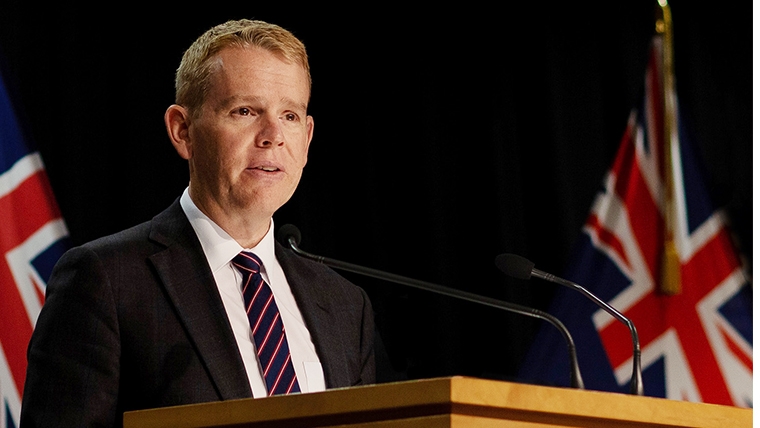
Prime Minister Chris Hipkins has promised there will be no new taxes and “no-frills” in the Labour government’s May budget, which will be focused on funding only the basics.
In a pre-Budget speech in Auckland, Hipkins ruled out using a cyclone levy to pay for the recovery from the Auckland floods and Cyclone Gabrielle.
“This will be an orthodox no-frills Budget focused on funding the things most important to New Zealanders like support with the cost of living and cyclone recovery,” he said.
He also ruled out any possibility of a wealth or capital gains tax, promising no major tax changes in the budget. This followed the release of IRD research on Wednesday, which found the ultra-wealthy paid a lower tax rate than salaried workers.
Revenue Minister David Parker has said that tax policy was a matter for Cabinet to decide and any proposed changes would be taken to the election in October.
Hipkins’ pre-budget speech highlighted his unwillingness to impose new taxes on households that are already struggling to make ends meet.
The Treasury has estimated the cost of repairing the damage from the Auckland floods and Cyclone Gabrielle will between $9 billion and $14.5 billion.
The government is comfortable it can meet this cost using a combination of annual operating and capital allowances, savings and reprioritization, and some debt.
With inflation falling but still too high, the Reserve Bank will be weighing up the inflationary impact of the May budget when it meets later that month for its Monetary Policy Statement.
Paul Conway, the central bank’s chief economist, explicitly warned the rebuild would result in higher interest rates if it generated inflationary pressure.
“Alternatively, diverting Government resources from projects elsewhere in the country or funding the rebuild via increased government revenues would free up resources without the need for higher interest rates,” he said in a March speech.
Hipkins has ruled out increased revenue but has promised more reprioritization. Whether it will be enough to prevent a bonus rate hike remains to be seen.
Kiwibank economist Jarrod Kerr said a cyclone reconstruction levy, similar to what the Australian government used after the Queensland floods in 2010, would have been a “clean and clear” way to fund the rebuild.
But the government can “easily absorb the cost” without the political risk of imposing an extra tax in an election year, and has decided to do so.
Kerr would like the government and the public to reconsider its definition of fiscal responsibility as something that goes beyond just nominal spending levels.
“We neglect things in order to adhere to these numbers which are probably too strict”.
It should not be considered fiscally responsible to keep spending low by under-investing in critical infrastructure or cutting core services, for example.
No-frills Prime Minister
Hipkins said cost of living was his top priority as Prime Minister and promised better delivery of more modest goals.
“The reality is the Government was previously doing too much, too fast, and the effect of that was being tied up with issues taking time and money away from where our primary focus needed to be”.
He said Government spending was falling towards “the low thirties” as a percent of GDP and should settle there overtime.
“I’d call it a no-frills approach, and that characterises the decisions we’ve made since I became Prime Minister as well as decisions we have made in the upcoming Budget”.
The term no-frills began being used in the 1800s to refer to simple clothing and, later in the century, as a polite way to describe someone as being plain or unrefined.
But it took off in the modern lexicon when, during a period of high inflation in 1978, a struggling Canadian supermarket rebranded its worst performing supermarkets as No Frills.
It mostly sold brandless products with just the items’ name printed in black Helvetica font on a yellow background.
Customers had to bag their own groceries and the whole building was painted with the same garish yellow as the no-name products it sold.
It was a hit with cost-conscious consumers and the idea spread to other markets, including New Zealand in the form of PaknSave.
The prime minister said he doesn’t make the trip into his local yellow-and-black store as often as he used to — but he still does his own shopping and keeps an eye on prices.
“But I think it is incumbent on leaders to not only walk in the shoes of others, but to reflect those experiences in the choices we make. That means it’s not right for households to be tightening their belts if the Government doesn’t too,” he said.
The future of frills
Being a no-frills Prime Minister doesn’t only mean making spending cuts to keep debt-to-GDP levels low, Hipkins also wants to set NZ up to be “the best little trading nation in the world”.
The budget will make targeted investments in things that could help improve economic growth and productivity: skills, science and technology and infrastructure.
“Rather than a long laundry list of worthy ideas, I want the Government to do a small number of things very well. And those small number of things need to be focused on growing our economy”.
Advanced economies such as Germany, South Korea, Japan and Singapore demonstrated that these items were the best possible investments in the future of an economy.
“When we came into office, we inherited infrastructure investment which had averaged just under $5 billion a year under the previous Government. It simply wasn’t enough and explains the deficit we are experiencing now”.
Infrastructure investment in the past five years was an average of nearly $9 billion and the Treasury estimates it will average more than $12.5 billion between 2023 to 2027.
We welcome your comments below. If you are not already registered, please register to comment
Remember we welcome robust, respectful and insightful debate. We don't welcome abusive or defamatory comments and will de-register those repeatedly making such comments. Our current comment policy is here.