
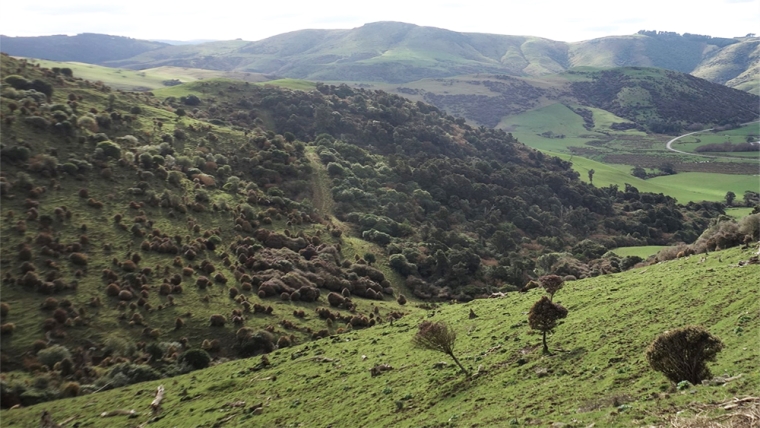
The Government will devolve the authority to make decisions about where pine forests can be planted to local councils.
This was an election promise made during Labour’s 2020 election campaign in response to increased planting of carbon forests on farmland, which has been disrupting rural communities.
Pine forests have been found to be one of the cheapest ways to offset carbon emissions, which has led to investors purchasing productive farms and converting them into forests.
These investors sell carbon credits from the sequestration into the emissions trading scheme, allowing companies responsible for emissions buy these offsets rather than emit less carbon.
This concerns the Climate Change Commission which thinks carbon offsets may be less effective at preventing climate change in the long term, compared with gross reductions.
For example, Canada’s pine forests are becoming a net source of carbon emissions due to forest fires and insect outbreaks. One independent report found disturbances to forests had recently released over 200 mega tonnes of carbon dioxide each year.
Rural communities’ opposition to carbon farming is less about climate resilience and more about a loss of economic activity that could trigger an exodus and undermine regions.
In May this year, Ruapehu mayor Weston Kirton called for immediate government action to address the threat to his community posed by carbon farming.
“They are seeing the loss of significant areas of productive land with flow-on impacts including the loss of skills, employment, economic activity and community identity, along with negative environmental outcomes.”
He said three large stations had been sold to corporate forestry firms in recent months, adding to a total of 10,000 hectares of “good hill country” that was being planted in pine.
Rural councils wanted the central government to devolve the power to manage the risks at a local council level, and restrictions for fire safety and to stop owners abandoning forests.
Today, the Labour government has granted some of what Kirton requested by giving councils’ the authority to determine where, and how much, carbon forestry can occur.
Kieran McAnulty, Minister for Rural Communities, said the Government had heard and acted on concerns of regions such as Tairāwhiti, Wairoa and the Tararua District.
“Everyone accepts we need to plant trees. The concern is that blanket planting of productive land is counterproductive. This change will assist communities to ensure that the right type and scale of forests are planted in the right place,” he said in a statement.
Peeni Henare, the Minister of Forestry, said the tighter rules were about getting “the right tree in the right place”.
Local councils will be empowered to decide which land can be used for plantation and carbon forests through the resource consent process.
Changes to forestry standards will impose the same regulation on permanent pine forests that plantation, or logging, forests have currently.
“This means many standards such as ensuring firebreaks, rules planting next to rivers, lakes and wetlands will now be required for any new forestry conversions,” Henare said.
In addition to this, the Ministry for the Environment is currently reviewing the emissions trading scheme to assess whether businesses need a stronger incentive to decarbonise and not just rely on offsets.
We welcome your comments below. If you are not already registered, please register to comment
Remember we welcome robust, respectful and insightful debate. We don't welcome abusive or defamatory comments and will de-register those repeatedly making such comments. Our current comment policy is here.