
National’s current policy proposals would exceed operating allowances by between $3 billion and $5 billion, according to a Labour-aligned group of trade unions.
A document put together by the Council of Trade Unions attempts to calculate the fiscal impact of various National Party policies, in an effort to demonstrate how much cost cutting would be required to balance the books.
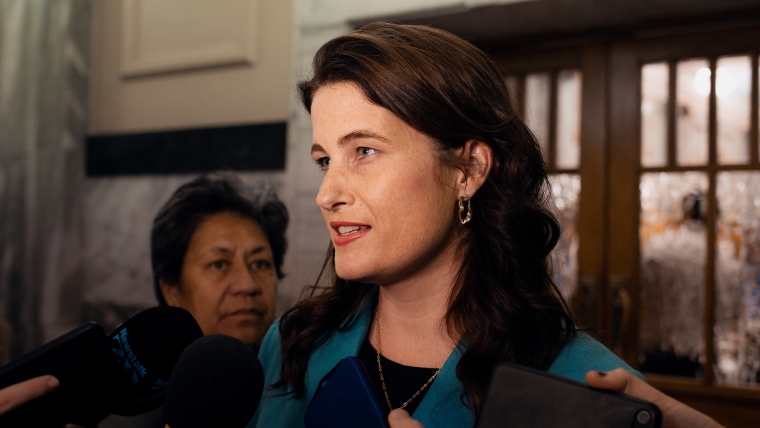
National’s finance spokesperson Nicola Willis said it was little more than a media release from Labour’s Grant Robertson dressed up as something else.
The CTU’s chief economist, Craig Renney, was a former advisor to Robertson.
Willis said the document was “ludicrous and hypothetical” and wasn’t worth a response.
“National will release a fully costed tax and fiscal plan in due course. It will represent a new way forward for NZ: lower income taxes, more disciplined Government spending, better public service delivery and a path out of the cost of living crisis”.
The CTU has claimed that the fiscal plan will require cuts to public services to balance out the impact of its promised tax cuts.
“When asked how it will pay for those tax cuts, National has claimed it would ‘cut wasteful spending’ without stating what that spending is, or what impact it will have on future Budgets,” it said.
“The public has no clear understanding of what the National Party would really change in terms of spending, nor how its plans would add up”.
The 2017 Labour opposition and the 2008 National opposition had both released fiscal plans by the start of August in previous election cycles.
However, neither party has released their tax policies or fiscal plans for the 2023 election. Recent polls have shown the National Party in a position to form a government with Act.
Plenty of policies
National has committed to adjusting tax brackets to account for the inflation that occurred between 2017 and 2021, but has been coy about whether it would go further.
Its bracket indexation policy, as it stands, would be an 11.5% increase to income tax brackets. The CTU claims this would cost about $2b in each of the years in the next Parliamentary term.
Returning interest deductibility to rental properties would cost another $650m per year, once fully implemented, while scrapping the Auckland fuel tax would cost another $150m.
The net effect of all policies means there would be somewhere between $2b and $3.2b less revenue in each fiscal year of a National Government.
This could be a problem, considering Crown tax revenue was already $2.2b below forecast in the 11 months ended May. The Treasury expects the shortfall to persist throughout the year.
National has also announced a slate of new spending promises, some of which were paired with cuts to help fund them.
For example, the Build for Growth payments would cost $378m but that could be offset by cancelling Labour’s free early childhood education for two-year-olds.
National would also free up money by cutting spending on contractors by $400 million and cancelling the GIDI fund which has been used to help decarbonise NZ industry.
But details on how the multi-billion dollar tax cut would be funded have not yet been specified. The CTU claims the party will need to find between $3.2b and $5.2b in savings.
The operating allowance across the three year term would be $21b, with the CTU claiming $16.8b would be required to maintain current service levels.
That leaves $4.2b for new policies which would be more than absorbed by National’s revenue policy, with only $15m of net spending cuts announced so far.
National disputed the document in general, but was unable to offer a full rebuttal until it revealed its fiscal plan. That is expected to occur in the next few weeks.
Costing unit
Willis said this debate wouldn’t be happening if Labour’s Grant Roberston had set up an independent policy costing unit.
This was proposed in the Labour and Green Party’s confidence and supply agreement in 2020 but was ultimately shot down by the then-National Party leader Simon Bridges.
Without cross-party support for an independent costing unit, Labour abandoned the idea.
However, Willis attempted to revive the policy when she became National’s finance spokesperson and deputy leader.
“I wrote in good faith to Finance Minister Grant Robertson and said I would like to take you up on your offer of an independent fiscal and costings unit,” she said.
“I think it is very telling that he has chosen to make no progress whatsoever on that”.
Robertson said it was “just a little bit late for that” and the Government wasn’t sitting on standby waiting for National to change its position.
“They turned us down and the money ended up being spent on other things, and everyone can agree that money is very, very tight.”
Willis said she would implement the costing unit if she were to become finance minister and Robertson said he still supported the idea “in theory”.
We welcome your comments below. If you are not already registered, please register to comment
Remember we welcome robust, respectful and insightful debate. We don't welcome abusive or defamatory comments and will de-register those repeatedly making such comments. Our current comment policy is here.