
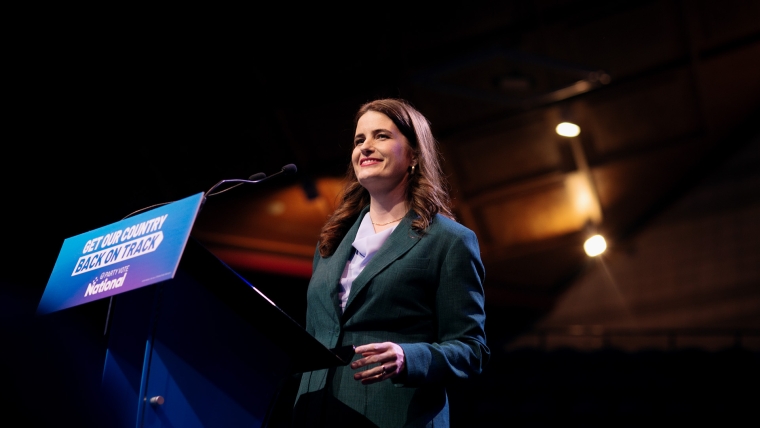
The coalition Government has announced $7.5 billion in cost savings and new revenue alongside Treasury’s half year update which showed a deterioration in the Crown accounts.
Finance Minister Nicola Willis framed it as the beginning of an economic “clean-up” after what she described as a “reckless” fiscal approach from the previous administration.
Treasury’s Half Year Economic and Fiscal Update still forecast the Government’s books would return to surplus in 2026 but it would be just $140 million, rather than $2.1 billion.
This was largely because inflation was now expected to be more persistent and force the Reserve Bank to hold interest rates higher for longer.
Higher rates will subdue growth and delay the economic recovery. That will flow through to lower corporate profits and therefore Crown tax revenue.
“Economic growth is forecast to average just 1.5% over the next two years, as elevated interest rates increase the cost of borrowing and of servicing the existing debt, driving weak consumption and investment.”
Real GDP growth is forecast to bounce back once inflation is under control, Treasury predicts an average of 2.8% per year from 2026 onwards.
Treasury said Core Crown tax revenue was expected to be $1.6 billion lower across the forecast period and an extra $2 billion of bonds would be issued to cover the shortfall.
Higher borrowing and interest rates will increase the Government’s debt financing costs, lifting core Crown expenses relative to the pre-election update.
These forecasts were finalised before the Coalition Government had formed, so they do not reflect policy decisions made since then.
Alongside the forecasts, Willis announced a handful of election promises which would improve the Government’s fiscal position by $7.5 billion across the forecast period.
This includes getting rid of free childcare for two-year-olds, removing the ability for commercial building owners to deduct depreciation from their taxes, and indexing benefits to inflation.
National will also bring the Brightline Test capital gains tax back to two years, which will cost $180 million over the forecast period.
Government agencies have been asked to find roughly $1.5 billion in annual cost savings, with specific targets set based on headcount growth since 2017.
Willis said this was a combination of the $500 million savings requested by the Labour Government, plus the $400 million contractor and $600 million back-office spending cuts National campaigned on during the election.
We welcome your comments below. If you are not already registered, please register to comment
Remember we welcome robust, respectful and insightful debate. We don't welcome abusive or defamatory comments and will de-register those repeatedly making such comments. Our current comment policy is here.