
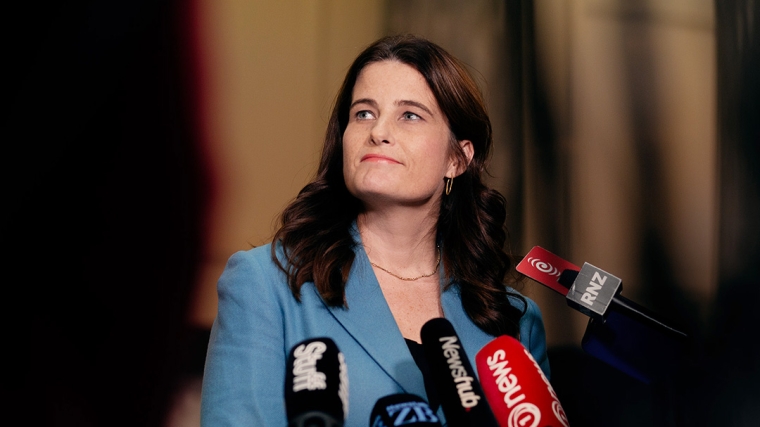
Treasury’s briefing to new Finance Minister Nicola Willis suggested she stick with the Government’s fiscal rules set in 2022, although left room for her to refine them.
Labour Finance Minister Grant Robertson set the current fiscal rules after the pandemic, based on Treasury advice. They require the Crown accounts to average out to a small surplus over time and for net debt to remain below 30%.
The National Party has been critical of these rules, which allow higher debt levels than previous governments have targeted, and hinted it may reset them.
Some commentators have criticized the flexibility of surplus rule for not setting a strict time limit. A government could always be forecasting a return to surplus but never get there.
In the November briefing, the Treasury told Willis that fiscal sustainability was a key policy issue and that fiscal rules were an effective way to communicate the Government’s commitment.
“We consider that the broad design and calibration of the existing fiscal rules from 2022 remain appropriate, but that there is scope to review or refine these rules depending on your fiscal strategy,” it wrote.
The agency recommended a return to surplus in 2026/27, as both National and Labour targeted in their fiscal plans, but didn’t suggest debt levels needed to be reduced.
New Zealand’s net debt has risen quickly during the pandemic but remains low by international standards.
“While the level of debt is currently not significantly impacting New Zealand’s economic performance, resilience, or wider living standards, fiscal policy has been contributing to recent excess demand pressures in the economy,” Treasury said.
The average government debt among advanced economies in 2023 was 47% of GDP, compared with 24% for New Zealand.
A reduction in government spending was required to bring revenue and expenses back into balance and prevent net debt creeping ever higher.
Fiscal constraints tightening
Treasury warned that revenue growth was unlikely to keep up with spending pressures, mainly from healthcare and superannuation, while constraints in NZ’s tax system could make reform difficult.
The difference between personal and company tax makes it difficult to efficiently lift individual tax or cut corporate tax, and the lack of a comprehensive capital gains tax restricts the ability to manage gaps between the two rates.
“Based on principles such as sustainability, efficiency and fairness, our first best advice is to address these two structural issues. Major tax changes take time to implement so there is a need to plan for these early,” the agency advised.
It said there was not much “low-hanging fruit” left in tax reform and short term fixes could hurt the progressivity of the system or restrain economic growth.
To achieve the surplus, Treasury said the Coalition Government could consider decreasing expenditure, limiting new spending, increasing taxes, or use debt more efficiently.
“It is likely that using all these levers will be necessary. The trade-offs across them are complex,” it said.
Decreasing and constraining spending could result in a decline in the quality of services which would have negative impacts on living standards.
However, increasing revenue could also negatively affect living standards and economic performance.
Other priorities
The Treasury's two other policy priorities were building economic resilience and improving Government performance.
It also recommended continued efforts on New Zealand’s “long standing challenges” such as productivity, housing cost, education standards, and international connections.
Improved productivity was the key to better living standards in the future, it said.
“While income is not the sole determinant of living standards, the ability to fund public services and institutions, invest in infrastructure and preserve the natural environment all depend on the economy performing well”.
Life in New Zealand had improved significantly in the past 20 years as better infrastructure, institutions and economy had made the population healthier, wealthier, and better educated, Treasury said.

We welcome your comments below. If you are not already registered, please register to comment
Remember we welcome robust, respectful and insightful debate. We don't welcome abusive or defamatory comments and will de-register those repeatedly making such comments. Our current comment policy is here.