
A vast and growing majority of New Zealanders want to see income tax brackets automatically adjusted for inflation, according to a Taxpayers’ Union–Curia poll released on Thursday.
Only 10% of the survey’s 1000 respondents were opposed to indexing tax brackets to inflation, compared with 74% who were in favour of the idea.
Support for indexation has been growing since the election. The same question asked in June last year, and again last month, found 67% of respondents were in favour and 14% opposed.
However, the political makeup of those in support does appear to have shifted.
In the 2023 poll, support was strongest among Act Party voters and weakest with Green voters, despite that being an inversion of the two parties’ actual tax policies.
The Greens campaigned on indexation, albeit with a higher top rate, while the Act Party campaigned on a flatter tax structure that would not be adjusted with inflation.
Voters appear to have picked up on their party preferences and support for indexation is now highest among Green voters, with net 72% support, and lower for Act voters with a net 68%.
The strongest opposition was among Te Pati Maori and New Zealand First supporters, where only a net 25% and 28% of their voters were in favour of automatic indexation.
National and Labour voters were at a net 68% and 63%, respectively.
Just do it
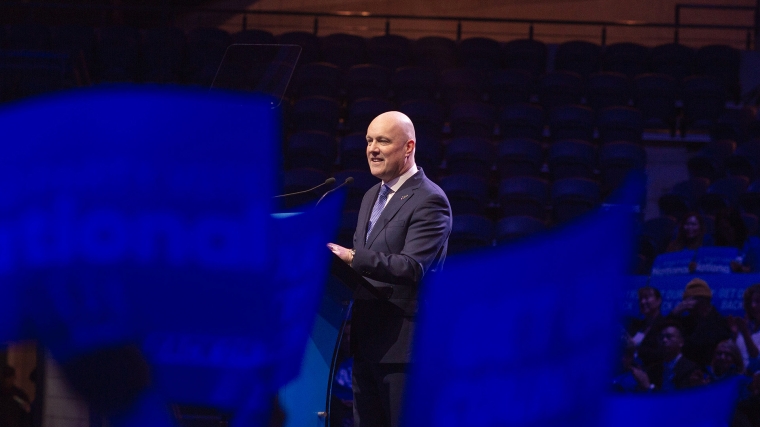
Connor Molloy, a campaigns manager at the Taxpayers’ Union, said Prime Minister Christopher Luxon should commit to indexation given his recent comments indicating his support for the policy change.
Following a speech to the Auckland Business Chamber on Wednesday, the Prime Minister said many countries already indexed their tax thresholds to annual inflation.
“The problem when you don’t do that, [and] what we’ve seen in the last six years, is that inflation actually helps the government’s books,” he said.
Governments can end up being “quite lazy” and leveraging inflation in a “very unhelpful and bad way” to fund their spending plans.
Molloy said politicians had been allowing these “stealth tax hikes” since 2010 and workers had been dragged into higher tax brackets, despite their purchasing power staying the same.
““The impact of this stealth tax is so significant that it means the average worker is paying an additional $49 per week in income tax compared with someone on the same real income when tax brackets were last adjusted in 2010,” he said.
“The Prime Minister thinks income tax brackets should be inflation adjusted, as do an overwhelming majority of New Zealanders. Then why is he refusing to commit to it at this years’ budget?”
Too hard basket
While Luxon appears to be sympathetic to indexation, NZ Treasury has advised the Government it will struggle to achieve its fiscal goals without raising revenue.
Advice prepared for the 2023 mini-budget warned the Coalition fiscal drag had played “an important role” in enabling successive governments to meet their objectives.
“If you wish to offset or end fiscal drag, through adjustment of personal income tax rates and thresholds, the fiscal headroom which needs to be created will further increase,” it said.
Freeing up enough fiscal space to deliver on all the Coalition's promises would be a “significant challenge” and would require both reducing spending and raising revenue.
Treasury recommended introducing a capital gains tax, among other changes, so that future governments could be less reliant on fiscal drag for revenue increases.
The Taxpayers’ Union poll was conducted by Curia Market Research in early May and had a 3% margin of error.
Voters were asked: “As welfare benefits automatically increase with inflation, would you support or oppose a law so that income tax thresholds also adjust for inflation, so that someone whose income increases in line with inflation doesn’t end up paying proportionally more income tax than previously?".
We welcome your comments below. If you are not already registered, please register to comment
Remember we welcome robust, respectful and insightful debate. We don't welcome abusive or defamatory comments and will de-register those repeatedly making such comments. Our current comment policy is here.