
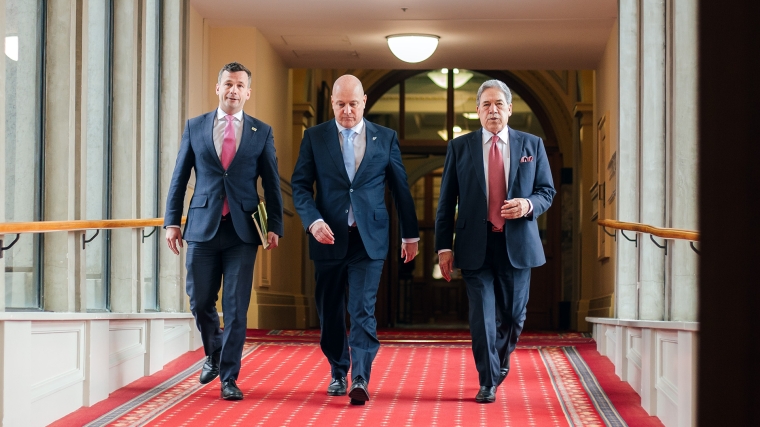
The National Party and its coalition partners have been losing support in polls for the past few months, as some voters question the trio’s ability to deliver on election promises.
Voters backed a change in government during the 2023 election and the three right-leaning parties were able to win an 11 percentage point lead over the left-leaning parties.
They were able to hold onto this advantage in polls throughout the summer, but public sentiment towards the Coalition has cooled as New Zealand has moved into a winter of mild discontent.
Various polls released in the past months have shown a significant shift away from National to the Labour Party, which has reduced the gap between blocs to just five percentage points.
Support for the smaller parties has been volatile but anchored around their October election results and therefore having a minimal effect on the overall balance of power.
If the polls were replicated in an election today, the Coalition would still win enough seats to govern but the trend shows opposition parties have a shot at winning in 2026.
Political commentator and former minister, Peter Dunne said the public may be questioning whether the Coalition can manage difficult political situations and govern effectively.
He said the poor handling of cancer medicine funding, smokefree legislation, and a “tin-ear” approach to public sector redundancies had been damaging the parties’ reputations.
“The Government will need to get on top of both these situations in the next few months, to restore its currently teetering credibility,” he wrote in a recent newsletter.
“Failure to do so soon will simply spill over into wider doubts about its capabilities in other areas, to the potential detriment of the attainment of its wider goals”.
Gloomy economy
Another factor in public sentiment could be worsening economic forecasts. This time last year, bond traders thought the Official Cash Rate would have been cut below 5% already. It remains at 5.50%.
Instead, the Reserve Bank has been warning the first cut might not come until the middle of next year as inflation proves more stubborn than first thought.
Higher interest rates means less spending, fewer jobs, a reduction in economic activity, and a worsening set of Crown accounts — despite the spending cuts included in Budget 2024.
Only one of the five polls was taken after the Budget was released. It also showed waning support for the National Party and a recovery for Labour.
The Coalition Government may hope its favorability numbers will improve in August when income tax cuts first appear in New Zealanders' pay cheques.
While the dollar amounts are modest, people will notice an extra $60 or $100 in their monthly salaries and welcome even a small amount of wriggle room in their household budgets.
Inflation and the cost of living has been the number one issue for voters since February 2022 and was arguably the driving force behind the change in government.
Ipsos’ Issues Monitor showed concern was still strong at 60% in May but it decreased slightly from its peak of 65% at the start of last year.
It also showed the public’s belief that National was the best party to deal with inflation and the economy had slipped between February and May, while Labour lifted a few points.
Carin Hercock, the managing director of Ipsos New Zealand, said concerns about inflation were easing in the rest of the world but were still worrying Kiwis.
“This lack of movement may be a key factor impacting New Zealanders’ assessment of the current government performance, which remains comparatively low at 4.6 [out of] 10.”
Better days ahead
Public sentiment towards the Government may also improve when annual inflation falls back into the Reserve Bank's 1% to 3% target band and as interest rates normalize before the 2026 election.
These positive stories will be balanced against an increase in unemployment, slower wage growth, and potentially even less affordable housing.
Dunne said the next six months will be defining for the Government as it turns its focus away from dismantling Labour’s legacy and gets to work on implementing its own policies.
“To do so successfully, and notwithstanding the shortcomings of other parties, it will need to lift its game substantially to retain the political initiative,” he said.
We welcome your comments below. If you are not already registered, please register to comment
Remember we welcome robust, respectful and insightful debate. We don't welcome abusive or defamatory comments and will de-register those repeatedly making such comments. Our current comment policy is here.