
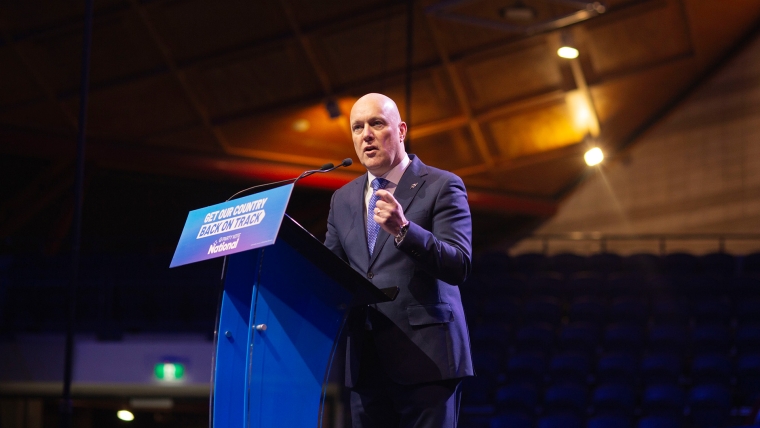
The local government conference in Wellington this week might have been uneventful, had Prime Minister Christopher Luxon not arrived to give councils a swift kick.
Luxon criticised elected officials as fantasists who had burdened council balance sheets with a “laundry list of distractions and experiments” instead of focusing on basic services like maintaining water infrastructure and waste collection.
Councillors needed to stop wasteful spending, return to delivering the basics well, and shouldn’t expect any Central Government funding to help them do so.
“Go line by line, stop the wasteful spending, remove the bureaucracy, focus on better customer service, and end the projects that aren’t delivering value for money,” he said.
This message was poorly received by some councillors and mayors who had already cut budgets and sold assets to fund significant investments in neglected infrastructure.
Other mayors, including former National Party MP Nick Smith, supported the Prime Minister’s call for councils to concentrate their limited resources on essential services.
Ironically, Luxon’s strident speech was undermined the next day by an announcement that his Government would co-fund a $1.5 million street dance competition with Auckland Council.
In his own speech to the conference, Labour leader Chris Hipkins accused the Prime Minister of playing politics and shifting the blame for significant rate increases.
After years of central government pressure to keep rates low, local governments were now dealing with a growing backlog of infrastructure investments, which had led to higher rates bills.
“Lambasting today’s local government leaders, who by and large are working really hard to grapple with challenges they themselves have inherited, is cheap and petty politics,” Hipkins said.
No cap
Sam Broughton, the president of Local Government New Zealand (LGNZ), said it was valuable to hear the Prime Minister’s views but councils were ultimately accountable to their communities, not the central Government.
He was not supportive of Luxon’s plan to consider imposing revenue caps on councils’ non-core spending, as it could hamper much-needed investments or services.
“To artificially hold rates low, or to put caps on just because you want to have a particular number, that could lead to some perverse outcomes," Broughton warned.
Core services have previously been defined as: network infrastructure, public transport, waste disposal, natural hazard mitigation, and recreational facilities such as libraries and parks.
Experimental statistics published in 2019 showed NZ councils’ five largest spending categories were roads, recreation and sport, wastewater, transportation, and town planning.
Luxon proposed creating performance benchmarks for local councils which would use this kind of data to show residents whether their representatives were doing a good job.
He also promised to remove a legal requirement for councils to support the social, economic, environmental, and cultural health of their communities.
Except for the threat of rate caps, the proposed changes were mostly minor tweaks meant to signal to local governments rather than reform them.
A cynic might view Luxon’s speech as an attempt to preempt the political fallout from rising rates. Despite adjustments to income tax brackets, many households will likely face a higher overall tax burden by the end of his term.
Regional deals
Putting politics aside, the more significant policy announcement came from Local Government Minister Simeon Brown, who on Thursday unveiled a framework for regional and city deals.
These are intended to align various regional authorities and central governments around a single plan to boost growth by building infrastructure and making investments in an area.
Councils currently gained little from regional economic growth, Brown said, as most tax revenue went to the central government, leaving ratepayers to bear the costs.
Regional deals could help by allowing councils to deploy user charges, targeted rates, road tolls, and even take a share of GST revenue earned on housing developments.
They would focus on funding tools, regulatory relief, better use of existing resources, and more coordination between local and central governments.
Broughton welcomed the framework as an opportunity to fund long-term plans with something other than just property rates.
The first deal will be chosen in 2025 from a shortlist of five regions, each of which will be invited to pitch their proposal.
However, these deals will not include any cash investment from the Crown. Luxon said there was “no magic money tree” and taxpayers shouldn’t be subsidising ratepayers.
Councillors may want to have money to spend without having to raise rates but “if any of you think those will be the terms of a regional deal, it’s time to come back to reality,” he said.
We welcome your comments below. If you are not already registered, please register to comment
Remember we welcome robust, respectful and insightful debate. We don't welcome abusive or defamatory comments and will de-register those repeatedly making such comments. Our current comment policy is here.