
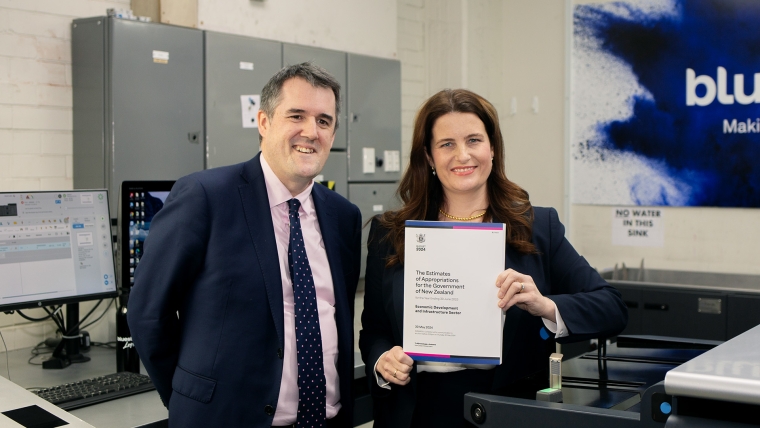
Finance Minister Nicola Willis says she will deliver her next budget on May 22 and it will include legal and regulatory changes, plus the regular spending decisions.
In a tweet, she called it the Growth Budget — breaking from last year’s decision to avoid giving the Budget a name or other decorations and reflecting the Government’s new theme for 2025.
Willis told the Finance and Expenditure Committee the Budget would contain “a number of measures to support economic growth” and address productivity challenges.
“These measures will go beyond the traditional budget focus on spending and savings initiatives. Our government intends to introduce separate legislative and regulatory measures, at the budget, focused on moving barriers that hold back job and wealth creation for New Zealanders”.
Both the Act and Labour parties have this week suggested Willis should tell the Reserve Bank to relax its capital requirements, which many believe are limiting small businesses access to credit.
When asked, Willis wouldn’t comment whether this was one of the legislative reforms she was considering for Budget 2025, as talking about specifics would “take away all the surprise”.
She said including law changes would broaden the scope of budget day and shift focus away from spending as the Government’s main tool for economic development, though it may also reflect a lack of new initiatives to announce.
The Coalition’s first full budget, delivered in May 2024, was a $9 billion reshuffle, made up of $3.2 billion in new spending and $5.8 billion funded through reprioritisation. This money was spent primarily on tax relief and boosting core services’ budgets to cover rising costs.
Budget 2025 will have an operating allowance of just $2.4 billion, most of which has already been allocated to core services. This means only $700 million of new spending is available to ministers without further spending cuts.
Willis said she was working with ministers to decide what new initiatives were worth pursuing and what cuts could be made to fund them. Cabinet had not yet made decisions on either side of the ledger, she said.
Economic stabilisation and forecast growth could not be taken for granted, so the Government would continue its “deliberate and medium-term approach” to balancing the Budget.
“The alternative course is more aggressive short term consolidation, with significant tax increases or radical spending reductions. I don’t think either of those is the right approach as both would limit New Zealand’s growth prospects and the financial security,” she said.
OBEGALx
Barbara Edmonds, the Labour Party’s finance spokesperson, challenged Willis to explain why she had opted to adopt a new fiscal indicator against the advice of Treasury.
Willis introduced ‘OBEGALx’ in the Budget Policy Statement, a new indicator measuring the Government’s income minus everyday spending, excluding the self-funded Accident Compensation Corporation.
Documents released under the Official Information Act revealed that the agency "strongly recommended" against changing the OBEGAL measure, used since 2008, citing concerns it could undermine fiscal credibility, Edmonds said.
However, Willis said Treasury agreed it made sense to exclude ACC's short-term fiscal impact, but advised against changes due to the risk of appearing to hide deficits.
Treasury officials later told the Committee that new Treasury Secretary Ian Rennie was reassessing the review of fiscal indicators and considering changes to the entire suite of measures.
We welcome your comments below. If you are not already registered, please register to comment
Remember we welcome robust, respectful and insightful debate. We don't welcome abusive or defamatory comments and will de-register those repeatedly making such comments. Our current comment policy is here.