
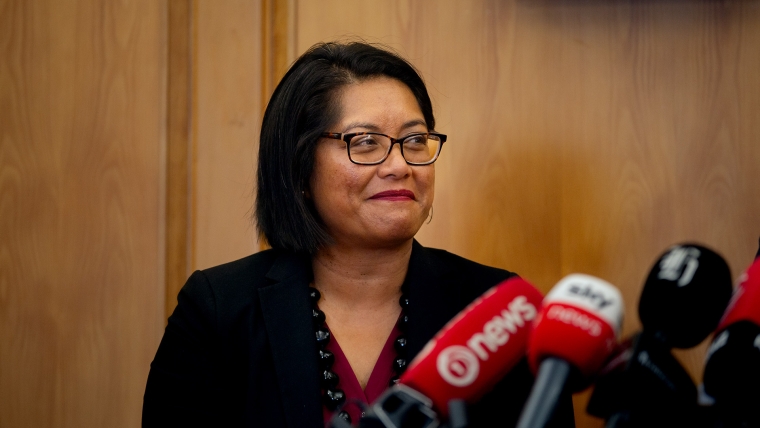
Opposition finance spokesperson Barbara Edmonds says the first announcement from the new Economic Growth Minister should’ve been about helping small businesses access capital.
Nicola Willis, the Minister of Finance and Economic Growth, announced tourists on visitor visas would be allowed to continue working remotely from New Zealand for up to 90 days.
Speaking to reporters at Parliament on Tuesday, Edmonds said the new visa rules were just “tinkering around the edges” of economic policy settings.
“I don't disagree with the digital nomad [visa], allowing people to work here. However, the wider issue is what are the benefits for New Zealand? How does that help our growth?”
“If they actually want to make some changes to productivity growth, I would have expected the first major announcement … from the Economic Growth Minister to be something about access to capital,” she said.
The Government should focus on understanding why banks are lending more to residential property than businesses, and introduce policies that enable more productive lending.
“For most small businesses, they really can only borrow if they have an asset they can leverage off, and generally it's the home,” she said.
“You want to be able to see what risk rules are restricting banks and see how you can change that — which is, kind of, what the select committee inquiry is looking at”.
The ‘yes’ economy
Edmonds said this didn’t necessarily mean instructing the Reserve Bank to relax the capital risk weights it puts on different types of lending, but she would consider it.
“Let’s have a look at the rules. Let's work with the bank to see how businesses can access more capital without having to use a house for it”.
“It was just a surprise that the first major announcement from the Minister was visitor visa tinkering, as opposed to something bigger that will help growth”.
Willis said she was happy to consider changing the Reserve Bank’s risk settings to support access to capital.
“I'm pleased that Labour have joined the party, in which this is a ‘yes’ economy, in which we come up with new ideas. And I have been consistent, in my view, that the Reserve Bank has a critical role to play when it comes to firms accessing capital needed for growth,” she said.
The Government is also looking at other impediments to small businesses' access to capital—including overseas investment rules and tax settings— and the public could expect announcements later in the year.
Own goal
Cameron Bagrie, an economist and director of an advisory firm Chaperon which helps business navigate banking, said New Zealand couldn’t create wealth by trading expensive houses back and forth.
The lack of lending to businesses was primarily due to overcautious Reserve Bank regulations and weak competition in the banking sector. Tackling those two issues would free up access to capital for small or medium-sized businesses.
Over the past five years, the Reserve Bank has introduced higher capital requirements for systemically important banks and set minimum risk weight floors for business and residential lending. This has encouraged banks to lend more on housing because they need to hold less capital on a home lend compared to a business loan.
These stricter rules require banks to hold more capital against business loans than housing loans, likely increasing borrowing costs and reducing access for smaller or higher-risk firms.
Bagrie called these changes an "own goal," saying the sector had just gone through a major economic shock without any signs of trouble. This suggests the rules could be loosened without risking a future financial crisis.
More competition could also encourage banks to lend more to businesses. That’s why the Government should move at “200 miles an hour” to get open banking up and running, he said.
There is only room for a handful of full-service banks in the small NZ market, and so scaling up Kiwibank was unlikely to succeed. But allowing niche open banking firms to enter the market could boost competition, especially in areas like business lending, said Bagrie.
We welcome your comments below. If you are not already registered, please register to comment
Remember we welcome robust, respectful and insightful debate. We don't welcome abusive or defamatory comments and will de-register those repeatedly making such comments. Our current comment policy is here.