
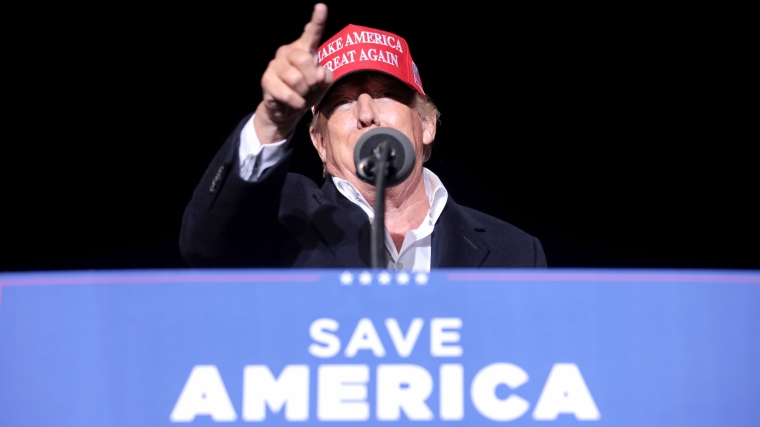
US President Donald Trump says he will impose 25% tariffs on Canada and Mexico and 10% on China, starting Saturday afternoon, New Zealand time.
The sudden move follows months of threats during the presidential campaign, but financial markets had taken the post-inauguration silence as a sign of a more cautious approach.
Reuters broke the story early on Saturday morning which was then confirmed by White House press secretary Karoline Leavitt a few hours later. AP reported Trump as saying he was considering a lower tariff on oil and possibly exemptions for specific goods.
Canada and Mexico have previously said they have prepared retaliatory tariffs and would be ready to use them. However, this would risk a wider trade war which would damage all the economies involved.
John Ballingall, a trade expert at Sense Partners, said the announcement should not come as a surprise as it was “straight out of the Trump playbook”.
“Which is, identify something that irritates him, threaten tariffs as leverage to try to get a deal of some sort, and then if a deal is not forthcoming, go through and impose the tariffs”.
“It was always my expectation that he would move on individual countries first—China, Mexico and Canada—because those are easier tariffs for him to introduce under the US legal system,” he said.
Canada and Mexico are part of the USMCA trade deal, which is set for a routine renegotiation in 2026. Trump may be hoping to use these tariffs to accelerate talks, as well as address his concerns over immigration and drug smuggling.
Ballingall said the key question now was whether these three countries were willing to negotiate or if they would call Trump’s bluff. The signals from Canada, which is gearing up for a contentious election, were that they would retaliate.
“Canadian politicians are not going to want to look like they're kowtowing to America when they're looking to find a successor to Justin Trudeau. That's another complicating factor”.
But the odds of a full-blown trade war were still low. All four countries would be aware of the economic damage tit-for-tat tariffs could do and would want to avoid escalating too quickly.
Tariffs imposed on these countries could create both challenges and opportunities for New Zealand exporters, although Trump’s fast moving policy style would make it difficult for Kiwi businesses to capitalise on any advantage.
“If the US starts introducing tariffs on Canadian, Mexican and Chinese goods, and they retaliate, then New Zealand exports become more competitive”.
Tariffs on Canadian dairy could prompt retaliatory taxes on Californian wine, giving some New Zealand exporters an edge in each market. But the exact impact and duration will be difficult to predict.
“It’s going to require a lot of very careful judgment by New Zealand exporters, not to be jumping at shadows every time there's a new tweet or a new executive order in place,” Ballingall said.
Plus, if a trade war weakens incomes or confidence, then Kiwi exporters could see softer demand despite any price advantage.
The tariff news lifted the US dollar and dragged American equity markets lower. The kiwi dollar jumped initially but soon fell, trading down 0.4% at 56.4 US cents by midday.
In a statement, New Zealand’s Ministry of Foreign Affairs and Trade said it was “aware of the signalling out of the new US administration and officials are closely monitoring”.
We welcome your comments below. If you are not already registered, please register to comment
Remember we welcome robust, respectful and insightful debate. We don't welcome abusive or defamatory comments and will de-register those repeatedly making such comments. Our current comment policy is here.