
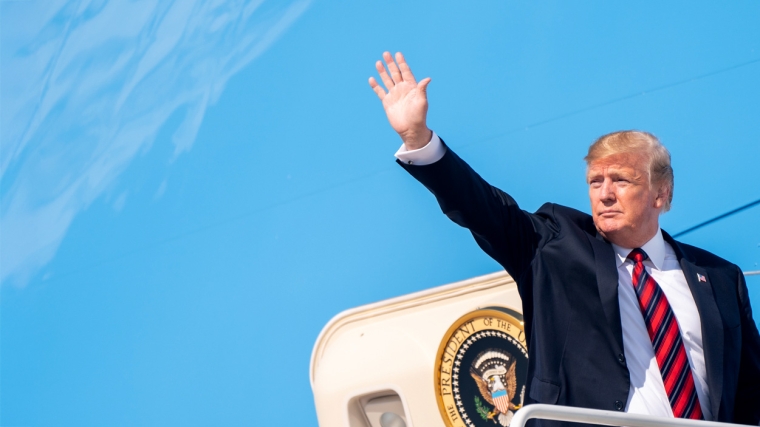
Former president Donald Trump has secured a second term at the head of the United States government after sweeping the swing states and seeing off his Democratic rival.
The race was extremely close. By sunrise, the Associated Press still hadn’t called a winner, but enough votes showed Kamala Harris had lost key battleground states by about two points each.
Meanwhile, Republicans had secured a Senate majority and could still hold onto the House, paving the way for Trump to propel the world’s largest economy further into protectionism.
This means imposing a 10% tariff on all imports, including those from New Zealand, as well as cutting taxes for businesses which produce goods inside the US.
Tim Groser, a former trade minister who served as Ambassador to the US during Trump’s first term in office, told Newstalk ZB that his re-election was “all bad” for NZ trade.
However, he did not believe the former president would be able to implement all of the policies pitched on the campaign trail.
“He will certainly try [but] there are massive problems that he is completely unaware of — I don’t believe for one minute that he can implement the full force of what he is proposing,” he said.
For example, candidate Trump promised to “rip up” the NAFTA trade deal during the 2016 campaign but ended up keeping 85% of it once in office.
It would be “utter madness” to slap 10% to 60% tariffs on intermediate imports, which are used in American manufacturing, as it would dramatically increase prices.
Elections around the world this year have demonstrated that voters despise inflation above all else and will vote a government out of office if it happens on their watch.
The United States’ economic data is the envy of the world, right now, but voters are furious about high prices and blame them on the Biden administration.
Election analyst Nate Silver argued on Twitter there was a correlation between higher inflation and the states that had swung toward Trump, though it may not be scientific.
Checks and balances
Groser’s point was that Trump’s political allies won’t allow him to sabotage their future election chances by reigniting inflation and making everything more expensive.
“Is it positive, hell no! But please keep things in perspective,” he said, speaking about both Trump’s climate and trade policies.
It will be important for New Zealand to get onside with the Trump team and attempt to steer them away from trade policies which might harm its interests, Groser said.
Prime Minister Christopher Luxon joined other world leaders in congratulating Trump on his election victory after the race was called by some news networks on Wednesday evening.
In a statement, he said he was looking forward to working with the new administration and that the NZ–US relationship was “strong and enduring”.
Foreign Minister Winston Peters said ‘the American people have spoken” and also congratulated Trump and his vice president JD Vance.
“New Zealand and the United States are two great democratic, open societies — and our bilateral relationship will continue to go from strength to strength”.
In private, these leaders will be frustrated by Trump’s victory. They had been pivoting foreign policy closer to the United States and asking it to help insulate global trade against China.
That work will continue but the new administration will be less sympathetic to the cause.
Global security could also become more volatile as Russia and Israel reassess their military options with a more friendly face in the White House.
MAGA markets
But it was a happy night for investments associated with Donald Trump. Many financial assets rallied as it became clear he would win the White House on election night.
Bitcoin hit a new record high as he has promised not to impose regulations on the cryptocurrency sector, which has thrived without complying with traditional rules.
Shares in Elon Musk’s Tesla surged in after-market trading and Trump’s own listed media company climbed 10%, while US stock futures rose more generally.
Bond yields rose as investors predicted big deficit spending and tariffs adding to inflation pressure in the US economy. These higher interest rates also pushed the US dollar higher.
But this all bad news for the Kiwi dollar which tumbled 1.6% when the first election results were reported on Wednesday, although it has since recovered half that loss.
Other assets exposed to tariffs also fell, most notably the Mexican peso and the Hong Kong stock market both dropped about 3% as investors priced in higher trade costs.
Trump is back and we have to live with it, for better or for worse.
Additional reporting by Ella Somers
We welcome your comments below. If you are not already registered, please register to comment
Remember we welcome robust, respectful and insightful debate. We don't welcome abusive or defamatory comments and will de-register those repeatedly making such comments. Our current comment policy is here.