
Donald Trump’s trade policies will add to global inflation pressures but won’t threaten financial stability unless retaliation spirals out of control, according to the Reserve Bank (RBNZ).
Swing states with manufacturing-based economies, such as Michigan and Wisconsin, helped the former US President win a second term on Wednesday night.
This may be partly due to his promise to use tariffs to bolster American manufacturers and add costs to Chinese competitors, which have taken jobs away from these states.
Whether or not his plan will create more manufacturing jobs and grow the US economy is up for debate, but it is almost guaranteed to make the global economy less efficient.
Global central bankers warn that trade barriers will drive inflation by pushing up prices across the board. Tariffs raise the cost of imports, making them more expensive than domestic goods and contributing to higher overall prices.
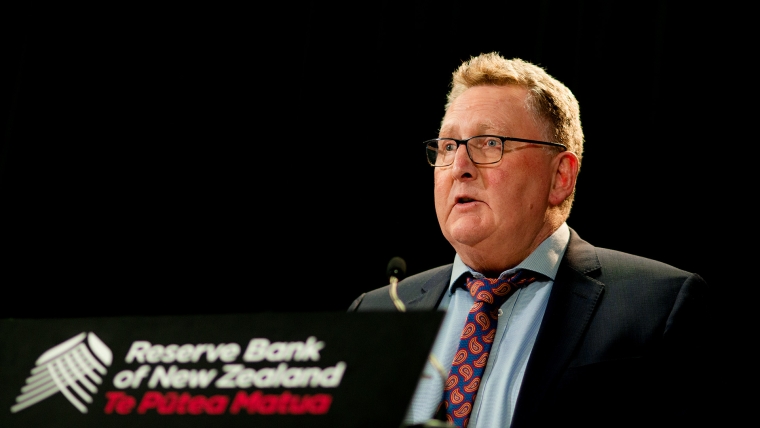
During a briefing on financial stability, RBNZ deputy governor Christian Hawkesby told Parliament independent central banks could easily manage this extra inflation pressure.
The key economic components of his platform were higher tariffs on imports, lower taxes within the US, less regulations, and lower levels of immigration, he said.
“We think that [Trump’s policies] are, on the margin, a higher inflation package than the alternative but one that’s very much manageable in the world of operationally independent central banks”.
The threat to NZ’s financial stability would only occur if these policies prompted retaliation from China and others which spiralled into a trade war — or worse.
“There are risk scenarios that rely on whether there is tit-for-tat escalation, who does what in response, and whether things broaden out from there,” Hawkesby said.
“With our financial stability hats on … we ensure that we've got a financial system that's resilient, not just for the central case, but for outlier cases that can happen”.
Dark corners
The RBNZ's recent stress test asked banks to identify scenarios that might lead them to breach their capital requirements. Most banks used a geopolitical shock to simulate the severe economic conditions that could cause this.
Military or economic conflict has become a growing concern for policymakers and financial institutions over the past few years. Any flare up between Russia and NATO, China and Taiwan, or Israel and Iran could draw in the United States and upset global trade.
When policymakers speak coyly about ‘geopolitical risks’ they are usually referring to some sort of fight between the United States and China, whether direct or indirect.
NZ First MP Mark Patterson, who is also a junior minister, offered a hint as to how some in the Coalition Government might view the new Trump administration behind closed doors.
He told the RBNZ officials they were being too “sanguine” about the “extraordinary circumstances” facing the global economy.
“Even with the US fiscal situation, you’ve got $30 trillion dollars worth of debt, probably got a tariff regime not seen since the 1930s, and two hot wars in the Northern Hemisphere; are you sure we've got our heads around how these secondary effects are going to impact us,” Patterson asked.
RBNZ Governor Adrian Orr said central banks around the world were taking these risks very seriously and asking the financial sector to prepare for a possible shock.
“We have passed, and may never see again in our lifetimes, peak global trade,” he said. Open markets have been replaced with “tit for tat protectionism” and 1980s style industrial policy.
“That’s why we are doing these stress tests, to ask how that will impact our financial system, and that can take you to some dark corners. Our job is to make sure we are as resilient as possible to those dark corners,” Orr said.
We welcome your comments below. If you are not already registered, please register to comment
Remember we welcome robust, respectful and insightful debate. We don't welcome abusive or defamatory comments and will de-register those repeatedly making such comments. Our current comment policy is here.