
In 1987, the Fourth Labour Government was worried enough about a nuclear war with the Soviet Union that it commissioned a study into how the fallout might affect New Zealand.
“Although the likelihood of nuclear war remains small, it is still high enough to justify concern, given the severity of the impacts it would have,” the authors wrote in an introductory chapter.
A survey from two years earlier had found 82% of New Zealanders were “strongly of the opinion” that some plans should be made for how to cope in the aftermath of nuclear war.
And so, the Government allocated $125,000 from the reparations paid by France for sinking the Rainbow Warrior to begin that process. The resulting report made the front page of the Auckland Sun under the alarming headline: “NZ helpless in a nuclear war”.
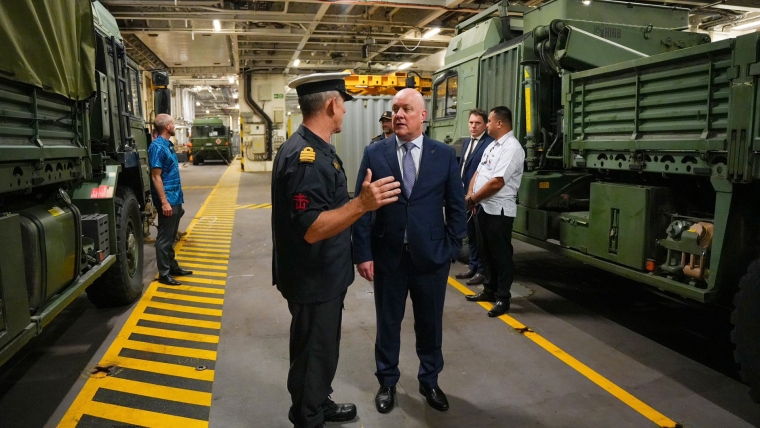
One plausible reader of that news story would have been a 30-year-old solicitor named Judith Collins, who now serves as New Zealand’s Minister of Defence.
Speaking in Parliament this Wednesday, the now 65-year-old politician reflected on that era in the context of her recent trip to meet with NATO in Belgium.
“Two days before that meeting, China launched an intercontinental ballistic missile that ended up in the nuclear-free zone of the South Pacific. That is for the first time in 44 years. Things are changing,” she said.
New Zealand needed to be aware that it was “part of the world” and could be in the sights of that ballistic missile if the worst were to happen.
“I mean, I grew up in the Cold War, and this is scarier than that—it's that bad,” she said.
“People understand that everything is changing. We do not live in a benign strategic environment; I think that history will show us that we never really did.”
New Zealand’s invitation to NATO reflects the organisations’ growing perception of China as a threat and its interest in finding allies in the ‘Indo-Pacific’ — a triangle of territory which stretches from India in the west, to Japan in the east, and NZ in the south.
Mis-priced confidence
It is hard to say how serious the risk of war really is, but it is enough to worry Judith Collins and another of her contemporaries, 62-year-old Adrian Orr.
The Reserve Bank Governor has been attending the IMF’s annual meetings in Washington DC this week where these security concerns have been one topic of conversation.
The IMF has said it is concerned about the “disconnect” between measures of geopolitical risk and financial market risk, as the two have been drifting apart in recent years.
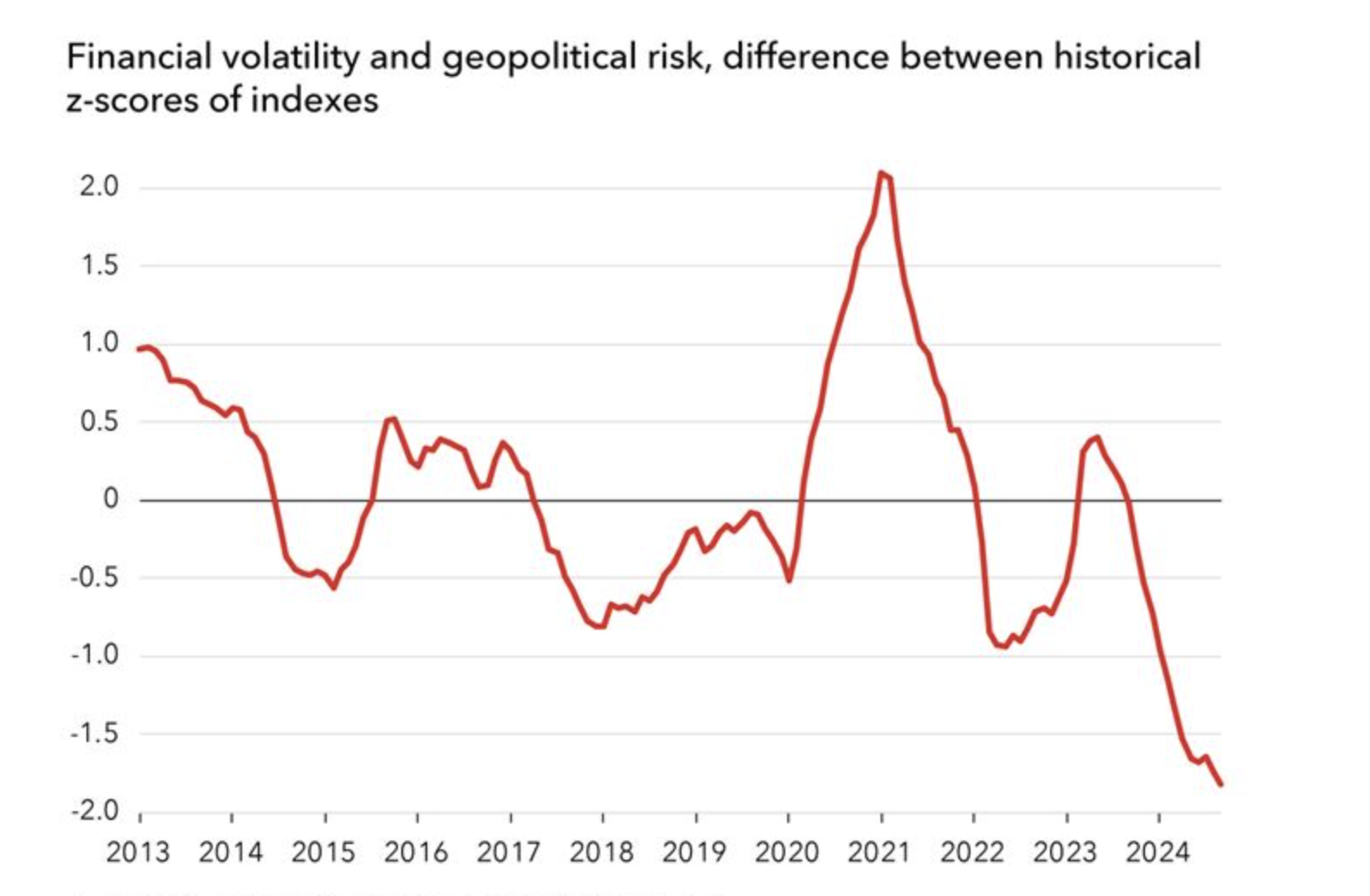
Orr told CNBC he shared these concerns and, as a central banker, was aware of the financial stability risk it could pose to the global economy and also New Zealand.
“The geopolitical tension, you know, there's not much we can do about it, other than be as diversified as possible in trade and as resilient as possible and flexible in our financial system.”
“But I do worry that a lot of asset prices at the moment are totally mispricing some of these geopolitical tensions and threats,” he said.
Orr was particularly worried about global equity prices—rather than fixed income or currencies—which were priced for the “perfect run” while risks were “underpriced”.
Orr was also critical of a possible Trump presidency which could see even more protectionist trade policies being implemented.
“It is poor, bad economics and people will suffer,” he said. “For us in New Zealand, 30% China dependent and [70%] the rest of the world, if we get stopped out of one of those because there's some angry fight in a far distant country; it's bad”.
A quick decline in listed asset prices might be relatively low on the list of problems for New Zealanders in the case of a hot war kicking off in the Indo-Pacific.
The Covid-19 pandemic demonstrated how dependent the country is on these shipping routes which could easily be choked off in any confrontation with China.
Short of an actual war, even an escalation of the ongoing trade war could cause costs for New Zealand’s export-oriented economy.
Policy pivot
The still-new Coalition Government believes the best way to prepare for this possible crisis is to strengthen trade links with the rest of Asia and its defence ties with the United States.
Prime Minister Christopher Luxon described this to the Economist Magazine as a foreign policy “reset” which has been driving his frequent visits to South East Asia.
Diversifying diplomatic and trade links away from China is uncontroversial and has bipartisan support, but the military aspect of this reset has been more contentious.
New Zealand effectively broke off its alliance with the United States in 1986 when it refused to allow US nuclear vessels into its waters and ports. It became a quasi non-aligned country.
In 2008, it signed a free-trade agreement with China which significantly boosted exports and incomes. NZ was sometimes described as being China’s “best friend in the west”.
Critics of Luxon’s foreign policy pivot believe these western military alliances may be unnecessarily provoking conflict with China and eroding NZ’s independence.
Some would prefer New Zealand took an approach more like Singapore, which aims to be a neutral friend to both superpowers.
Despite its neutrality, Singapore has a powerful armed forces. This is something New Zealand lacks, due to decades of underinvestment and somewhat pacifist culture.
Collins’ cold war speech in Parliament was likely about laying the groundwork for a big lift in capital spending in future budgets as the Defence Force updates its kit for potential future assignments and/or conflicts.
Foreign Minister Winston Peters told Newsroom he was bidding for an increase for both diplomatic and defence spending in Budget 2025.
“People, when you talk to them, look over your shoulder in many ways … [at] what’s behind you, and if it’s just talk, that’s a very difficult conversation position,” he said.
Treasury documents showed Defence was requesting $4.4 billion of capital investment in the next budget, as of March, although noted this was likely to change as a review was underway.
We welcome your comments below. If you are not already registered, please register to comment
Remember we welcome robust, respectful and insightful debate. We don't welcome abusive or defamatory comments and will de-register those repeatedly making such comments. Our current comment policy is here.