
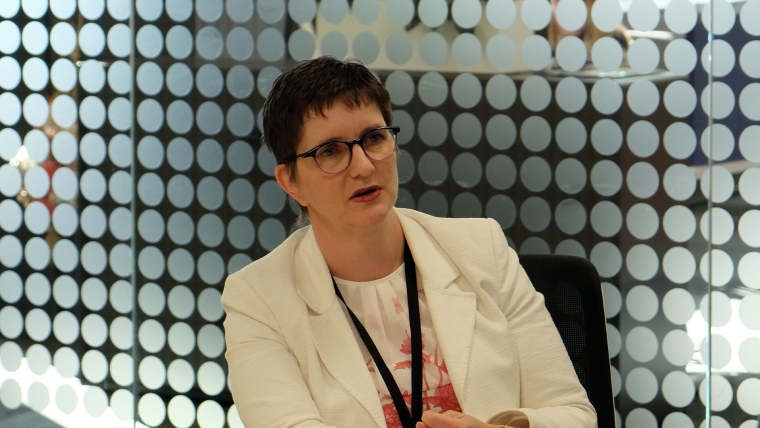
Sitting behind the country's hospital wait times, primary care access and infrastructure upgrades is a complex policy machine. The Ministry of Health is at the centre of some of the Government’s most consequential decisions - advising the Government where billions in Vote Health funding should go. But as Director-General Audrey Sonerson tells Interest.co.nz, allocating money is only the beginning.
Audrey Sonerson leads the Ministry of Health at a time when expectations are high, resources are stretched and every funding decision is under scrutiny.
New Zealand's Budget gets split into various 'votes', and Vote Health - the health sector's share of the Government's funding pool - is significant.
For the 2025/26 year it was $31 billion - just over half of that going into Crown Entity Health NZ's hospital and specialist services, a third to primary, community, public and population health services, about a tenth into infrastructure and the rest for Pharmac, hauora Māori services and to keep the Ministry of Health running.
Problems in health are constant and can largely be grouped into issues around patient care, workforce issues and creaking infrastructure. Meanwhile, two major breaches have hit the health sector just this year, Manage My Health faced a largescale privacy breach and the more recent MediMap breach.
While a common perspective on the health sector is that it can suck up as much money as is thrown at it, Sonerson told Interest.co.nz while that could be the case, "there is a limit to what they can actually then put on the ground to deliver services".
'How do those resources get turned into services?'
Interest.co.nz asked Sonerson how - when multiple funding options are put in front of her - she decides where to sign off on where the money goes.
Sonerson said one of the important aspects of policy and budgetary advice is, "how do those resources get turned into services?"
"That's about understanding and ensuring we have the infrastructure, both physical and digital, the models of care, the workforce, all those different things that can actually deliver the service that government wants for New Zealanders, because if you just put money in, it doesn't necessarily turn into outcomes."
Decisions around where the funding goes is based around policy objectives, she said.
"The Government's objectives, things like ensuring Health NZ's focus on the basics and ensuring that its core delivery is strong, we've got a priority around health infrastructure... then you've got other government objectives around things like primary health care and improving access and timeliness for patients to primary care when they need it, elective surgery, emergency department, wait times.
"So if you think about those kind of broad government objectives, the process is all about - how do we support those objectives that the Government's trying to achieve, and how do we make sure that the resources are going into those things?"
As to how workforce funding and wage rises play into decisions - a major problem for Health NZ grappling with large outstanding nurse and senior doctor collectives, Sonerson said while the money that Health NZ receives has a cost uplift in it, the "exact mix" for the workforce is in the hands of Health NZ.
Who is Sonerson?
Sonerson, who previously led the Ministry of Transport, was named the new director-general of Health in April last year following the abrupt resignation of Diana Sarfati - who stood down halfway through her term. It was a period of significant upheaval in health - Margie Apa had just resigned as the chief executive of Health NZ, and Simeon Brown had recently replaced Shane Reti as Health Minister.
Sonerson said it was important she was clear about what the role of the Ministry is and its relationship with Health NZ.
"My focus was very much on ensuring that the senior leadership and the people who work here understand post-health reforms, actually the Ministry has a different kind of a role and approach and it needs to be the best it can be for New Zealanders."
Sonerson's first job was at the Ministry of Health as an analyst. It was a time when District Health Boards were being established and Sonerson was part of that team working on funding arrangements.
"Similar questions, but obviously a very different context, when you've got 21 DHBs and national funding sitting in the Ministry, versus now where you've got almost all delivery out of Health NZ and then a ministry that's that's very much that kind of policy, regulatory, monitoring functions."
Sonerson thinks of the Ministry of Health and Health NZ relationship as "a constructive tension" - "they need to be pushing us around as well on policy and regulatory settings that can help them".
"And we need to be acting on behalf of the Minister and the Government of the day on what they want Health NZ to achieve. As the policy, regulatory part of the system, you're effectively setting the rules of the game."
Stress, criticism and being on call all day and night
"You have to have perspective," she said. "And one of the ways you get perspective is by having a full and rounded life."
Sonerson trail runs and does karate.
"If you're in a setting like that, you can't be thinking about work. You don't want to get honked on the nose, being able to actually put some of that stuff away is quite important."
"There'll always be criticism and you have to evaluate that criticism and think, ok, where is that person coming from? What is the constructive part of that criticism? Is it actually they've got a different objective? Or actually, what's underlying that, and what do I need to understand them better?"
"None of us are superhuman," Sonerson said, adding there are nights lying in bed thinking about an issue.
But she loves a challenge.
"In all of these big jobs, particularly across the public sector, one of the things you do learn to do is to be able to focus on the thing in front of you. When you work hard, you achieve some things - you celebrate those things and then you move on to the next thing."
We welcome your comments below. If you are not already registered, please register to comment
Remember we welcome robust, respectful and insightful debate. We don't welcome abusive or defamatory comments and will de-register those repeatedly making such comments. Our current comment policy is here.