
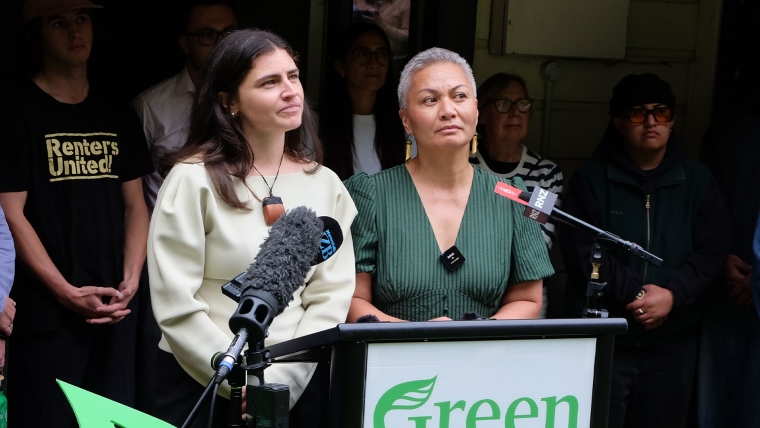
The Green Party says power has been "concentrated in the hands of shareholders and board rooms for too long" and "it’s time our energy system stops only working for the few and starts working for all of us."
This comment comes as the Greens release their election year energy policy, which includes creating a publicly-owned entity called Kiwipower in an effort “to deliver affordable, secure renewable power that the market has failed to build.”
Announcing their energy plan on Monday at the Dunedin Gasworks Museum, the party is also proposing:
- Zero-interest clean energy loans so homeowners can install solar and batteries
- Establishing a renters’ right to solar and progressing regulation to legalise plug-in solar
- Expanding the Government’s Warmer Kiwi Homes programme to cover more upgrades
- $200 million investment into community energy projects - this would be funded by reallocating subsidies for fossil fuel companies to these projects
- $80 million investment into renewable energy for Māori housing
- Making sure solar is installed on more than half of all public homes within four years
“Affordable bills should not be a luxury. A warm, dry home powered by clean energy should be within everyone’s reach,” the Greens say.
Kiwipower
The Green Party wants Kiwipower to have two main functions.
The party says: “Kiwipower will invest in new renewable generation, with a primary focus on renewable firming capacity – geothermal, batteries, demand response, biomass and pumped hydro.”
“These are the types of backup power we need and the private market has failed to fill, because high prices serve the big players’ interests."
“By expanding renewable firming, Kiwipower will help solar and wind generators enter the market and invest, increasing competition and putting downward pressure on prices.”
Kiwipower will contract firming capacity such as hydro storage, the Greens say, including from the big power companies.
“It will then make that capacity available to independent generators, retailers and energy users, directly or through markets at fair, affordable, and transparent prices.”
“Kiwipower will secure capacity and open it up to the rest of the market on fair terms,” the Greens say.
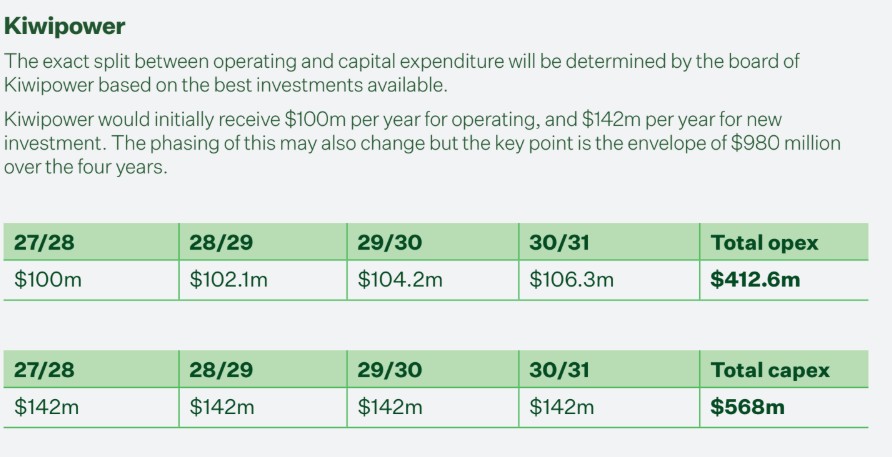
Kiwipower would be funded through a four-year $980 million appropriation - with $100 million per year for operating and $142 million per year for new investment. This would be paid by the Greens’ Super Rich Tax.
Loan scheme
When it came to the party’s loan scheme proposal, the Green Party says its broad-based loan would be backed by central and local government.
“This scheme achieves cheaper finance than typical floating mortgage rates (around 2-2.5 percentage points lower), over the long term (15-30 years). Our policy has Government subsidising the remaining interest rate to 0%.”
The Greens say “some borrowers will have the option to defer repayments until property sale, while loans will be paid off over time via a separate levy.”
Central government would be a 20% shareholder, while participating councils and the Local Government Funding Agency would split the remaining 80%.
“The structure minimises impacts on Crown and council balance sheets because no partner holds more than 20% and loans are tied to the rateable property,” the party says, and it estimates the scheme could be up and running in as little as six months if elected into Government.
In terms of the cost of subsidising zero-interest loans, the Greens say this comes from a model by group Rewiring Aotearoa.
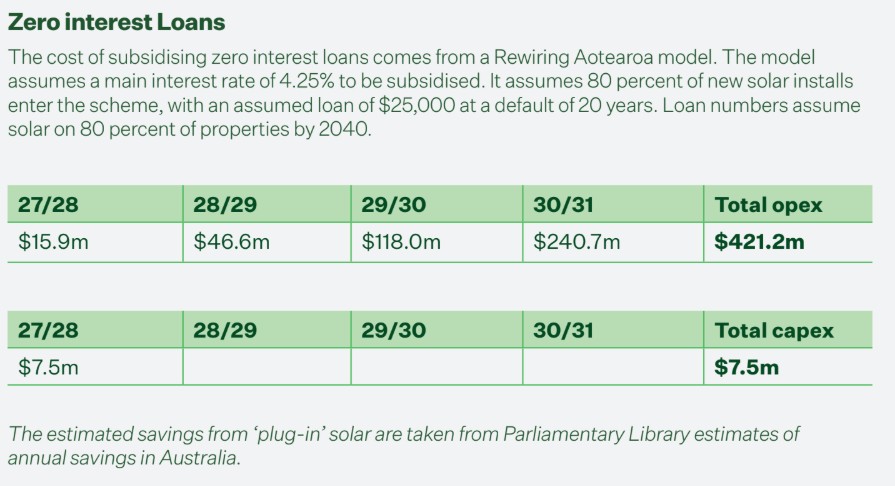
“The model assumes a main interest rate of 4.25% to be subsidised. It assumes 80% of new solar installs enter the scheme, with an assumed loan of $25,000 at a default of 20 years. Loan numbers assume solar on 80% of properties by 2040.”
The scheme would have a total operating cost of $421.2 million over four years and a capital expenditure of $7.5 million in 2027/2028.
‘Putting power directly in the hands of our communities’
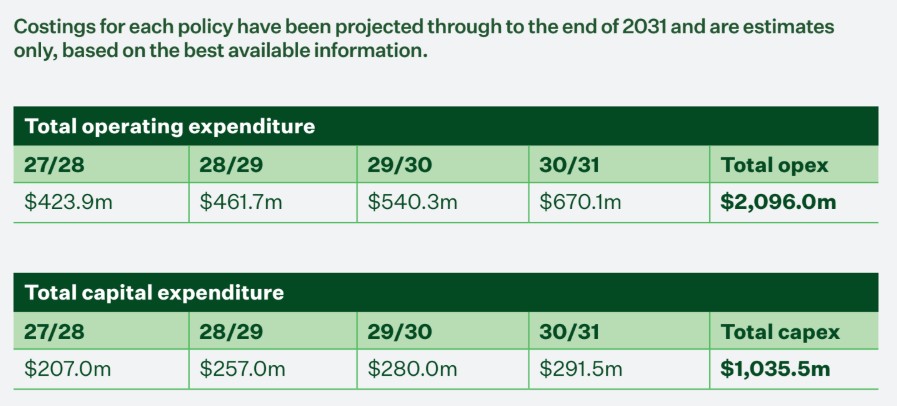
The Green Party says costs for each energy policy have been projected through to the end of 2031 and are estimates only.
They say the total operating expenditure for their energy plan is $2.096 billion and its total capital expenditure is $1.0355 billion.
Greens co-leader Chlöe Swarbrick says: “Generations of New Zealanders built our energy infrastructure, and two National Governments have sold it off for parts, driving up bills and reducing New Zealanders' power and control."
"The Greens will fix that by investing in putting power directly in the hands of our communities.”
"Hope is not a plan. Successive Governments, including and especially this one, have failed to plan for a renewable energy transition to give certainty, stability and resilience to households and industry," she says.
“Today, the Greens are proud to launch the plan our country needs, for abundant, affordable renewable energy, for all of us."
Greens co-leader Marama Davidson says the plan puts ownership back in the hands of communities.
On the $80 million Māori housing investment, Davidson says tangata whenua are two to three times more likely than the general population to face energy hardship.
"This is about rangatiratanga over energy, and it is part of our enduring commitment to Te Tiriti o Waitangi."
Swarbrick says: "When the market won't deliver affordable, secure, renewable power, a responsible Government should step in. We can pay for all of this by making corporations and the super-rich pay their fair share.”
"A warm, dry home powered by clean energy should be within everyone's reach. That is the country we can build, and this is how we do it.”
'There is a need to shake up New Zealand's energy market'
Asked about the Green Party's energy policy, Labour leader Chris Hipkins says it's clear both Labour and the Greens believe renewable energy is the way of the future.
"There is a need to shake up New Zealand's energy market. It's not delivering what we expect," Hipkins says.
"The Greens can speak to their own policy but I will be very clear here. While we might have common ground in some areas, we're absolutely opposed to the implementation of a wealth tax and we will not support that in order to pay for energy policy."
Hipkins says Labour has further energy policy to come, focused on the market and "the need to reform the market".
When asked about the Green Party's energy policy at a post-Cabinet press conference, National leader Christopher Luxon told reporters: "I don't pay a lot of attention to Green Party policy."
We welcome your comments below. If you are not already registered, please register to comment
Remember we welcome robust, respectful and insightful debate. We don't welcome abusive or defamatory comments and will de-register those repeatedly making such comments. Our current comment policy is here.