
By David Mahon*
Grasshopper, if a man dwells on the past, then he robs the present.
But if a man ignores the past, he may rob the future.
The seeds of our destiny are nurtured by the roots of our past.
- ‘Master Po’ from the 1973 television series Kung Fu
New Zealand and Australia’s trade with China remains strong but, increasingly, can no longer mask deteriorating political relations with Beijing. Both nations appear oblivious to the idea that treating China as a security threat may have some bearing on their trade partnerships. In the last three years, Canberra has signed treaties with Papua New Guinea, Nauru, Vanuatu, Tuvalu, and most recently the Ocean of Peace Alliance with Fiji, which carries explicit mutual defence obligations. All reinforce economic and security ties, while constraining the Pacific island nations’ strategic and infrastructure relationships with China.
The US military is retreating incrementally from the Asia-Pacific while pushing Asian partners which have helped blockade China since the 1950s — Japan, South Korea, the Philippines, and Taiwan — to continue its containment mission, now largely at their own risk and expense.
Washington has a propensity to retreat in the face of intractable opposition since being fought to a stalemate in Korea in 1953, defeated in Vietnam in 1975, Afghanistan in 2021, and now struggling to extract itself from the war it is losing with Iran. Asia-Pacific nations have ample reasons to doubt American dependability in the future. There have been few magnanimous great powers in history; most act in their own ruthless self-interest. The US is no exception.
The USS Abraham Lincoln aircraft carrier strike group, with its attendant destroyers, cruisers, and submarines, was deployed away from the Asia-Pacific to the Middle East in January of this year, followed by THAAD and Patriot missile defence systems in March. These missile systems, central to US power in North Asia, are unlikely to be replaced in the foreseeable future.
The signatories to the Ocean of Peace Alliance are conflicted. The recent Australian treaties with Pacific nations rely on implied future US strategic underwriting to have any substance. The treaties are intended, in part, to keep the US engaged in the region, but also to serve as an alternative shared security architecture should the US leave entirely.
Ballistic diplomacy
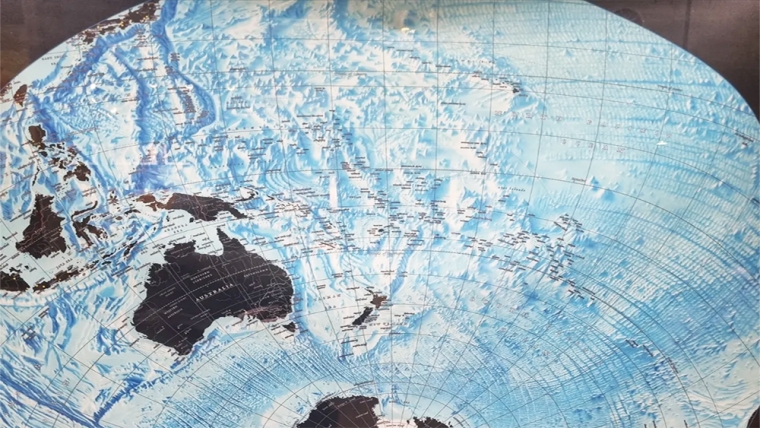
On July 6th this year, China test-fired a ballistic missile from a submarine, landing 7,300 km away in South Pacific international waters near Fiji. China wanted to demonstrate to the US that it had remote nuclear strike capability should the mainland be attacked, but it also wanted to signal its displeasure at the Ocean of Peace Alliance treaty signed that day. Canberra and Wellington emphasised the latter motive as the most egregious; for Beijing, the former was far more important.
‘It is fine for New Zealand and Australia to take stances against China; Australia in particular matters a lot economically to China. We have little power. We need economic and development opportunities, but both sides keep forcing us into strategic positions we can’t influence much or change. China has not helped us with this recent missile test, as it has given Washington and Canberra leverage to force us to choose their side.’
South Pacific trade official
America’s global economic demise has been exaggerated, for it will likely remain an economic hegemon in most regions, except Asia, for many years to come. The US’ military withdrawal from all spheres but its own is, however, irrefutable. President Trump’s seemingly inevitable loss to Iran has come at great cost to the Iranian people, but also to the US’ arsenal and Washington’s prestige regionally and globally. This will only accelerate America’s military withdrawal from the Asia-Pacific.
In time, Japan may acknowledge its mounting strategic isolation, and the Philippines may recognise that it has been cast more as a strategic US pawn than a respected ally, which may lead them to consider signing accords with Beijing. South Korea’s position is more complex, as it faces the threat of conflict with North Korea with little chance of rapprochement with Pyongyang, let alone reunification in the future. Beijing and Moscow do not want a US suzerain state on their borders, so both oppose Korean reunification.
Washington’s recent economic, trade and military co-operation agreement with Jakarta is, for Indonesia, more a marriage of strategic convenience than a commitment to a trustworthy partner. Indonesian President Prabowo Subianto flew to Moscow the same week he signed the informal agreement with the US.
China is challenging, and in many markets around the world, surpassing the US and the European Union through commercial competition, innovation and corporate diplomacy, not the threat of military coercion or the Trump administration’s ‘deal-making’ that is more akin to a protection racket. Ironically, China is outcompeting the capitalist West through the West’s own basic market principles.
In the realm of hard power, Chinese bases on rocks and reefs in the South China Sea and its expanding military naval capabilities were intended to weaken the effective, decades-long US military siege, rather than subjugate its neighbours. In this, China is succeeding. At times, Beijing has overreacted in dealing with territorial disputes in its region and would benefit from more measured responses. The idea of an imminent Chinese invasion of Taiwan is, nevertheless, little more than a phantom reflecting Western powers’ continued underestimation of China’s pragmatism and instinct to preserve its own economic selfinterest, which would be severely harmed by any major armed conflict.
Chinese, ‘go back to your own country’
In July in Parliament, New Zealand Foreign Minister Winston Peters told Lawrence Xu-Nan, a New Zealand opposition politician of Chinese origin, to ‘go back to [his] own country.’ Later, Peters said of Xu-Nan (who had immigrated to New Zealand as a child in 1994), ‘he’s only been here for five minutes and can’t even speak the language properly.’ Prime Minister Christopher Luxon and other government politicians have noted Peters’ comments were racist, but declined to hold him to account with any real consequences.
The silence of New Zealand’s business community in the face of Peters’ racist comments translates to a form of complicity, particularly from those who trade with China.
Across the Tasman, Australian politician Pauline Hanson, leading a similar political party to Peters, has been fomenting racial disharmony, decrying the fact that Chinese is being taught and spoken in Australia as a ‘growing language problem,’ and questioning why Canberra allows the Chinese Government to own Australian assets.
Both Australian and New Zealand societies still echo the racial attitudes of their shared colonial histories to varying degrees, from their evolution from British colonies to sovereign nations, having displaced and oppressed their native peoples whom they saw as inferiors.
‘Beijing has long understood Peters’ position on race, and on us in particular. We know he represents a minority view, so can discount him to a degree. What disappoints me is the extent to which the majority of New Zealanders, who appeared to me to be tolerant and respectful of other cultures, do not stand up to people like him. He even insults his own Māori people as if he was not one of them. I suppose there is a bit of MAGA in many Western political cultures these days.’
Retired Chinese trade official
Sheltered for almost two centuries by the British, and then by the American Empire after the fall of Singapore in 1942, New Zealand and Australia have not yet worked out how they will deal with what they perceive as their coming abandonment by Washington. They also have yet to understand how to relate to the burgeoning regional economic hegemon, China.
Both economies have grown significantly from their trade with China, while paradoxically increasing their strategic dependence on Washington, despite President Trump’s random tariffs against them. In Australia’s case, the tariffs ignore its trade deficit with the US. The Albanese administration has at least engaged with Beijing consistently, with the Prime Minister demonstrating a degree of respect for and good intentions toward China.
New Zealand was once a fairly deft practitioner of the art of non-alignment, maximising its limited political agency through an independent foreign policy, well-crafted diplomacy, and references to international law whenever it saw its own interests marginalised. Over the last three years, New Zealand has been toying with the idea of deeper security ties with Australia and the US, including consideration of joining AUKUS Pillar 2. After the signing of the Ocean of Peace Alliance between Canberra and Suva, Prime Minister Luxon declared he was also considering joining the defence alliance.
Wellington’s distancing from China has been happening for almost a decade, through a period in which China has become an increasingly important arbiter of New Zealand’s prosperity. This has been profound during the term of the current New Zealand Government, which has drawn New Zealand closer to Washington in security matters without reference to the consent of the New Zealand people, weakening New Zealand’s sovereignty. The Australian Government too has denied the Australian people a chance to choose whether their country participates in the AUKUS pact. At least in Australia, there is a vociferous, although limited, public debate on these issues, which appears mostly lacking in New Zealand.
In both countries, Asian immigration in recent generations has changed demographics and led mainstream society to at least acknowledge the importance of Asia, and the fact that New Zealand and Australia are part of the Asia-Pacific, with unique identities that derive from this region. Perhaps this Asia-Pacific identity, combined with the robustness of longstanding democratic institutions, independent judiciaries, and press freedoms can help combat rising xenophobia.
In clinging to the diminishing prospect of US altruistic leadership in the region, New Zealand, Australia and smaller Pacific nations do themselves a disservice, in that they must determine their own way forward. To the extent that allying with the US means taking security positions against China, their relationships with Beijing will also suffer further. It would be better for Pacific nations to strive for the non-alignment and collective regional interest that, historically, they have often achieved.
*David Mahon is the Executive Chairman of Beijing-based Mahon China Investment Management Limited, which was founded in 1985. This Briefing is here with permission.
We welcome your comments below. If you are not already registered, please register to comment
Remember we welcome robust, respectful and insightful debate. We don't welcome abusive or defamatory comments and will de-register those repeatedly making such comments. Our current comment policy is here.