
By Chris Trotter*
New Zealand's biggest problem is the one it has created for itself. For the best part of a century New Zealanders were celebrated as policy trailblazers. From industrial conciliation and arbitration to women’s suffrage in the 1890s, to the Social Security Act of 1939, and the no-fault accident compensation scheme of the 1970s, the citizens of New Zealand took pride in their country’s reputation as “the social laboratory of the world”.
The mood changed, however, in the 1980s. From being the social scientists in white coats, the perception began to grow that New Zealanders had become lab rats. Experimentation, formerly perceived as “a good thing”, began to be coded as dangerous. More and more politicians were concluding that offering the electorate bold and transformational change was the height of folly. When the voters start reading promises as threats, then it’s time to stop promising.
The cause of this critical shift in voter perception was the nine-year period of radical transformational change which began with the Fourth Labour Government in 1984 and drew to a close under National in 1993 with the passage of the MMP referendum.
That bold experimentation acquired a bad name in this period was largely due to the fact that both “Rogernomics” and “Ruthanasia” were unleashed upon the country without either of the major parties clearly signalling their policy intentions before the votes were cast and counted.
If these ideas are so good, many voters demanded to know, then why did Labour and National not trust the voting public to recognise their merit?’ Why run on promises of “consensus” and “restoring the decent society” when both major parties were well aware that their true policy agenda would deliver neither?
The growing feeling that New Zealand politics had entered a period of institutionalised bad faith was reinforced by the “Tina doctrine”. (Tina standing for “there is no alternative”.)
That ominous phrase confirmed for many New Zealanders that they were being steered without their consent into very dangerous political territory. If the economic “experts” held that no course of action (other than the course they had already prescribed) was either desirable or even possible, then what would become of democracy?
If political parties could no longer debate and decide upon the policies put forward by their members with the slightest prospect of them being accepted and enacted by the domestic and international “powers that be”, then what purpose did party members serve beyond canvassing door-to-door, erecting billboards, and distributing pamphlets?
Small wonder that the membership of New Zealand’s two largest parties, once measured in the hundreds of thousands, plummeted to the low tens of thousands. There is a world of difference between being the mistress of one’s own house, and serving as the masters’ handmaid.
The consequences of this dramatic reduction in the number of New Zealanders willing to participate in electoral politics were nothing if not predictable. When it became clear that the transmission lines between the major party organisations and their MPs had been severed beyond repair their respective memberships split.
Those who opted to remain within the hollowed out holders of the brands “Labour” and “National”, rather than join NewLabour/Alliance, NZ First, or ACT, understood that their parties were now institutions dedicated primarily to identifying and recruiting potential MPs. The maintenance of a competent pool of volunteers experienced in triennial on-the-ground campaigning, while important, had ceased to be crucial. Political parties were professionalising. Enthusiastic amateurs no longer needed to apply.
The hollowing out of New Zealand’s two largest parties was made considerably worse by the internal political impact of MMP. The Party List more-or-less guarantees ideological conformity and political docility. Getting along by going along has, accordingly, become the norm. Standing out from the crowd (as opposed to standing alongside it) when the Party List is being drawn up is not a winning strategy.
Nothing argues for unreliability more strongly in either major party than the serious expression of doubts about the wisdom of persisting with the neoliberal experiment. That a succession of global and domestic crises has exposed the economic, social, and moral failures of neoliberalism may be no more than the truth, but on the not unreasonable grounds that acknowledging these failures would likely bring the entire neoliberal regime crashing down, it remains unsayable.
Is it any wonder that the latest batch of opinion polls shows the combined support for the two major parties falling to a risible 59 percent of the electorate? National and Labour both remain tightly tethered to the economic assumptions of the past 40 years.
In Labour’s case, that allegiance made it necessary for Prime Minister Chris Hipkins to countermand the carefully nurtured plan of his Finance Minister and Revenue Minister. Grant Robertson and David Parker had jointly developed a fiscal strategy that would have shunted Labour off the neoliberal track so dramatically that it just might have gone on to win the 2023 general election.
Hipkins’ “Captain’s Call” cancelling the Robertson/Parker plan confirmed that winning an election, and receiving the public and private cooperation needed to govern effectively for the next three years, are two very different things. As Helen Clark and Michael Cullen discovered in the winter of 2000, deviating even slightly from the neoliberal script is a strategy fraught with political danger.
Not that the voters have much sympathy for the leaders of National and Labour. To many voters the two largest parties seem oblivious to the day-to-day difficulties experienced by ordinary New Zealanders. The political leadership’s attention remains fixed upon the needs of the neoliberal system: deregulation; fiscal shrinkage; wage restraint; privatisation.
Where once National and Labour competed to present the most useful improvements to the state’s portfolio of public services, they are now content to spar with one another over who is more deserving of the experts’ praise for colouring inside the lines of acceptable economic policy.
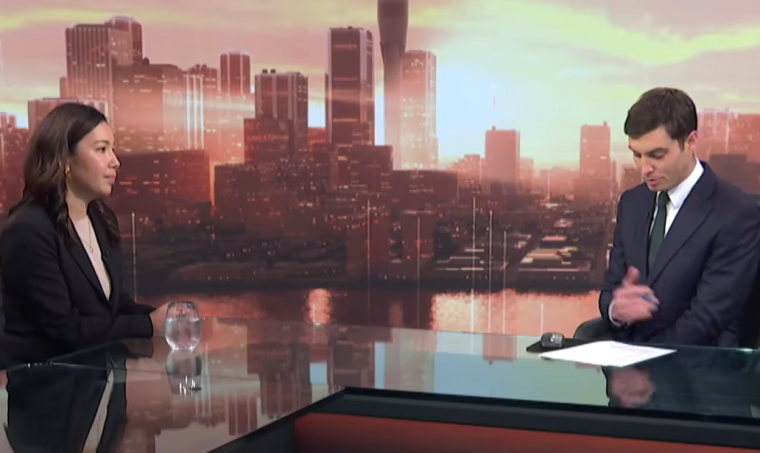
No wonder the United States’ term “the uniparty” is catching on in New Zealand. No wonder Qiulae Wong’s Opportunity party has soared to 8 percent in the latest 1News-Verian Poll.
Equally unsurprising, however, has been the response of the news media to Opportunity’s declared intention to resurrect New Zealand’s historical flair for transformational change.
To see the Q+A programme’s presenter, Jack Tame, do his best to overwhelm Wong with a fusillade of forensic fiscal questions was to witness the almost reflexive response of those raised entirely within the neoliberal system to any kind of innovation that does not fall within the thick black lines of economic orthodoxy.
The takeaway message was very clear: experimentation of any kind (other than the great and unmandated experiments of the late-1980s and early-1990s) is dangerous; no good can come of it; better by far to adhere to the principles of economic rationalism and sound political management.
If nobody moves, then nobody, or at least nobody in the top one percent of income earners, is going to get hurt.
*Chris Trotter has been writing and commenting professionally about New Zealand politics for more than 30 years. He writes a weekly column for interest.co.nz. His work may also be found at http://bowalleyroad.blogspot.com.
We welcome your comments below. If you are not already registered, please register to comment
Remember we welcome robust, respectful and insightful debate. We don't welcome abusive or defamatory comments and will de-register those repeatedly making such comments. Our current comment policy is here.