
The upcoming 12 cent fuel tax increase is now officially off the table, the Government confirmed Monday after months of speculation, however a question mark hangs over where $1 billion to pay for the cancellation comes from.
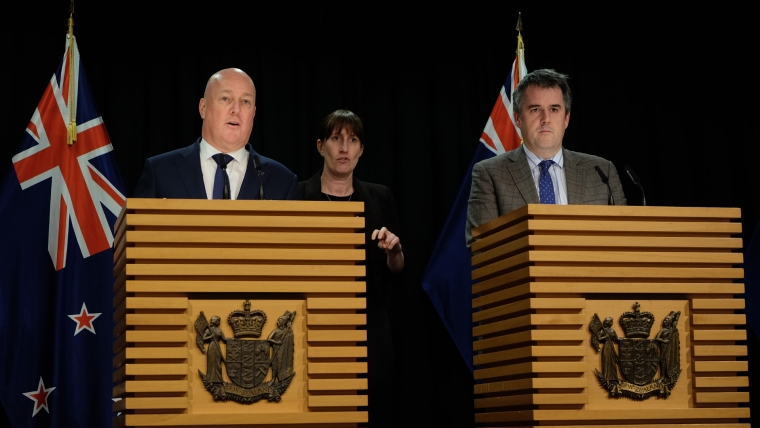
Prime Minister Christopher Luxon announced Cabinet had signed off on scrapping the increase, due to kick in January 1, 2027. Future increases from 2028 are also now staggered by six-monthly, five cent increases until 2030, where it will increase annually by 5 cents.
Transport Minister Chris Bishop said it would be irresponsible to reduce funding for the land transport system to pay for the change, so the Government has planned to top up the fund to account for the reduction in fuel excise revenue by $1.476 billion over the forecast period.
That will be paid for with the unused $450 million fuel response contingency fund, and the remainder will “be managed through and reflected in the Pre-Election Economic and Fiscal Update (PREFU)”, Finance Minister Nicola Willis said. That will be released at the end of September.
Asked if the $1b would come from borrowing, Luxon said: “You'll see it all at PREFU, and there's a number of other moving pieces when you pull a picture together for PREFU.”
Last week Labour announced it would not increase fuel excise for three years if elected.
Road freight association lobby group Transporting New Zealand said deferring the increase would lead to transport issues "that fuel the cost-of-living crisis."
"Flatlining revenue from fuel tax and RUC alongside a significant increase in road construction costs means the actual purchasing power of our National Land Transport Fund has plummeted," Chief executive Dom Kalasih said.
Road user charges
The planned road user charge (RUC) increase will also be deferred, with increases from 2028 in line with the fuel tax increases.
Bishop said the Government still did not have a date set in mind for when all drivers switch over to RUCs, but would likely start to look at that in 2028/29.
"There's a few things that have to happen before that. One is we have to pass the Land Transport Revenue Bill, which is currently waiting [at] its committee stage... and I'm advised by the Leader of the House is unlikely to complete its passage before the election, but we can deal with that after the election... There's a bunch of work around design, there's privacy considerations we've got to carefully work our way through," said Bishop.
"So that's on the medium-term track."
Student loans shake up promise
National announced over the weekend if re-elected, it'll decrease the student loan pay back threshold, meaning the repayment rate would drop from 12% to 10%.
“Right now, compulsory student loan repayments are paid at 12 cents on every dollar earned above $24,128. It is often one of the biggest weekly expenses for a young graduate," Willis said. “It means borrowers can repay their interest-free loans over a longer period and keep more of their pay in their back pocket, which can make a big difference when they’re at the start of their careers and earning at the lower end of their profession."
Willis also promised to crack down on overseas borrower penalties, increasing interest by 1% more, restricting KiwiSaver withdrawals - those living overseas permanently needing to have paid off their loan first - and tighter arrest settings.

Retirement villa repayments
Labour has promised to introduce legislation to ensure seniors leaving retirement villages get their money back within three months, leader Chris Hipkins announced on Monday.
“Seniors should not be forced to wait up for months on end to get their money back,” Hipkins said. “Three months is a fair and reasonable timeframe, and seniors deserve certainty."
Luxon said National would have their own policy on the matter, but said on Labour's three-month-pledge, "what that means going forward is that residents are going to be paying an awful lot more in fees, hundreds of dollars... and that may also lead to increase in capital costs of residences as well".
Credit rating affirmed
On Friday, S&P Global Ratings announced it had affirmed New Zealand's 'AA+/A-1+' foreign-currency and 'AAA/A-1+' local-currency sovereign credit ratings, with a stable long term rating outlook.
It forecast annual GDP growth of 2.5% in the 2026/2027 year.
We welcome your comments below. If you are not already registered, please register to comment
Remember we welcome robust, respectful and insightful debate. We don't welcome abusive or defamatory comments and will de-register those repeatedly making such comments. Our current comment policy is here.