
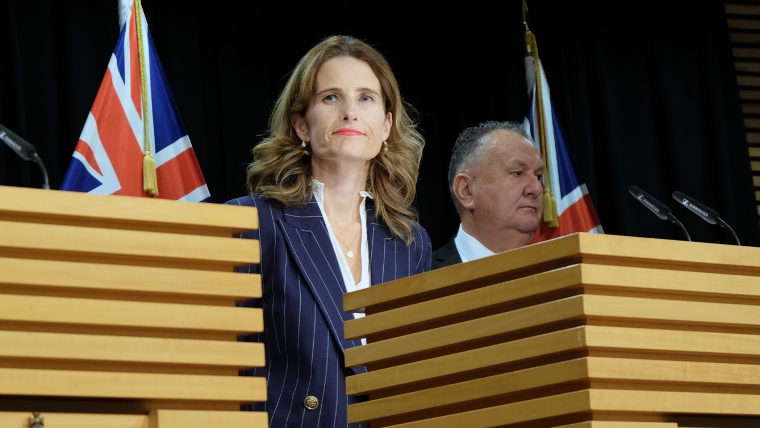
The Government's $450 million reserve set aside if conditions deteriorate from the Middle East crisis is a "slush fund" available to the Government up to the election, Labour's finance spokesperson Barbara Edmonds says.
Budget 2026 put the one-off operating contingency aside for possible further temporary and targeted measures in response to the conflict, and will expire on March 31 next year.
Announcing the policy last month, Finance Minister Nicola Willis said they were "humble enough to know that it's not us who decide what happens in the Middle East".
"If things do get worse, and I hope that they won't, and Treasury isn't expecting them to, but if they do, I want New Zealanders to have confidence the government's ready to respond."
Edmonds said the issue she had with the fund, "and in some ways it's slightly cynical, is... they've got this sort of slush fund sitting there, but they haven't indicated to New Zealand the policy that would allow it to be distributed".
"They've got this slush fund sitting there that they have to use up to the election, ultimately. Why can't they say to New Zealand, if... fuel hits a certain amount, we will do X.
"If inflation hits a certain amount, we will do X. Instead, they just said, well, we've got some money set aside if the conflict gets worse, but at the same time fully at their discretion just before the election."
In response, Willis said there were a range of options should the situation worsen.
"It needs to be targeted at whatever particular problem is that we're trying to solve, so that's a key principle. It also needs to be temporary, because we don't want to be putting in something permanent for a fuel crisis that's temporary.
"We will continue to be prudent," Willis said.
Budget 2026 also allocated $373m for the $50 per week increase to In-Work tax credit, which will last up to a year and $24.2m for temporary increase to mileage rates for home and community workers.
"Treasury is forecasting that fuel prices will come down later this year, and that then they'll be more steady going forward, but that's based on a view of the futures market and a view of what will happen with the conflict in the Middle East, and the truth is, no one knows what's going to happen with the conflict in the Middle East," Willis said.
"We think it's prudent as a government to be prepared for a range of different scenarios that could occur, where you could see fuel prices spiking further, or you could see them staying higher for longer.
"And if that happens, we don't want to be in a position where we say there's nothing we can do.... We think we should be true to Kiwis and say we'll be ready to react if any of that's happening. We'll keep monitoring the situation if further timely and targeted responses are required."
The books before the war.
Willis told Interest.co.nz before the Iran war, the books were looking “much better.”
“It’s gutting more for me because I’m worried about the impact it's had on Kiwis and the thing that I'm just so conscious of is all of those families and businesses who were just recovering… and then bang, we get hit by this fuel price spike, diesel's up, petrol's up, and it's been really hard on household budgets and businesses.”
Willis said the earlier than previously expected surplus return "means less borrowing, a lower debt track and a stronger fiscal position than previously forecast".
"Treasury also expects net core Crown debt to start reducing as a percentage of GDP in 2028/29, with this turning point occurring a year earlier than previously forecast."
We welcome your comments below. If you are not already registered, please register to comment
Remember we welcome robust, respectful and insightful debate. We don't welcome abusive or defamatory comments and will de-register those repeatedly making such comments. Our current comment policy is here.