
Labour is perceived as the political party most capable of handling all of the top five issues New Zealanders rank as most important, the October Ipsos NZ Issues Monitor has found.
"This is the third consecutive wave in which Labour has led across all five top-ranked issues," the latest Ipsos NZ issues monitor report, released on Monday, said.
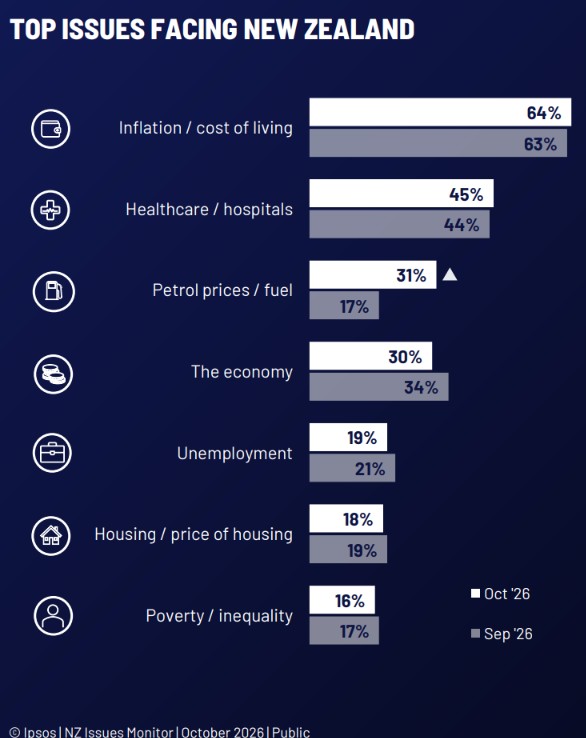
Inflation/cost of living is the top issue for the survey, at 64%, followed by healthcare/hospitals at 45%, petrol prices/fuel at 31%, the economy at 30% and unemployment at 19%.
The Ipsos NZ Issues Monitor tracks which issues New Zealanders are most concerned about and which political parties those surveyed believe are best to manage these issues.
Petrol prices jump to third place among New Zealanders' most important issues
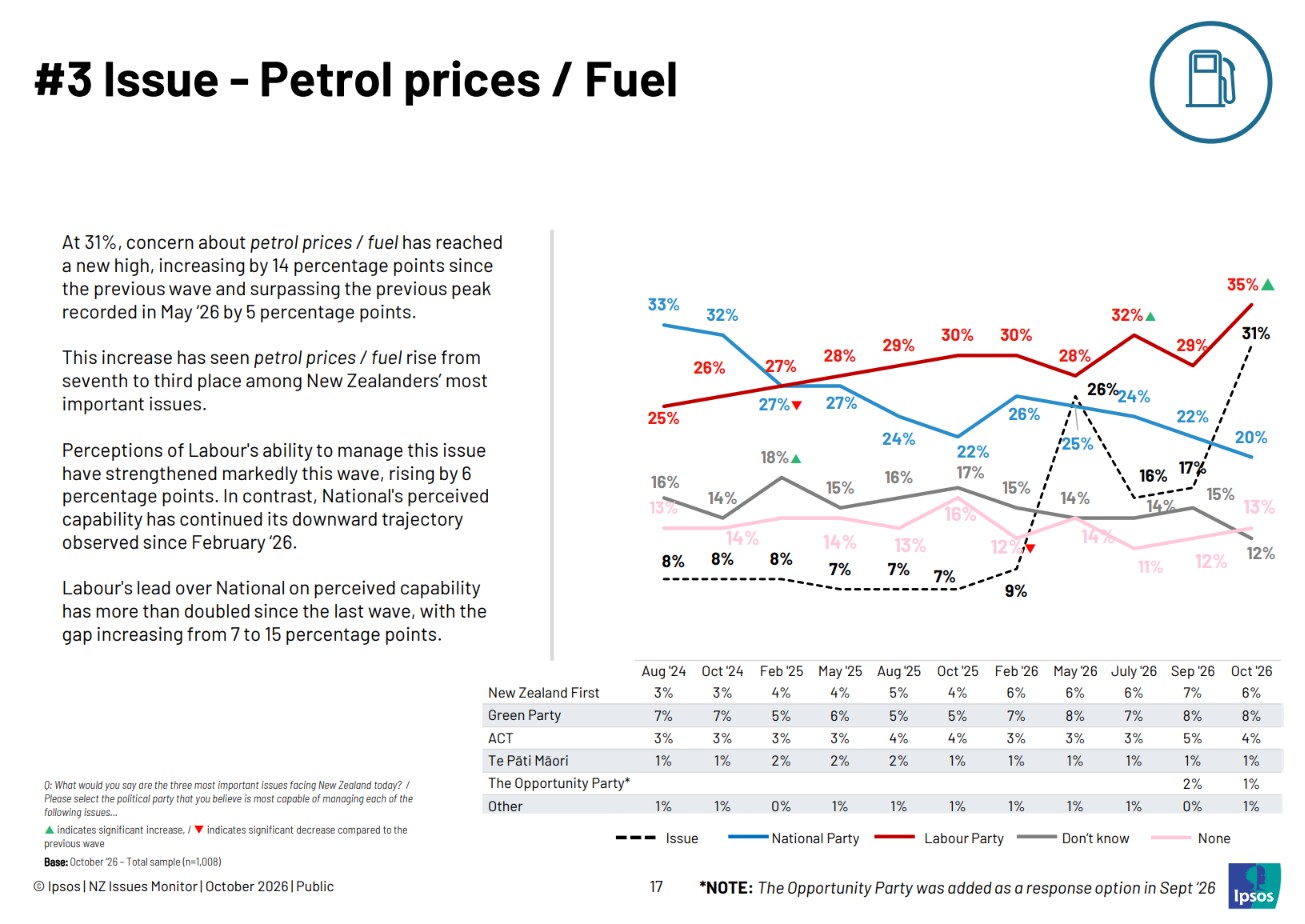
Ipsos' report said petrol prices/fuel as an issue had increased 14 percentage points to 31%, moving from seventh to third place as a pressing issue for New Zealanders - reaching its highest level recorded in its issues monitor.
"Perceptions of Labour's ability to manage this issue have strengthened markedly this wave, raising by six percentage points. In contrast, National's perceived capability has continued its downward trajectory observed since February '26," the report said.
"Labour's lead over National on perceived capability has more than doubled since the last wave, with the gap increasing from seven to 15 percentage points."
Ipsos NZ’s executive director of public affairs, Amanda Dudding, said: “As fuel prices climbed to near-record levels across New Zealand, concern about the cost of fuel has surged into the top three issues facing the country.”
“The result highlights how sensitive New Zealanders remain to increases in everyday household costs and reinforces the importance of cost-of-living pressures in shaping voter sentiment ahead of the election.”
National continues to lead on law and order but Labour leads on 16 out of 20 issues
Those polled rated the Government’s performance as 4.1 out of 10, unchanged from September’s issues monitor. About 26% rated the performance between 7 and 10 while 42% rated the government between 0 and 3.
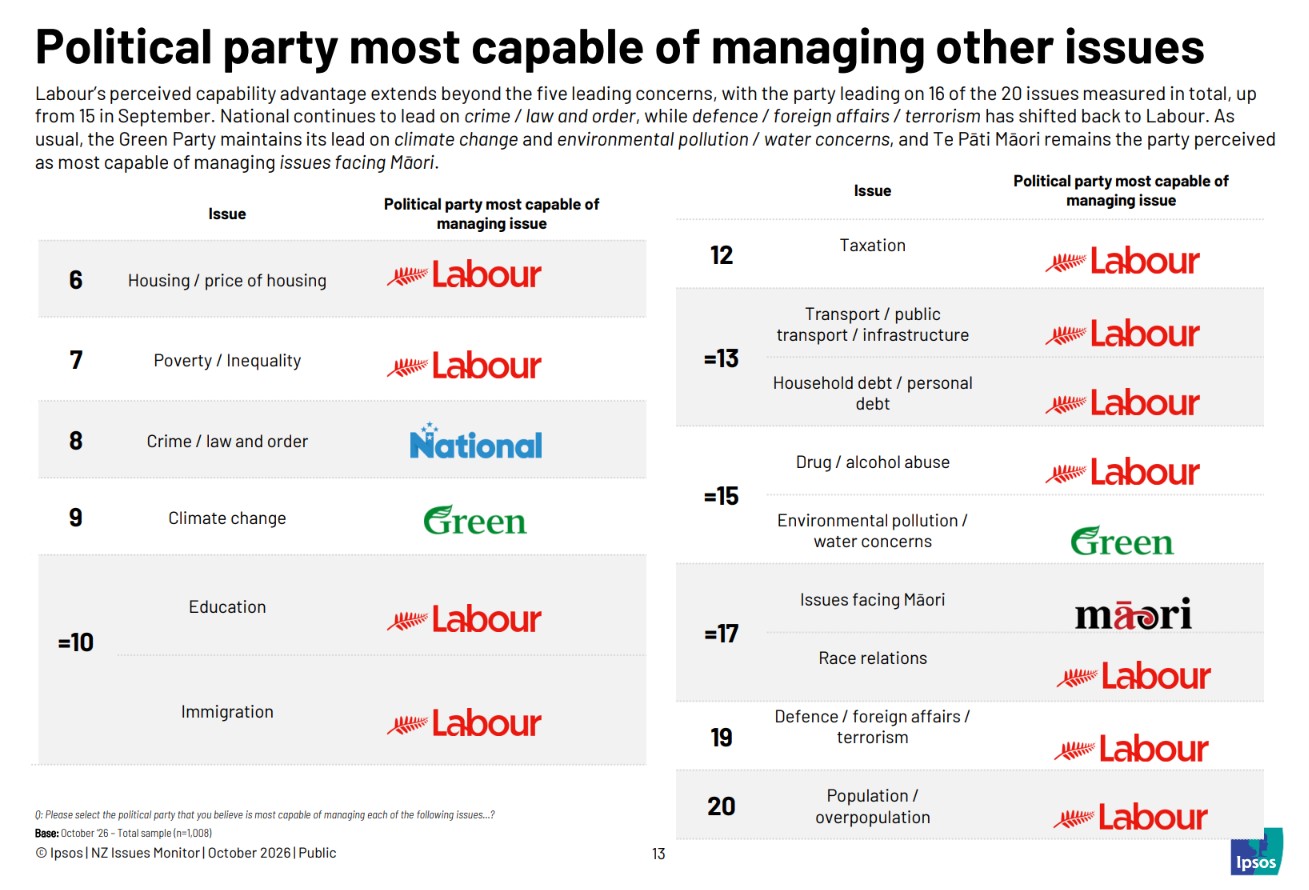
When it came to other issues, the report said: “Labour’s perceived capability advantage extends beyond the five leading concerns, with the party leading on 16 of the 20 issues measured in total, up from 15 in September.”
This includes housing/price of housing, poverty/inequality, education, immigration, taxation, transport, household debt, drug/alcohol abuse, race relations, foreign affairs, and population.
Meanwhile, National continued to lead on crime/law and order, the Green Party maintained its lead on climate change and environmental pollution/water concerns, and Te Pāti Māori remained the party perceived as most capable of managing issues facing Māori, the report said.
Market research company Ipsos polled 1008 respondents via online panels in October, with the results weighted by age, gender and region.
Full-court press
With five days to go until election day, it's crunch time for political parties as they campaign across the country, meeting with New Zealanders in the hopes of securing their votes.
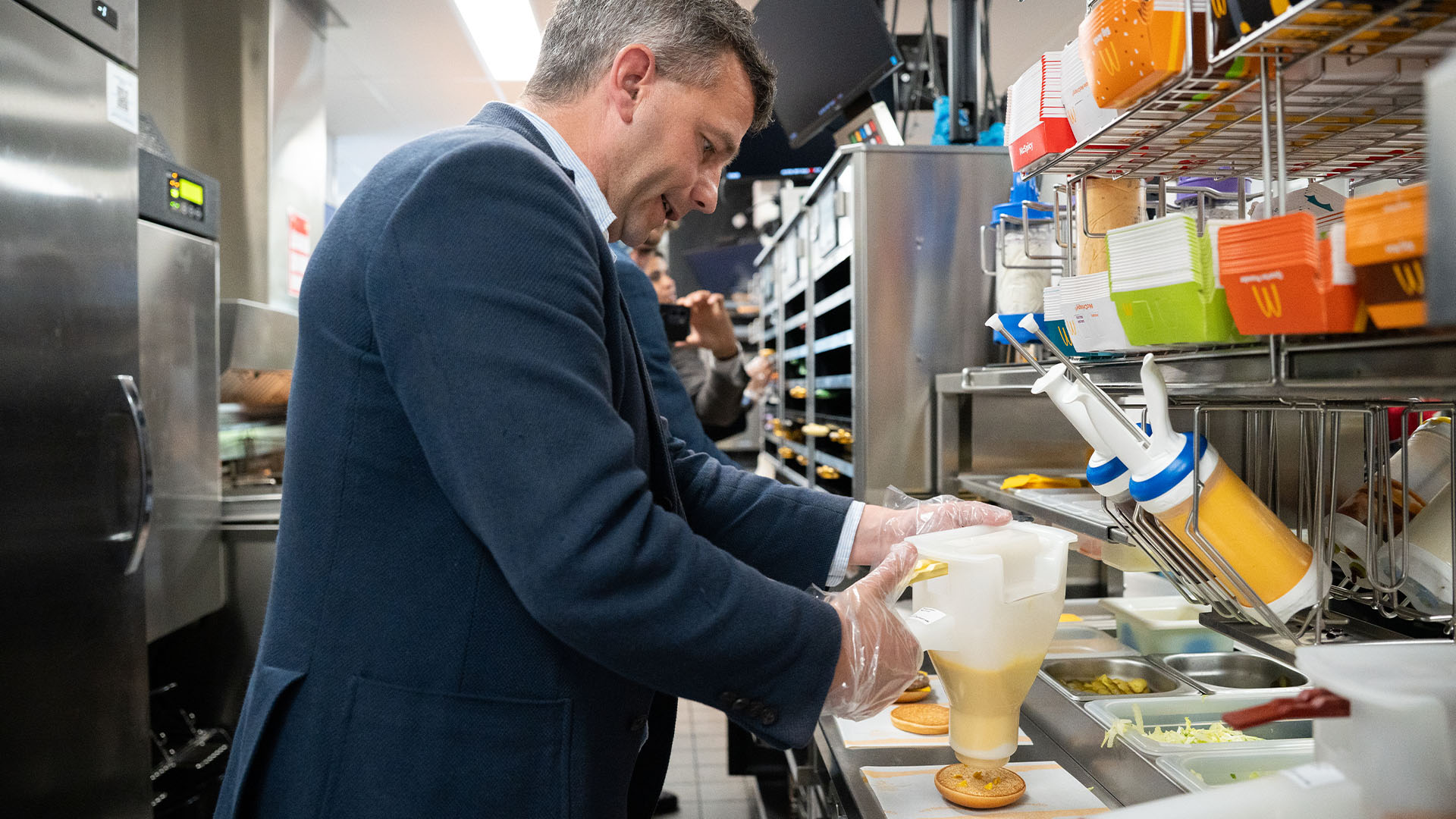
Parties were out in full force over the weekend, waving signs, talking at rallies, attending events and ACT leader David Seymour worked a shift at McDonald's Newmarket in Auckland.
ACT's Equal Rights policy
On Sunday, Seymour spoke about his party's Equal Rights Policy in Auckland, saying: "Politicians and bureaucrats have increasingly divided people into groups, created different rules, and allowed vague laws to be interpreted in ways Parliament never intended."
"Instead of focusing on what people can achieve, we have become increasingly obsessed with who people are," Seymour said.
As part of its Equal Rights Policy, some of the things the party is proposing is to put parliamentary sovereignty, the rule of law and equality before the law into the Constitution ACT, add property rights to the Bill of Rights ACT and "keep elected lawmakers accountable by stopping courts creating Treaty duties Parliament has not legislated and requiring clear Treaty obligations in new laws".
The party also said it wanted to "ensure people with the same needs receive the same public services by making need, not race, the legal standard" and "protect professionals’ livelihoods and free speech by stopping regulators punishing lawful opinions expressed outside professional practice".
"Every New Zealander is an individual with dignity, rights, and the potential to make a difference in their own life," Seymour said.
We won't unlock their potential by dividing people into competing groups, giving some special treatment, or allowing unelected institutions to make decisions that belong to voters. That is what we’re campaigning for this election."
Labour's Barbara Edmonds outlines first-week plan if she becomes Finance Minister
In Wellington, Labour finance spokesperson Barbara Edmonds spoke to reporters about her priorities if she becomes the Finance Minister following the November 7 election.
The first thing she said Labour would do is focus on taking action to bring people’s bills down.
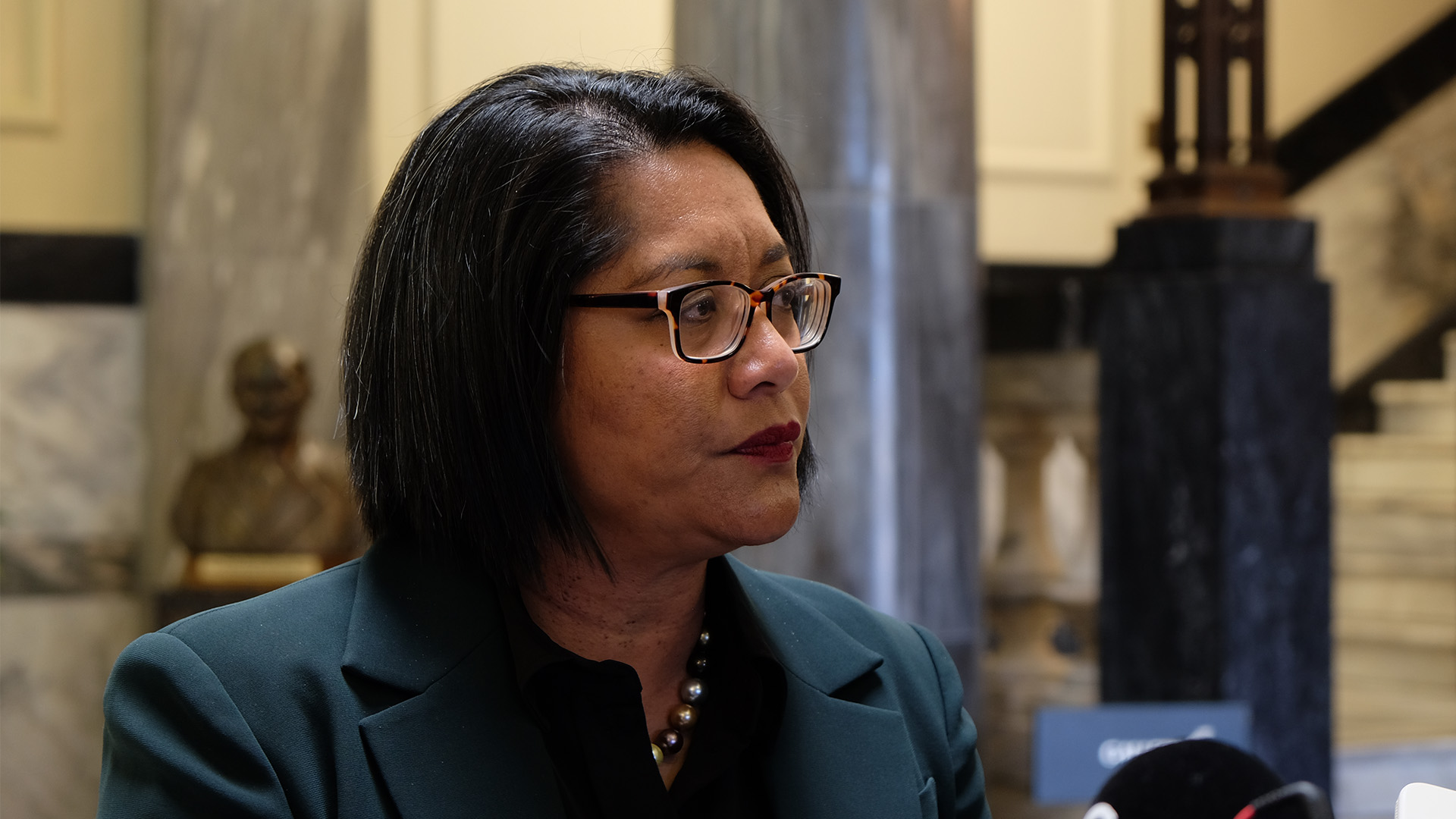
“The number one issue that New Zealanders are telling us across the country is that the cost of living is incredibly tough for them,” Edmonds said.
Edmonds said if elected, Labour would immediately start work on its public transport fare cuts and three free GP visits.
Labour would also:
- Direct the Public Service Commissioner to stop further cuts to public services
- Meet with Treasury on day one, “get the full picture” and set out expectations to get to surplus and bring debt down, and start work on the party's proposed capital gains tax
- Write to the Reserve Bank Governor setting out the plan to restore the Bank’s dual mandate so it targets both inflation and maximum sustainable employment
- Direct Treasury to get to work on the New Zealand Future Fund
- Instruct officials to deliver a $4 an hour pay rise from 1 January 2027 to care and support workers
- Start work on wiping 10% off eligible student loan balances on 1 April 2027
- Instruct officials to draft a law so big businesses pay small suppliers within 15 days, and start work on a $10,000 asset write-off from 1 July 2027
- Work with the Minister of Customs to reverse National’s tax cut for tobacco companies from 1 January 2027.
“Every dollar the government spends is someone’s hard-earned money. I’ll treat it that way, with no waste and every dollar going where it makes a real difference,” she said.
“We want an economy where everybody gets ahead. We want New Zealanders to have a future here in New Zealand.”
Over 3.7 million people enrolled to vote
As of October 30, the provisional enrolment rate for the 2026 General Election is 93.6% with 3,790,946 people enrolled to vote.
About 309,876 people cast their votes in the first three days of advance voting (this opened on October 26), up from 235,515 in 2023.
We welcome your comments below. If you are not already registered, please register to comment
Remember we welcome robust, respectful and insightful debate. We don't welcome abusive or defamatory comments and will de-register those repeatedly making such comments. Our current comment policy is here.