
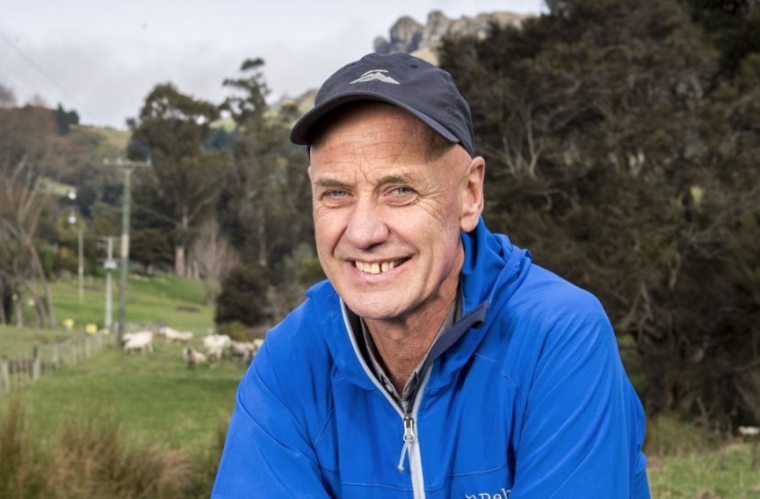
This week David Norton joined me to share his views on recent flooding events in Gisborne and the Hawke’s Bay. David Norton is a Professor at University of Canterbury and areas of research are vast and include integrated land management (especially involving biodiversity in agricultural and plantation forest systems), and research focusing on integrating pastoral and biodiversity values in New Zealand Farming systems and high country environments.
He visited Tolaga Bay back in 2018 after another significant event, and he say’s we're seeing the same sort of damage again, substantial amounts of sediment and slash coming out of catchments, which is impacting on productive, aquatic and marine systems.
I asked if he has any concerns around carbon farming, he says that the old saying of the right tree in the right place with the right purpose is very much relevant today.
“I have to confess to have grave concerns about carbon farming, and I mean when I look at the ETS, and I look at what they call the permanent category of the emissions trading scheme, to me permanent, we're talking about decades and centuries. The reality is carbon dioxide has a half-life in the atmosphere of 120 years and some of the carbon dioxide that’s out there now, remember it's increased by 50%. Some of what's out there now is going to be there and several hundred year’s time. So when we talk about permanent forests, I just don't get it that pine is being planted for carbon and not providing a permanent forest. To me I'll be quite honest with you, I see them as a money making venture, someone has figured out there is good money to be made and planning pine trees; We will plant pine trees we will harvest the carbon credits, and they'll be great for the next 30/40 years, and well I probably won't be around, the investor thinks, and I've got my money.”
“There is no credible science from New Zealand to suggest that in our environment that apart from a few situations that you can transition them [exotic trees] to natives unless you invest a substantial amount of money. And I'm seeing no evidence that those people who are proposing and promoting carbon farming with exotic trees are prepared to put the money aside. I mean, I think if they are genuine about transitioning then they should say, Well look we'll put half the carbon income, hold it back, put it into some sort of fund and we'll use that to then manage that transition in the future. That's not happening, and unless that's done, it's ecologically fraudulent in my mind.”
Norton says farmers should get recognition for the native plantings they have done and are doing and sequestration in its entirety should be calculated. He says parts of the ETS are flawed and that it is an excuse for polluters to continue to pollute and that needs to be addressed.
Sequestration
“We [also] need to be thinking about the other side of the equation which is sequestration and what sequestration is about and it's got to be permanent, it's got to be permanent and long term. And I think we should be rewarding and providing an income for native forests as a permanent long term carbon sequestration tool, both for post 1990 but also for pre 1990. If a farmer can show that they are making a deliberate decision with an area of regenerating forest or an old North Island cutover native forest, that they are deliberately excluding livestock and deliberately managing goats and pigs and deer to favour carbon and biodiversity. And I think they should get rewarded for that as well, because it's all sequestering carbon.”
So what about change at a policy level, do we need change?
"Well we definitely need change and look, I will talk to any politician and I've talked to some National politicians today, I talked to Green politicians, I'll talk to Labour politicians, I want everybody to recognise that we can have sustainable rural landscapes that provide a key part of our income as a nation through sustainable farming. But to do that we need to have native forests as a core part of that."
"And that native forest can range from hedgerows of native trees, small copses, right up to you know, catchments that that are eroding planted up or allowed to regenerate into natives and forming resilient landscapes. We get too caught up with adaptation as being around infrastructure. I think what we should be talking about is resilience, building resilient landscapes that can both help protect people communities livelihoods, but also can help sequester carbon draw down carbon from the atmosphere and to me that would be the best the best outcome for rural New Zealand. And we are not talking about converting every single sheep and beef farm in New Zealand by any means into native forests. We're just talking about having a land use approach where we have native trees as being a core part of how we use our rural landscapes.”
Listen to the podcast to hear the full story
Angus Kebbell is the Producer at Tailwind Media. You can contact him here.
We welcome your comments below. If you are not already registered, please register to comment
Remember we welcome robust, respectful and insightful debate. We don't welcome abusive or defamatory comments and will de-register those repeatedly making such comments. Our current comment policy is here.