
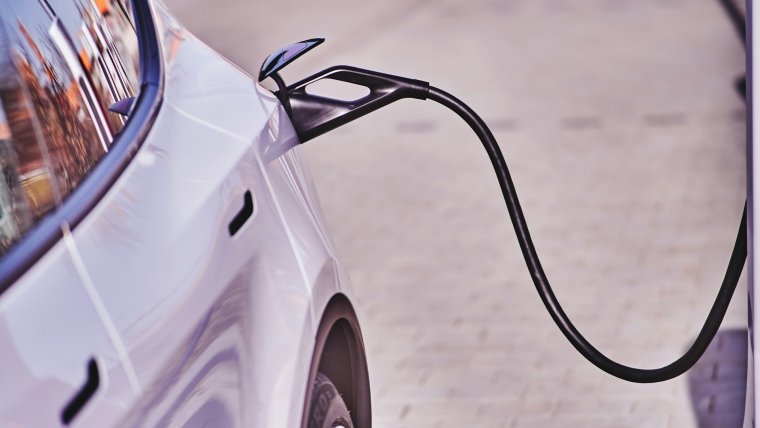
As oil supply continues to be disrupted due to conflict in the Middle East, electric vehicles are back in the spotlight with the Government announcing that electric vehicle (EV) public chargers around New Zealand will more than double.
Currently, the country has just over 1800 charging points and this announcement means there will be 2574 new charge points on the way.
It's funded with $52.7 million in zero-interest loans from the Government and co-investment from companies Meridian Energy and ChargeNet.
Both Meridian Energy and ChargeNet are co-investing a combined $60 million of their own capital alongside the Government loans, taking the total investment to over $110 million. Those companies were chosen through a value-for-money bid process.
Even before the recent fuel price rises, Transport Minister Chris Bishop says many New Zealanders were thinking about getting an EV.
“But research shows the lack of public chargers is holding many back from making the switch to EV.”
"The private sector is reluctant to invest in charging infrastructure until there's sufficient demand, but demand won't grow until the lack of public chargers stops putting buyers off … we’re taking action to break that deadlock.”
"Concessionary loans bring forward private investment in public EV charging infrastructure by lowering the cost of capital, while keeping the taxpayer's contribution to a minimum," Bishop says.
“In this case, the average loan per charge point is $20,000, but once repayments are factored in, the net cost to the Crown is around $10,000 per charger, roughly a quarter of what a direct grant would cost."
Over the years
The Government’s announcement follows changes to electric vehicles over the past few years.
This includes the end of the clean car discount, the introduction of road user charges for EVs and plug-in hybrids, and a jump in ACC levies for EV owners.
Alongside this, the Government is carrying out a first principles review into the Clean Car Standard. While Bishop told RNZ it was unlikely the Clean Car Standard would be removed fully, as it was under a review, an option to get rid of it was on the table.
The Clean Car Standard was introduced by the previous Government, and on its website, New Zealand Transport Agency (NZTA) says it’s a way to tackle transport sector carbon dioxide emission levels as part of an effort to address climate change.
'Kiwis are already making the shift'
“We’re also changing our planning rules to make the installation of public EV chargers a permitted activity under the RMA (Resource Management Act), meaning in most cases no consent is required – another factor that will help to speed up delivery," Bishop says.
The 2574 charging ports will include 1374 DC fast chargers and 1200 AC chargers.
DC fast chargers can charge a car in 20 to 60 minutes so they’re suited to highways and places where people stop briefly. AC chargers are slower and better suited to spots where cars are parked for longer like shopping malls, workplaces and residential areas, the Government says.
Bishop says half of the new chargers will be in Auckland, Hamilton, Tauranga, Christchurch, Dunedin and the Wellington region. The other half will be throughout the regions.
With 161 charge points already in progress, the national toll will be around 4550, Bishop says.
“The Government is working towards 10,000 charge points by 2030, roughly one for every 40 EVs.”
Simon Watts, Minister for Energy and Climate Change, says owning an EV in New Zealand already makes strong financial sense.
"Electricity is cheaper than petrol and almost entirely generated from renewable sources like wind, geothermal, solar, and hydro.”
“Kiwis are already making the shift to electric vehicles as a cost-of-living choice, and we have seen uptake grow," he says.
"In February 2026, EV sales were up 10.5% on the same month last year – and anecdotal evidence suggests even greater interest over the past couple of weeks as conflict in the Middle East has seen fuel prices increase."
"At a time when global fuel markets are volatile, that matters,” Watts says.
“A better charging network means more New Zealanders can take advantage of it, and that's good for household budgets and our emissions profile alike.”
We welcome your comments below. If you are not already registered, please register to comment
Remember we welcome robust, respectful and insightful debate. We don't welcome abusive or defamatory comments and will de-register those repeatedly making such comments. Our current comment policy is here.