
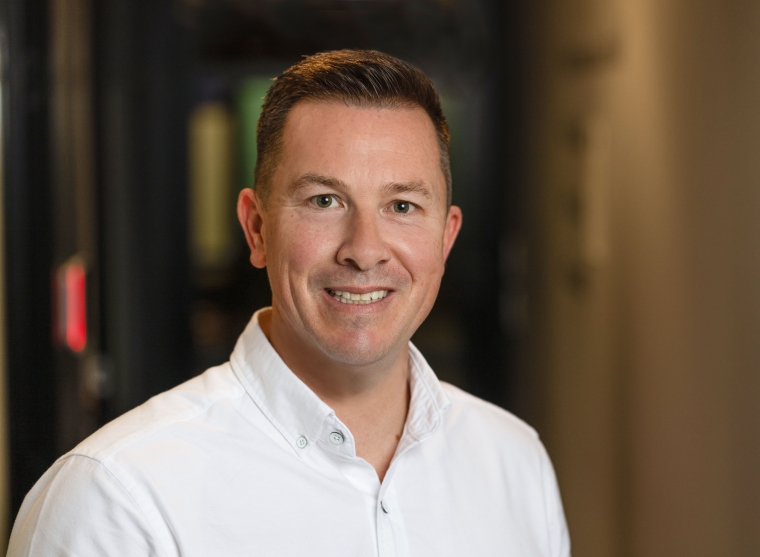
Andrew Dixson, the chief executive of Heartland Group Holdings says a decision has not yet been made on which bank’s technology platform a combined Heartland-TSB would use, if the proposed merger goes ahead.
Heartland announced on Tuesday that it had signed an agreement with TSB's parent, the Toi Foundation, to buy TSB in a deal valued at $620 million, comprised of debt, equity and cash.
If the proposal proceeds, Toi Foundation would hold a 17.5% shareholding in Heartland Group. TSB and Heartland Bank would merge, with the merged bank renamed TSB Heartland Bank.
Toi Foundation chairman Chris Ussher told interest.co.nz on Tuesday the foundation had received an unsolicited approach in late 2024 about the potential sale of TSB shares, but wouldn’t confirm if it came from Heartland.
However, Dixson told interest.co.nz later the same day that Heartland had not approached TSB in 2024.
“No, it wasn't us,” he said and confirmed that merger discussions with TSB had begun a “good 12 months ago”.
Toi Foundation has owned 100% of TSB since Toi was established as a charitable trust in 1988. The foundation also holds a 66% shareholding in investment manager and KiwiSaver provider Fisher Funds.
“TSB is the only bank that we have discussed a proposal of this nature with,” Dixson told interest.co.nz.
“When we look at TSB, we see a lot of similarities to Heartland in that strong regional focus and that strong tie to communities. TSB also offers a lot of the things that we don't currently have.”
Cultural differences, home loans and deposits drawcards
Culturally, the two banks are very different. Heartland is a listed company and TSB is owned by a philanthropic organisation. The two banks focus on different banking areas – Heartland offers a range of different lending products while the majority of TSB’s lending book comes from home loans.
Dixson pointed to TSB’s home loan portfolio as well as the bank’s deposit offering being a strong drawcard to Heartland. Heartland was also attracted to TSB’s strong ties to the Taranaki region, with Dixson describing it as a similar loyalty that Heartland has with Canterbury and particularly Ashburton.
He said TSB liked Heartland’s range of bank products which include reverse mortgages and motor vehicle finance – as well as Heartland’s focus on rural and small business sectors.
Asked if he has concerns about how the two banks are going to be merged, given the cultural differences between Heartland and TSB, Dixson said no.
“But I wouldn't underestimate the task ahead of us in terms of integrating the two things,” he told interest.co.nz.
“So absolutely, both organisations will have their own culture and own values about them. But at the end of the day, we are people, we serve our customers and our communities and we care about that. So I don't expect there to be any great problems with that integration.”
Scaling up home lending
The proposed merger of Heartland and TSB will boost the bank’s home lending portfolio and lift its long-term credit rating, according to Dixson.
He told analysts in an investor briefing on Tuesday morning that the merger wouldn’t change Heartland’s “specialist product focus” but rather “enhance” its banking capabilities.
The merged bank would be able to offer a broader product suite including home loans, reverse mortgages, motor finance, commercial property lending, rural lending, business finance and personal lending, he said.
“On the funding side, the merged bank will have an optimised funding base with a greater proportion of non-interest and interest-bearing on-board or on-call products held by TSB.”
According to Dixson, the proposed merger also provides an opportunity for Heartland to scale its home lending portfolio.
“This is an area where Heartland Bank has not been able to achieve meaningful scale organically and the acquisition of TSB addresses that directly,” he said.
TSB’s lending portfolio currently includes $6.5 billion in home loans, representing 84% of the bank’s total lending.
“We believe this portfolio is capable of generating appropriate return on equity in the combined bank, assisted by the planned reduction in risk weights following implementation of the Reserve Bank’s capital changes come October 2026,” Dixson said.
Which technology stack will the combined bank use?
Dixson said the $620 million acquisition price implies a 0.76x multiple of TSB’s book value – as of 31st December 2025 – and represents a 12.1x net profit after tax (NPAT), excluding synergies and an 8.2x NPAT including synergies.
“From an earnings perspective, we expect normalised earnings per share accretion in excess of 20% in the first year post-completion and an enhanced dividend per share profile. Return on equity is also expected to improve over time,” he told analysts.
Following the completion of the merger, pre-tax cost synergies of approximately $34 million are expected to be realised over three years.
However, that $34 million figure has excluded technology-related expenses associated with the merging of the two banks. During Tuesday’s investor call, analysts questioned Dixson on why those costs had been excluded and what the technology stack of the combined banks will look like.
Dixson said Heartland had left out technology costs because a decision hadn’t been made on which bank’s technology to use for the combined bank.
“During our diligence process, we have scoped their respective technology infrastructure across both banks,” he said.
“As we go through this next phase, we will need to understand an appropriate technology strategy for the merged bank. At this stage we haven't been able to scope how much that may cost and how much that may deliver in terms of synergies until we actually make a firm decision around the direction of travel on that particular front.”
“We have a view on the direction going forward and which technology infrastructure is the way to go. And it will be one of the existing banks’ infrastructure, not a completely different one,” Dixson said.
He told interest.co.nz on Tuesday that the bank won’t have decided on which technology to go with by Heartland’s shareholder meeting in August, when stakeholders will be able to vote on the merger. As a listed company, Heartland needs to hit a 50% approval threshold from shareholders to secure the merger completion.
Dixson said the technology stack will be a decision that the new board of the new bank will have to make and will likely be made by the time the merger has been completed.
“So we can't make those decisions for them. But it’ll be a critical work stream during the implementation phase. We expect by the time we complete [the merger], we will have a pretty good view on what the go-forward strategy for technology looks like,” he said.
Credit rating uplift
Dixson told analysts on Tuesday that the merger may support an improvement in the merged banks’ long-term credit rating as a reflection of strengthened asset quality and risk profile.
Heartland Bank has a long-term credit rating of BBB stable from Fitch Ratings. To get the merger confirmed, Fitch will need to reaffirm that the combined bank will have a credit rating of at least BBB with a ‘stable’ outlook.
Asked what discussions Heartland had been having with Fitch, Dixson said the bank had been having “a lot of discussions” and Heartland had been through a formal ratings impact assessment service with Fitch.
“I can't disclose the outcome of that, but as we have said, we expect this to support an uplift on the credit rating,” he said.
Fitch released a statement saying it had placed Heartland's credit ratings on rating watch positive following the TSB announcement.
"TSB's large residential mortgage book offsets some of the risk associated with Heartland's existing niche loan portfolio, reducing the overall risk profile of the bank upon completion of the deal," Fitch says. "Heartland's share of New Zealand banking system assets will more than double upon the acquisition of TSB but at 2% it will remain small."
Heartland Group shares were up more than 11% at $1.27 late on Tuesday.
Heartland is aiming to complete the deal in December this year.
We welcome your comments below. If you are not already registered, please register to comment
Remember we welcome robust, respectful and insightful debate. We don't welcome abusive or defamatory comments and will de-register those repeatedly making such comments. Our current comment policy is here.