
A new report from the Reserve Bank (RBNZ) has found banking in New Zealand is likely to become more digital, diverse and interconnected over the next 10 years, but the pace and direction of that change remain uncertain.
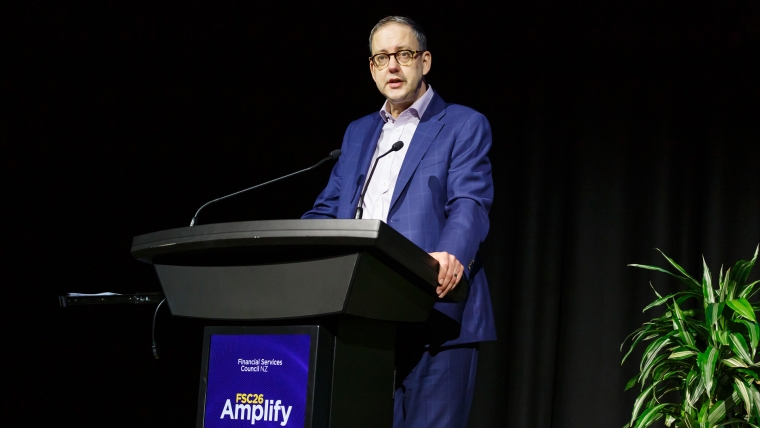
In a speech about the Reserve Bank’s new Future of Banking Study in Auckland on Thursday evening, RBNZ Assistant Governor of Financial Stability Angus McGregor told an audience of Institute of Financial Professionals (INFINZ) members that the environment banks operate in is changing quickly.
“The question is not whether banking will change – it will,” he said. “The real question is how quickly it changes, the nature of that change, and whether New Zealand is well prepared.”
In the report, McGregor pointed to geopolitical uncertainty, technological innovation, artificial intelligence, data sharing, changing consumer expectations and new forms of competition reshaping financial services globally.
“These forces create significant opportunities for better services, greater efficiency, increased competition and wider participation. They also bring new risks and challenges for resilience, trust and the role of regulation,” he said.
“Whatever path banking takes, it is important that we have a system that is resilient, trusted, efficient and adaptable. We will also need a system that supports competition, participation and innovation, while continuing to safeguard the stability and confidence on which banking depends.”
The RBNZ carried out its new banking study to help the central bank anticipate and prepare for long term change and disruption in the banking sector. To do this, the study explored how banking in NZ could evolve by 2035 through three “plausible scenarios”.
The RBNZ said each scenario presented different opportunities, risks and implications for financial stability, but all three scenarios had the potential to deliver benefits for consumers, the banking sector and the wider economy.
The first scenario the RBNZ explored in its report was “better banking”, where banking in NZ had evolved “incrementally.” While the market became less concentrated in this scenario, major incumbent banks retained their market dominance and disruption remained minimal, the RBNZ said.
In the second scenario, which looked at a “digital banking revolution”, disruptive fintechs together with global and local digital banks captured substantial market share through innovative propositions and business models, while many traditional banks struggled to adapt.
The third scenario explored the “rise of platform banking”, where the banking sector shifted into a more “modular ecosystem” powered by an increase in platforms and interconnected providers. This scenario introduced widespread, disruptive competition, although many providers fell outside the Reserve Bank’s current prudential perimeter.
The report found each scenario presented different opportunities, risks and implications for financial stability.
In its summary of the report, the RBNZ said consumer expectations, technological innovation, new forms of competition and evolving regulatory priorities would “reshape” how financial services are produced, distributed and consumed in NZ over the next decade.
“These forces are challenging the traditional one-stop-shop banking model that has long dominated banking and are encouraging institutions to rethink their roles within an increasingly modular and interconnected financial ecosystem,” the RBNZ said.
McGregor said the report wasn’t a prediction of the future and it also didn’t signal future policy decisions or preferred scenarios. Instead, it highlighted the “considerable opportunities” for NZ.
“If we get this right, the benefits could be significant. Customers could have greater choice and benefit from faster services that are increasingly tailored to their individual needs and circumstances. Banking could become increasingly integrated into everyday activities and digital experiences. Competition from a diverse range of providers could encourage greater innovation and efficiency. Individuals and businesses, particularly those currently underserved, could find it easier to access finance and services,” he said.
“Critically, more efficient payments, improved credit assessment, and lower transaction costs could lead to better allocation of capital across the economy, driving improved productivity, growth, and economic performance.”
'Concentrations of risk'
Despite the opportunities, McGregor said the study also highlighted that the changes that may deliver the greatest benefits “could also give rise to the greatest challenges.”
As banking becomes more digital and interconnected, operational resilience and cyber risk will become increasingly important.
“Greater reliance on technology providers, cloud infrastructure and third-party services may create new dependencies and concentrations of risk. It also increases exposure to cyber risk, more sophisticated attacks, fraud attempts, and security challenges,” he said.
“Navigating this balance between resilience, innovation, and managing any transformation risks is likely to become one of the defining strategic challenges for banking leaders over the coming decade. Perhaps more importantly, trust remains fundamental. Trust and confidence are the foundations on which banking and financial stability depend. As services become more digital, more distributed, and more complex, maintaining trust may become both more challenging and more important.”
Will banks get the Spotify treatment?
In his speech, McGregor said New Zealand's banking sector had been “relatively insulated” from the change and disruption seen in other banking markets internationally.
“Recent inquiries into banking competition help explain why. We're a small and highly concentrated market dominated by broadly similar business models, with relatively low levels of innovation and customer switching. That gives major banks significant advantages of scale and scope, and makes it harder for new and smaller entrants to enter, to expand, and to compete,” he said.
“However, several powerful forces are already reshaping banking and financial services globally, and we're beginning to see signs of that here. Consumers increasingly expect banking experiences that mirror those they receive in other parts of their lives. Whether it's retail, travel, media, or transport, people have become accustomed to services that are seamless, personalised, intuitive and available instantly. Increasingly, we expect the same from banking and financial services.”
McGregor used the example of how people used to listen to music, describing how people would buy an album or a CD, listen to the tracks selected by an artist and build a collection one purchase at a time. Now, with the creation of technological services like Spotify, all that has changed.
“The product has shifted from something we own to a service built around us. Banking could undergo a similar shift, from a standard set of products provided by one institution to a more personalised, on-demand set of services assembled around each customer's needs, especially when by 2035, two-thirds of New Zealanders will be digital natives,” he said.
“Their expectations will increasingly shape banking of the future.”
We welcome your comments below. If you are not already registered, please register to comment
Remember we welcome robust, respectful and insightful debate. We don't welcome abusive or defamatory comments and will de-register those repeatedly making such comments. Our current comment policy is here.