
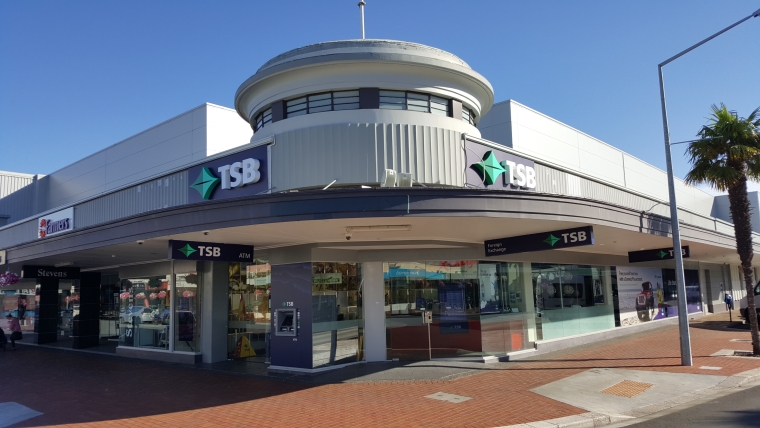
The Reserve Bank (RBNZ) has asked TSB to get an independent report after TSB identified and reported issues to the RBNZ on how it calculates and reports its regulatory liquidity and capital ratios.
The Reserve Bank has issued its report request under Section 95 of the Banking (Prudential Supervision) Act 1989, which gives the RBNZ the power to require a bank to provide a report by a RBNZ-approved, independent person.
Reports under Section 95 are part of the RBNZ’s supervisory toolkit and provide independent assurance and insight about banks’ systems and practices, according to the prudential regulator.
The RBNZ said on Friday that TSB has advised it has appointed Deloitte to undertake the report. A draft report is due at the end of October and a final report is due to the RBNZ in November.
"The Reserve Bank issued the Section 95 notice after TSB identified and reported issues concerning aspects of the computation and reporting of its capital and liquidity ratios."
In a statement, TSB said the bank’s current liquidity and funding positions “are sound” and the bank remains “well capitalised.”
“The review provides an additional level of independent assurance as TSB prepares for the proposed merger with Heartland Bank,” TSB said.
Liquidity ratio & LVR errors
TSB's latest general disclosure statement, for the year to March 31, says an internal review identified an error in the calculation of its regulatory liquidity ratios; - one-week mismatch, one-month mismatch and core funding. Because of this TSB says it has been non-compliant with a condition of its banking registration since 2010, when the liquidity requirements took effect.
"The Bank had been classifying some funding balances as ‘non-market funding’ when these should have been treated as ‘market funding," TSB says. However, TSB says its liquidity ratios were compliant with regulatory minimum requirements throughout the period of the error.
Meanwhile, TSB says in 2019 it identified it had made errors in calculating its risk weighted assets and regulatory capital.
"The Bank used loan-to-value ratios calculated at origination, as opposed to recalculating them for each reporting period. The Bank also identified several credit data classification discrepancies," TSB said in a general disclosure statement last year.
It acknowledged also identifying "some collateral classification data discrepancies" but said these weren't material and didn't result in non-compliance with the conditions of its banking registration.
"The Bank has identified the scope to resolve these matters but calculations are yet to be reperformed. The Bank currently holds approximately $192m of capital in excess of the minimum regulatory capital requirements including the prudential capital buffer," TSB said last year.
"Capital adequacy calculation issues were resolved as at 30 September 2025. Prior-year figures have not been restated, as the impact of the errors has been confirmed to be immaterial," TSB said this year.
Heartland shareholders to vote on TSB takeover next week
The report request from the RBNZ comes as TSB's parent, the Toi Foundation, tries to get a proposed merger with Heartland Group Holdings over the line. Heartland wants to buy TSB for $620 million and create “a New Zealand challenger bank of scale with a regional focus” that will be called TSB Heartland Bank.
Heartland told the NZX on Friday that the review relates to TSB, not the proposed merger between TSB and Heartland.
“Heartland and Toi Foundation continue to actively engage with RBNZ in relation to Heartland’s proposal to acquire from Toi Foundation all TSB shares on issue, and subsequently merge Heartland Bank Limited and TSB,” the bank said.
Heartland chief executive Andrew Dixson said Heartland continued to believe in the “strategic opportunity” available through the proposed transaction.
“We take regulatory matters very seriously and will consider any relevant findings from the review, including any implications for the Proposed Transaction, as the review progresses,” Dixson said.
Heartland said prior to entering into the merger implementation agreement (MIA) with Toi Foundation, Heartland had undertaken “extensive due diligence”, with relevant matters identified through that process reflected in the commercial and contractual terms of the MIA.
“The Proposed Transaction remains subject to satisfaction of the remaining conditions, including Heartland shareholder approval, the TSB Material Adverse Change condition, and receipt of the necessary regulatory approvals. This means that if the outcomes of the review are materially different to what is known today, the Proposed Transaction may not complete, even if Heartland shareholders have approved it,” the bank said.
To date, the proposed merger has received Toi Foundation trustee approval, although the deal has faced resistance from some members of the Taranaki community. In August, a Taranaki community group sought a High Court injunction to block the sale of TSB to Heartland, but the application was unsuccessful. Justice Andrew Isaac, who dismissed the case, labelled the case’s claims “legally and factually weak.”
Heartland’s Special Shareholder Meeting to vote on the Proposed Transaction will continue as planned on Wednesday, September 30.
Additional reporting Gareth Vaughan.
We welcome your comments below. If you are not already registered, please register to comment
Remember we welcome robust, respectful and insightful debate. We don't welcome abusive or defamatory comments and will de-register those repeatedly making such comments. Our current comment policy is here.