
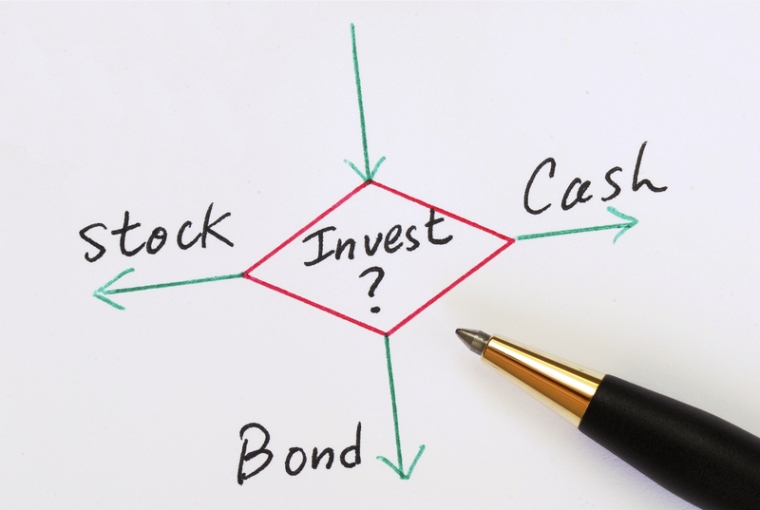
The Labour Government has revamped the investor migrant regime to force those wanting to buy residency to invest more directly in companies and technology, rather than just in bonds and property.
Previously, non-business migrants had to invest $10 million in assets in New Zealand over three years to get full residency for themselves and their partners and children aged under 24 (Investor 1 category). Also, experienced business people could buy residency for themselves, partners and children indefinitely by investing $3m in assets here (Investor 2 category). However, almost all of the $12b invested by such investor migrants over the last decade was put into passive listed shares and bonds, rather than in active businesses generating jobs and exports.
New Migration Minister Michael Wood and Economic and Regional Development Minister Stuart Nash announced changes to the regime to encourage bigger investments and more active investments, and to not allow investments in bonds and property to be counted in the regime between $5m and $15m. The new minimum investment for a single new class of investor migrant is $5m and at least 50% must be invested 'directly' in businesses, rather than 'passively' in listed equities and bonds.
Those who only want to invest passively or are only able to invest passively, will have to stump up at least $15m. Applicants have to spend a minimum of 117 days in New Zealand over a four-year investment period or just over a month per year, up from 88 days under the previous regime.
"The new visa settings will attract active and high-value migrants who will bring their international expertise to help New Zealand businesses to grow, which increases local employment and directly benefits the economy," Nash said.
“The new Active Investor Plus visa will replace the old investment visa categories, which although successful in attracting a large amount of funds over past decade – over $12b –often resulted in passive investment in shares and bonds rather than directly into New Zealand companies, meaning a missed opportunity to attract more active investors who can deliver real benefits to our economy over a long period of time," he said.
“We want to encourage active investment into New Zealand, which generates more high-skilled jobs and economic growth compared to passive investment. This new visa category will also leverage the skills, experience and networks of migrants who will bring their access to global networks and global markets to help Kiwi companies grow faster and smarter."
The new Active Investor Plus visa category will open on 19 September and applications under the Investor 1 and Investor 2 visas will not be accepted after 27 July. The specific eligibility criteria have yet to be confirmed.
National and Green criticism
The Green Party accused the Government of allowing wealthy people to buy residency while "entrenching a system that keeps low-waged workers on a precarious and temporary status."
“The Government is essentially maintaining its open door policy for the super wealthy, even as it makes it harder and harder for essential workers on low wages to come to New Zealand to put down roots,” said Ricardo Menéndez March, Green Party spokesperson for immigration.
“Many people who we deemed essential during the pandemic face uncertain pathways to residency while the Government continues to prioritise investors," Menendez March said.
“We urge Labour to put energy into reviewing the residency settings for underpaid professions such as nurses, decouple work visas from single employers and to create genuine pathways to residency for lower waged workers to create a more equitable immigration system," he said.
“The double standards present in the current approach do not reflect the values of most New Zealanders and speak to a growing divide in our immigration system."
National Immigration spokeswoman Erica Stanford said the new regime risked turning billions of dollars away because it was convoluted and made it harder to invest here.
“The new categories ask new arrivals to New Zealand to immediately invest directly in private companies, a high-risk investment in a market they would not yet understand," Stanford said.
“Productivity Commission research looking at the typical investor lifecycle found that high-risk investments generally follow low-risk investments, while overseas investors find their feet in New Zealand. This is backed up by research commissioned by Immigration NZ and conducted by BERL, which shows that individuals go on to make further active investments far exceeding the initial investment required to gain residence."
Stanford said she understood investor migrants who invested one dollar passively in the early years went on to invest a further two to three dollars in active investments later. She said Australia's new premium investor category was scrapped in 2021 after the threshold was set at $15m and it did not attract enough applicants.
35 Comments
Suggest no residency (or citizenship) unless you are in country at least 4 out of next five years. And if you try to use New Zealand as a transit to Australia, all is revoked.
If you ever leave for more than two years, all is revoked.
(if the Aussie switch ain't going to work, they won't try it)
Better welcome investors with a free ticket back to where they came from. Why not.
Oh, and let’s tax them 75% out of the $10m they have to invest so we have funds for the next 100,000 Kiwis who don’t want to work.
Residency already has rules like that in place before you can get citizenship. You need to be in the country for 240 days in each of the 5 years before applying for citizenship. Citizen applications also declare they have "no intention" to leave.
And as for citizenship, you're creating second class citizens there. Once you're a citizen here, you're no different from a citizen by birth. And that's the way it should be. I don't think we should be revoking citizen when people do something we don't like. The Aus thing is a perk every other Kiwi is entitled to. Maybe an exception for those who leave to join ISIS.
sounds like a jail term.
I think it's a good move, it'll generate more businesses and more jobs, National & the Greens shouldn't complain
I keep hearing the problem is we currently have too many jobs that can’t be filled – but yet we apparently need to create even more jobs that can’t be filled.
Never mind though– I imagine ever more immigrants can be brought in to fill these positions that would otherwise go begging.
But really, what was the point – and does this game ever have an end point?
Perhaps it will all be explained within the soon to be released population policy outlines from the various parties – although sadly, expectations shouldn’t be particularly high in this regard.
More and more growth burning more and more fossil fuels that we are running out of.
You're right. Successive governments have relied on RBNZ and INZ to make up for their own failure to reform our education & skills programme, tax structure and industrial policies.
The question policymakers need to address is what does NZ have going for itself to attract foreign investors and skilled migrants away from countries such as Australia and Canada?
Even the managers at the Harvard endowment fund chose to buy forestry assets and dairy farms in NZ, the latter of which they sold a few years later and perhaps pocketed the gains tax-free.
Does this game have an end point? Why yes it does. Earth as an unlivable hell hole. You never find a growthist thinking beyond his/her 3 month report though. The growth cult is a danger to themselves and the rest of life on planet earth. If humans were rational, such people would be treated for their psychosis, not celebrated and given the keys to run the place.
I think I might set up a company that does nothing but hold nzgb. For a modest management fee of course.
that's exactly what will happen is'nt it, the good old lawyer and accountant will work it all out, don't worry about that.
You'll need to compete with my company that will do nothing but buy houses.
This is a twonk policy that could only have been dreamt up by those completely detached from the reality of NZ. We need teachers firemen nurses IT engineers and GPs. They need to see a future in NZ before they come. Crash the housing market.
This article is not about the housing market
But the article IS about migration, and Jim’s point is a valid one, that the priority needs to be on getting skilled immigrants in healthcare, education etc. And then the related point is that to attract those key workers we need a more affordable cost of living, including housing.
I agree with Jim that we need nurses, teachers and other professionals, I just have an issue with his last sentence "crash the housing market" because no matter the subject, Jim always comes back to that conclusion.
We need nurses, teachers and other professionals, but they don't deserve to own a home. We'd rather allow people to leverage housing bubble equity into additional "cages" for these productive people to be milked for all they're worth.
We need 3k doctors and 12k nurses in NZ just to meet the current skill shortfall.
However, there have been no concrete changes to the pre-pandemic migration policy that ensures we won't have thousands upon thousands of business diploma students, cafe workers and tour guides coming into NZ adding more demand pressure on these services.
The new "green list" fast-tracks residence for genuinely skilled workers but all the others still have the usual pathways available to them.
The Green Party accused the Government of allowing wealthy people to buy residency
This was always the case. Except now they can't just buy a mansion, they actually have to invest in something productive. Which is (I grudgingly admit) an improvement.
Although why not just call it a $10M immigration fee and be done with it. Let's face it, the wealthy aren't exactly a burden on our society, and the money could be used to sponsor the acquisition of the necessary infrastructure workers we desperately need.
I think it’s a farce.
Perhaps the necessary infrastructure workers we desperately need is simply in response to the rapid, poorly managed importation of so called “desperately needed workers” over the last few years causing a strain on our existing infrastructure.
Much squawking from the various political parties attempting point scoring – however a deafening silence when it comes to outlining a meaningful population policy.
You had me until you said the wealthy aren't a burden. I absolutely disagree because public policy becomes skewed towards their needs through the networking influence of their status and wealth. They bring their ideology with them which often means the avoidance of tax using offshore havens, individualistic culture and lack of societal conscience, investing their locally made 'declared' profits in realestate and stock buybacks.
How much did Peter Thiel invest for getting his citizenship in a short time (without having lived here) and what is the current status of that investment ? Is it still with NZ, or have they all been shifted out ?
How long will the $15 mil required to be retained here in NZ for continuation of residency ?
Typical Labour tweeking - a foot in all camps, but no brains (or ethics) whatsoever.
So Kate, you prefer the current situation where foreigners can buy citizenship by buying houses?
I can't decide whether you're proposing a straw man or a masked man logical fallacy: what do you think?
From an ethical perspective the category should be scrapped altogether unless there is clear empirical data which proves that the country as a whole benefits from the category/scheme over the period of time that it has been running.
I'd be very happy with a philanthropist, as opposed to investor category. Government puts together any number of social good projects that qualify for philanthropic funding - person chooses which project to sponsor - the capital is paid to the benefactor organisation and citizenship is granted.
Bad news for the realestate agents but good news for stock brokers. You can always retrain.
National is all about the houses - i suspect they still want the incoming money to go there to protect the ponzi (given their MPs all own so many houses they will be desparate to keep it alive)? Perhaps they could suggest instead 6 months of passive investment into bonds or whatever (not houses) but then the migrant will have had time to consider their options and learn the market and either they must invest it all in start ups or clear off to another country.
I would prefer labours policy to nationals (i am business oriented and traditional national supporter but well over the housing ponzi now).
Greens on the best track.. good nurses and teachers are what we need and a clear pathway to residency and affordable houses and cheaper food is vital for them to be attracted here.
Labour seem to be finally seeing the light, reading the room and shifting policy away from the housing ponzi and in to productive business (its probably pretty obvious now housing ponzi is sinking fast and they need to cling to another boat).. this policy supports that opinion.
National on the other hand seem to have tied themselves to the property boat and want to save property investors and developers - thinking that is 'business'. Need to get with the sentiment.
Surely as a wealthy business person moving to a new country you would research before you came.
I really don't understand why we sell our citizenship at all. Team NZ has no idea what the end goal is, completely lacking in any future vision.
I'm not too sure the article is correct re 'buying houses' (residential property is not a permitted investment class). An investor is however permitted to buy a house like any resident (i.e. not subject to OIO rules).
The passive investments however are permitted and, from what I could see, only benefited the banks who typically charged 40bps custody for the privilege of doing practically nothing. So I guess from that perspective a revamp is probably well overdue.
However, having folks come in who spend at restaurants, bars, buy cars and boats etc ain't all bad and there have been very very few Investor class visas issued in the past 3 years.
Not everyone needs to be a doctor or a teacher. Some people can just spend to help the economy tick over.
Amateur moves, bulk milk powder thinking. Make our golden visa cost 100m. Or 1b. Then let it be known that the NZ passport is the most exclusive on the planet and watch them line up for bragging rights. Seriously though, a fair chunk of the population is sleeping in cars or motels and they have time to waste on this?
The 50% increased investment required (from NZ$10million to $15million passive) may just be where our government is expecting real inflation move the value.
I’ve always been puzzled by the unstated assumption that rich migrants are inherently better or more desirable than other migrants.
Because I belong to a wealthy family (NBR rich list level) and my direct experience has been that people become progressively more risk averse as their assets rise in value. People become wealthy by taking risks, and they remain wealthy by investing conservatively.
Good point Feijoa, someone building wealth, constructively, is a greater asset to the economy than someone who wanders in with an already made fortune. As the latter may well wander out again, leaving behind who knows.
Another point which has been made many times is the wealthy can build what they need and not buy existing infrustructure.
Edit, should be inforced to build.
We welcome your comments below. If you are not already registered, please register to comment
Remember we welcome robust, respectful and insightful debate. We don't welcome abusive or defamatory comments and will de-register those repeatedly making such comments. Our current comment policy is here.