

 By Roger J Kerr
Potentially two counter-acting forces evolving this week will not help settle the debate as to whether the RBNZ need to lift the OCR in late 2012 or early 2013.
The debate is not only about the timing of OCR adjustments, however the speed and extent of those increases.
Stronger GDP growth that brings higher inflation risks with it would point to earlier and more rapid increases. Much also depends on where the NZD/USD exchange rate is.
Should the NZD/USD rate stay above 0.8000 and the TWI Index stay up near 74 over coming months, the RBNZ have monetary conditions being tightened for them automatically by the exchange rate and thus will not change interest rates.
The two variables this week are the NZ inflation numbers for the March quarter on Thursday 19th and RBA meeting minutes tomorrow, Tuesday 17th.
Rightly or wrongly, our short-term swap rates do follow Australian swap rates and the Aussie interest rates have fallen as they anticipate more RBA rate cuts. The RBA are waiting to make sure there are no surprises in their inflation figures on 24th April before cutting rates; however their moneymarkets are pricing-in 0.90% in cuts by December from the current 4.25% OCR. The meeting minutes should confirm the abrupt change in attitude at the RBA over recent weeks.
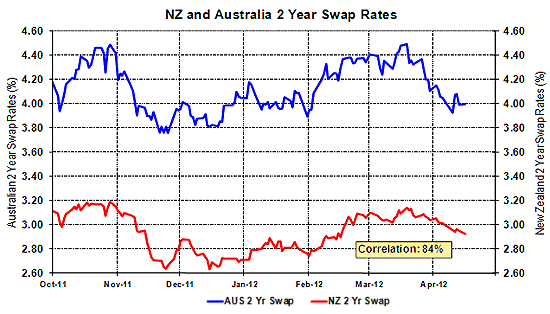
The RBNZ still appears to be too relaxed and/or complacent about our inflation outlook.
Whether we see all the recent price increases occurring in the economy coming though in the March quarter’s numbers remains to be seen. I would not expect any surprises away from the +0.6%/+0.7% prior forecasts for the quarter.
Looking ahead, on top of all the electricity, fuel, insurance, food and beer price increases going on, there are two new developments that are also causing higher inflation:
- Construction prices have to lift as an under-resourced building industry struggles to match the sudden lift in demand from the Christchurch re-build and Auckland under-build.
- The rising NZ dollar last year caused price decreases for imported consumer goods which has partly disguised other price increase in the economy to date. The stabilisation of the NZD/USD rate just above 0.8000 and potential pull-back into the 0.7000’s over coming months means that such price decreases are not going to repeat this year.
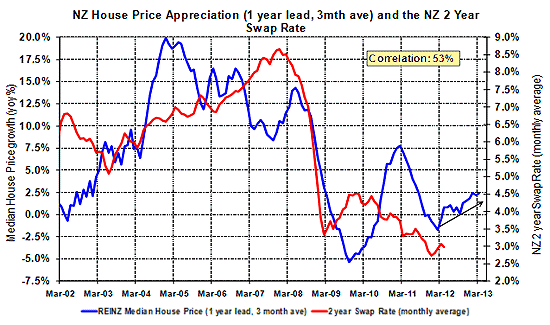
Latest residential property price data from REINZ confirms the upward trend now in place and as the chart below indicates, the two-year swap rate has historically followed.
--------------------------------------------------------------------------------------------------------------------------------
To subscribe to our daily Currency Rate Sheet email, enter your email address here.
--------------------------------------------------------------------------------------------------------------------------------
* Roger J Kerr runs Asia Pacific Risk Management. He specialises in fixed interest securities and is a commentator on economics and markets. More commentary and useful information on fixed interest investing can be found at rogeradvice.com
We welcome your comments below. If you are not already registered, please register to comment
Remember we welcome robust, respectful and insightful debate. We don't welcome abusive or defamatory comments and will de-register those repeatedly making such comments. Our current comment policy is here.