
By Bernard Hickey
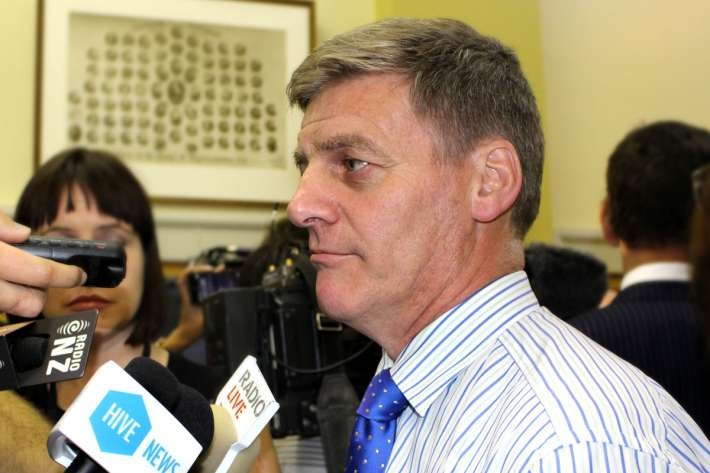
Finance Minister Bill English has warned that a NZ$100 million hit to oil royalties because of the oil price slump and lower taxes on bank term deposits was putting pressure on the Government's plan to return the Budget to surplus in the current 2014/15 year.
English was very cautious about repeating his previous assurances that an OBEGAL (Operating Balance Excluding Gains and Losses) surplus would be recorded by the time the accounts are finalised in October. The pressure on the Government's flagship surplus promise was thought to have eased after Treasury reported on March 11 a NZ$77 million OBEGAL surplus in the seven months to January.
English pointed reporters in Parliament to inflation being lower than expected in the last six months pressuring the Government's books.
"It's great for households and good for business and helps for the conditions for investment, but it's a bit of a challenge for the Government's books," he said.
"There's certainly pressure on the surplus. We've got about NZ$100 million less in oil royalties and tax. Discount rates on our liabilities are lower," he said.
"We get quite a lot less interest income because interest rates are lower than expected. We've got over NZ$100 billion in bank deposits and the interest on that very large amount of money is lower than expected, so yes it does put pressure on the surplus."
Asked if he remained confident that the Government would achieve its long-targeted OBEGAL surplus in 2014/15 by the time the year's accounts were finalised in October, he said: "You'll just have to wait and see. The Treasury is going through a forecasting round right now and I wouldn't want to get ahead of that."
'No need for PTA change'
Asked about growing calls for either lower interest rates or a lower inflation target for the Reserve Bank in its Policy Targets Agreement with him, English said the outlook depended on "whether you think zero inflation is permanent or temporary, and it's a bit hard to tell right now."
"It's lower than expected six months ago and that's going to have an impact on the Government's books because the tax base isn't growing pushed by inflation. It's growing purely on the base of real GDP," English said.
"The question of whether it's permanent or temporary: that's the exactly challenge the Reserve Bank Governor has got. If he started to think it was permanent, that might affect his interest rate decisions. So far the RB's view appears to be that while inflation is quite low now, it will probably come up again," he said.
Asked about BNZ's call for a lower inflation target to avoid rate cuts that might overheat the economy, he said: "I don't think there's a need to look at the policy structure. That's a bit of a distraction from the core issue, which is whether you think zero inflation is going to be around for two to three years or five years, or for the next six months."
English also rejected Winston Peters' comments about the high New Zealand dollar hurting the regions, saying he had not heard that raised by Northlanders when he visited during the campaign.
No chart with that title exists.
We welcome your comments below. If you are not already registered, please register to comment
Remember we welcome robust, respectful and insightful debate. We don't welcome abusive or defamatory comments and will de-register those repeatedly making such comments. Our current comment policy is here.