
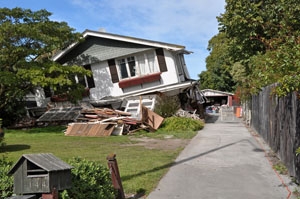
The revamped Resource Management Act could prevent the most vulnerable being left out of pocket as the supply of affordable housing increases, the Insurance Council of New Zealand (ICNZ) says.
The Government has proposed to include the management of natural hazards in the updated legislation.
The ICNZ maintains this will prevent budget housing from being built on land prone to the likes of flooding, erosion or liquefaction.
“Insurers take the long view and our concern has been that in the necessary push to increase the supply of affordable housing, poor quality land that is highly vulnerable to natural hazards would be released for development," ICNZ chief executive Tim Grafton says.
“It is reassuring to hear the intent is to avoid these becoming the platform for future disasters.”
ICNZ has been advocating for the Government to write legislation that recognises the fact New Zealand’s third on a Lloyds Global Underinsurance Report list of countries most vulnerable to the impact of a natural disaster as a percentage of GDP.
The Canterbury earthquakes cost the country about $40 billion dollars, equivalent to about 20% of GDP.
“There has been this vague assumption that risk reduction requirements are managed under our main piece of planning legislation, the RMA, but the term ‘risk reduction’ is not mentioned in the Act and nor is the management of natural hazards.
“Hopefully, the new Act will address this glaring anomaly,” says Grafton.
Environment, Building and Housing Minister, Nick Smith, recognised this loophole in the existing legislation in the speech he gave on the RMA on Wednesday.
Referencing the Bexley subdivision in Christchurch, he said:
“Hundreds of pages of reports and submissions were written on the effects of this housing development covering birdlife, landscape, coastal impacts, effects of recreation, effects of Maori cultural values, but nowhere did any official consider the effects of land liquefying in an earthquake like what occurred in 2010 and 2011.
“This was despite this risk having clearly been identified by council natural hazard experts.
“I’m sure the people of Bexley and the taxpayers who ended up with a bill for hundreds of millions of dollars would have much preferred the RMA process gave more attention to the earthquake risks than the more esoteric concerns the law required them to focus on.”
Grafton says more information about the risks and hazards of different properties need to be made available, before the market can reasonably set the price.
The ICNZ points out that currently, information about all types of natural hazards doesn’t have to be disclosed in Land Information Memorandum (LIM) issued by local authorities.
This masks market signals that would encourage people to retreat from risk-prone areas.
Grafton recognises migrants are particularly at risk at the moment, as they may not be aware the glitzy property they’re buying in a new subdivision, has been built on swamp land, for example.
“Liquefaction won’t even be in their vocab.”
He says national guidelines for risk tolerance are also needed to help local councils make decisions that are consistent with each other.
We welcome your comments below. If you are not already registered, please register to comment
Remember we welcome robust, respectful and insightful debate. We don't welcome abusive or defamatory comments and will de-register those repeatedly making such comments. Our current comment policy is here.