
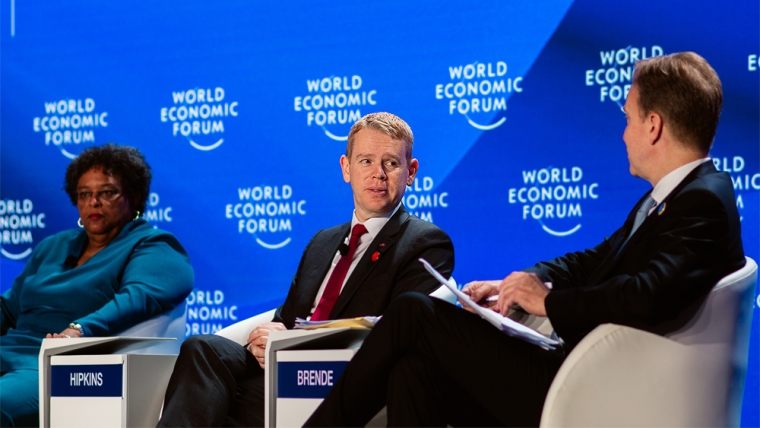
Labour leader Chris Hipkins confirmed this week that he will contest the 2026 election with a policy to broaden the tax base, although the details haven’t yet been drawn up.
The former prime minister told a Stuff podcast that an additional tax, on something other than wages, would be part of his 2026 campaign to reclaim the Beehive.
For the past three decades it had been possible to provide world-class healthcare, education, and retirement while keeping government spending below 30% of GDP, he said.
But the ageing population means that will no longer be possible. Continuing to offer public healthcare and universal superannuation would push spending above that line.
Labour also wants to balance the budget and therefore would have to raise revenue from somewhere.
“We do need to have a significant conversation with the country about tax. But I don’t think we need to be jingoistic about it — even the current government is looking at new forms of revenue,” he said.
Tax capital
Hipkins doesn’t want to take that new revenue from workers, who already bear the bulk of the tax burden. International economists, such as those from the OECD and IMF, have told New Zealand it relies too much on taxing wages and salaries, and not other forms of income.
"Philosophically, I think regular bracket adjustment … is a sensible idea. As long as you’ve got alternative revenue sources to make sure the Government can fill the hole it creates,” he said.
The Coalition Government had also recognised the need to broaden the tax base, Hipkins said, and was doing so by increasing vehicle registration fees, putting road user charges on electric vehicles, and tripling the visitor levy.
He also argued it was looking to expand the taxation of capital gains with plans to impose ‘value capture’ taxes on properties which benefit from future infrastructure investments.
Rather than continue this piecemeal approach, Labour has been pondering some sort of economy-wide tax — such as a more comprehensive capital gains or wealth tax.
A somewhat vague post, shared by Labour Whangaparāoa’s Facebook page, showed former revenue minister David Parker has been pitching a “capital income tax” to party members.
It sounds a lot like the wealth tax he designed with Grant Roberston in 2023, which Hipkins vetoed, except perhaps more focused on taxing increases in wealth.
A sensible shepherd
Barbara Edmonds, the party’s finance spokesperson, told attendees at the FSC24 Conference that she was reviewing the whole fiscal strategy and looking at more than just “progressive tax reform”.
“You can’t just look at debt without looking at expenses and taxes. You need to look at it wholly, and if you change one area you need to look for unintended consequences in other areas.”
Edmonds doesn’t see herself as the key decision-maker on tax policy. She has previously said her role was to inform the internal debate and support the decision made by the party.
Some have speculated she and Hipkins may both favour a more traditional capital gains tax over the wealth tax, advocated by Parker and some of the more leftist Labour MPs.
However, Hipkins told Stuff his problem with the 2023 proposal was related to its timing and the ability of the party to adequately explain it to the public, rather than its actual design.
Official views
The Treasury produces a document assessing the Crown’s long-term fiscal position every four years. It is due an update next year, but in 2021 it said policy changes were needed.
“Our projections indicate that the gap between expenditure and revenue will grow significantly as a result of demographic change and historical trends, in the absence of any offsetting action by governments. This will cause net debt to increase rapidly as a share of GDP by 2060.”
Changing tax rates or limiting spending growth would help to close the growing gap between revenue and expenditure but neither would be enough on its own.
“This means that future governments will likely need to draw on multiple levers and consider trade-offs across different policy options in responding to our fiscal challenges,” it said.
“There are many ways in which governments could seek to raise additional revenue from existing and new tax bases beyond personal income tax. All have trade-offs; there is no perfect way to raise revenue, and different levers have different economic and social impacts.”
Treasury has long advocated for a more comprehensive capital gains tax. It said this could raise around 1.2% of GDP each year, although that was highly uncertain. A wealth tax would likely raise significantly more, but could come with unintended consequences.
As the agency said, there are no perfect taxes, but there is a growing consensus that New Zealand needs more of the imperfect ones, and Labour will be pitching one to voters.
We welcome your comments below. If you are not already registered, please register to comment
Remember we welcome robust, respectful and insightful debate. We don't welcome abusive or defamatory comments and will de-register those repeatedly making such comments. Our current comment policy is here.