

The number of overseas students in New Zealand has hit a record high for the time of year.
The latest figures from the Ministry of Business Innovation and Employment (MBIE) show there were 76,215 people in NZ on student visas at the end of January this year.
That's up 13.3% compared to January last year, and is the highest number for the month of January according to MBIE figures which date to 2016.
Although the total number of overseas students has recovered strongly post pandemic restrictions and now sit at a record high, there have been important changes in the composition of the overseas students.
Most of the growth in numbers has come from school aged students aged up to 19 years-old, while the number of those aged 20 and above has slumped from previous highs.
The implication is that more overseas students are attending secondary school, while fewer are attending NZ tertiary institutions such as universities and polytechs.
That trend is not new.
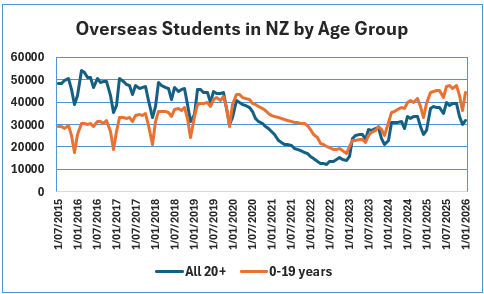
The graph below shows the total numbers on student visas aged 0-19, and those aged 20+ at the end of each month from July 2015 to January 2026.
It clearly shows that those aged 0-19 were steadily increasing in number up until 2020, while the number of those aged 20 and above was in a slow but steady decline.
The number of overseas school students overtook the number of tertiary students at the start of 2020.
The numbers of both groups then slumped sharply in 2021/22 due to pandemic restrictions, with the older group declining more quickly than the younger group. (See graph below).
Although the numbers of both groups have since recovered and resumed their normal seasonal trends since 2023, school students numbers have recovered more quickly than tertiary student numbers.
While school student numbers hit a record high for the month of January last month, the number of older students aged 20 and above remains down by 43% compared to its 2016 January peak.
The difference in the composition of overseas students has important economic implications, not just for educational institutions but for the wider economy.
School aged students are likely to be boarding or living with friends or family, while older students have a significant impact on the rental property market, particularly for apartments and flats near their study centres.
And of course older students can be a significant source of revenue for the hospitality industry, so a downturn in their numbers can hit the bars, cafes and entertainment venues they like to frequent.
The comment stream on this article is now closed.

We welcome your comments below. If you are not already registered, please register to comment
Remember we welcome robust, respectful and insightful debate. We don't welcome abusive or defamatory comments and will de-register those repeatedly making such comments. Our current comment policy is here.