
Fuel prices rose in September while onions have had a meteoric annual price rise, according to Statistics New Zealand's latest Selected Price Indexes (SPI) figures.
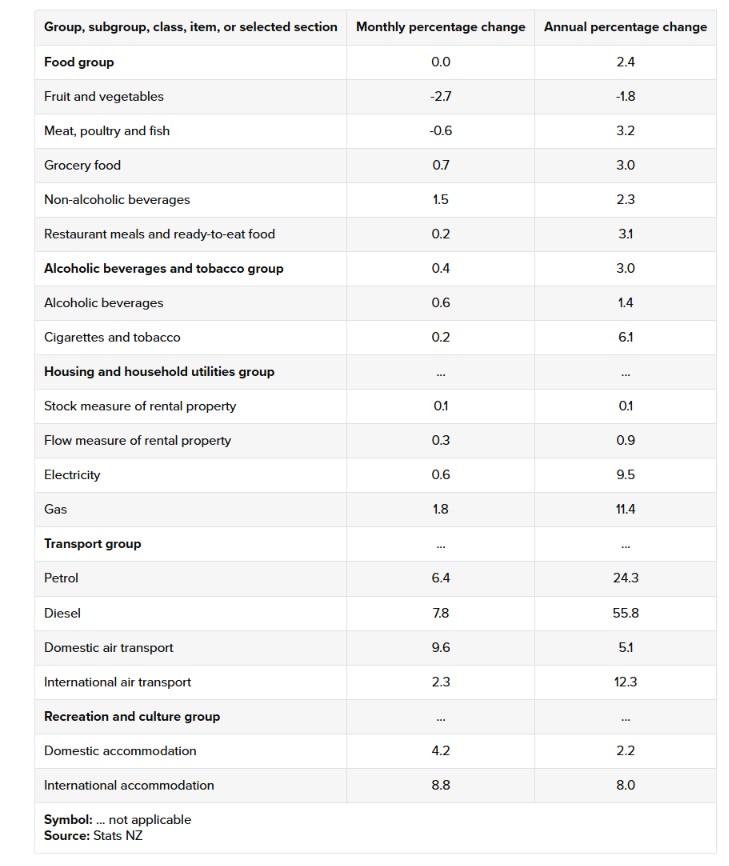
The rise in fuel costs won't come as a surprise to many New Zealanders, who have felt rising monthly fuel prices while at the pump. In the year to September, petrol prices jumped 24.3% while diesel soared 55.8%, the SPI shows. Although the SPI figures don't account for October just yet, petrol prices have reportedly reached new highs - with 91 petrol sitting at $3.52 and diesel around $3.23.
Other major annual price increases included a 9.5% rise in electricity prices, with gas prices up even more, 11.4%. These are higher than the increases recorded in the August year of 9% for electricity prices and 11% for gas prices.
Meanwhile, annual food prices rose 2.4%, down from a 1.9% rise in the year to August. Onion prices soared 86% in the September year.
"This is the largest annual increase in onion prices since the series began in 2008," Statistics NZ prices and deflators spokesperson Nicola Growden said.
The SPI is a monthly series featuring about 47% of the contributors to the quarterly Consumers Price Index (CPI) - New Zealand's official measure of inflation. The SPI also includes monthly data on things like food, alcoholic beverages and tobacco, rental housing, utilities, transport and accommodation services.
It gives people a good steer of how inflation is tracking with September's SPI figures showing that, compared with August, petrol prices in September were up 6.4% while diesel prices jumped 7.8%.
"Supply disruptions that began in late February 2026 contributed to higher fuel prices in March and April, Growden said.
“Petrol and diesel prices then declined through to July, before increasing again in August and September. Although prices in September were above March levels, they were still below the peak recorded in April.”
In terms of food prices, the grocery food group was the largest contributor to the annual increase, up 3.0%. This was followed by an increase in prices for restaurant meals and ready-to-eat food group, up 3.1%
Fruit and vegetable prices have continued to fall, dropping 1.8%. In the year to August, fruit and vegetable prices fell 1.6%.
Price increases were recorded for meal kits, chocolate blocks, onions and potatoes. Price decreases were recorded for tomatoes, fresh eggs and cabbage.
Monthly food prices flat in September
Food prices between August and September were little changed. This follows a 0.3% increase between July and August.
Month-on-month, prices for the grocery food group increased 0.7% in September, while the fruit and vegetables group dropped 2.7%.
Monthly prices increases were recorded for meal kits, onions, instant coffee and energy drinks. Price decreases were recorded for tomatoes, chicken pieces, cucumbers and capsicums
CPI and the Official Cash Rate
For its second monetary policy review in a row, the Reserve Bank (RBNZ) raised the Official Cash Rate in September to 2.75% from 2.50%.
In its September Monetary Policy Statement (MPS), the RBNZ's Monetary Policy Committee (MPC) determined that gradually removing monetary stimulus was necessary to return inflation to the RBNZ’s 2% inflation target midpoint and support growth and employment, while avoiding unnecessary instability in output, employment, interest rates and the exchange rate.
The RBNZ has previously hinted strongly at a possible pause at the next OCR review on October 28 but following the latest gross domestic product (GDP) figures, some economists suggested stronger-than-expected GDP data could nudge the central bank towards an increase in October.
Annual inflation, as measured by the CPI increased to 4.1% in the June quarter – the highest annual inflation rate NZ has seen since it hit 4.7% in December 2023. The September quarter CPI is due out on October 22.
In its September MPS, the RBNZ is projecting annual inflation in the September quarter and December quarter to be at 3.9%.
The RBNZ is tasked with maintaining inflation between 1% and 3% based on the CPI, specifically targeting 2%. The OCR is its main tool for doing this.
Here is the detailed SPI information for September as supplied by Statistics New Zealand:
We welcome your comments below. If you are not already registered, please register to comment
Remember we welcome robust, respectful and insightful debate. We don't welcome abusive or defamatory comments and will de-register those repeatedly making such comments. Our current comment policy is here.