
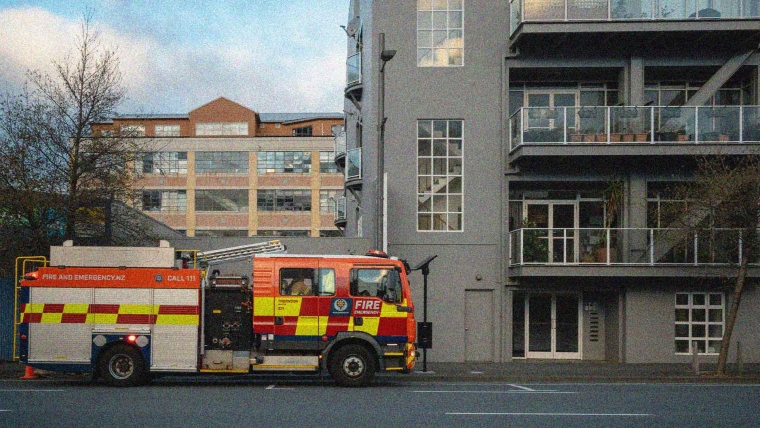
The Department of Internal Affairs (DIA) will look into whether there are better ways to fund Fire and Emergency New Zealand (FENZ) compared to the current insurance levy system, Internal Affairs Minister Brooke van Velden says.
“The Fire Service levy was introduced in 1975 and, despite changes to the core services FENZ delivers, is still the funding model used today," van Velden says.
Alongside responding to fires, FENZ responds to medical emergencies, maritime incidents, severe weather events and disasters.
"Given the widened mandate, there is a valid question about whether this model is fair for levy payers and fit for purpose," van Velden says.
She says 95% of FENZ’s income is collected from levies on property insurance protecting against the risk of fire.
FENZ's levy is part of a person’s premiums if they have insurance cover for property in New Zealand against the risk of fire. The levy also applies to motor vehicle insurance policies. According to the Insurance Council of New Zealand (ICNZ), the lobby group for general insurers, FENZ currently raises around $800 million annually through the levy.
On its website, ICNZ has provided a broad example showing the FENZ levy makes up about 5% of a house insurance premium.
The Government also says another longstanding issue with the model is "the issue of free-riding," where people don't insure their property but still rely on the service.
The levy has been going through changes, with new annual levy rates kicking in from July. The DIA's website says for motor vehicles, a flat levy amount will apply while for other insured property, the levy will be a defined proportion of the insured value.
Motor vehicles owners will pay an annual levy of $25. While homeowners will pay a maximum annual amount of $107.40, with the new maximum annual amount based on a residential property levy rate of 10.74 cents per $100 sum insured and a cap of $100,000.
The new levy rates will still go ahead while the DIA looks into the current levy system.
The DIA will engage with stakeholders and consider any issues with the current system and possible alternative approaches, taking into account feasibility of implementation.
“Given the significance of the levy, it is timely to consider whether its design and operation remain appropriate, or whether improvements are possible," van Velden says.
“It is important that the revenue collected to fund Fire and Emergency is reliable, fit for purpose and future proof. This work will give us greater understanding about whether insurance is the only feasible collection method, or if there are other practical alternatives. I look forward to seeing feedback from the targeted consultation.”
'Community Protection Levy'
Just a few weeks ago, ICNZ put forward a proposal to replace the FENZ levy with a ‘Community Protection Levy’ which would focus on natural hazard risk reduction.
Under ICNZ’s proposal, FENZ funding would move from insurance-linked levies to Crown funding, which according to ICNZ, would allow around $600 million to $700 million a year to be redirected into resilience and risk reduction. The ‘Community Protection Levy’ would be collected by insurers on behalf of the Government.
But at a conference recently hosted by the ICNZ, Finance Minister Nicola Willis told the audience she didn’t think it was necessary to have a specific levy to achieve resilience against natural hazards, "if you have [a] prudent Government investing in infrastructure”.
We welcome your comments below. If you are not already registered, please register to comment
Remember we welcome robust, respectful and insightful debate. We don't welcome abusive or defamatory comments and will de-register those repeatedly making such comments. Our current comment policy is here.