
Here's our summary of key economic events overnight that affect New Zealand, with news the prospects for a rebound in global growth aren't obvious to a global analyst.
But first, today is an American public holiday, Martin Luther King Jr Day, and markets are closed there.
The IMF said that the fall in global growth appears to have bottomed out but there is no rebound in sight. They cite risks ranging from trade tensions to climate shocks that they say makes the outlook uncertain. They are recording that American GDP growth dropped -0.6% in 2019, and China's fell -0.5% all due to the trade wars. Of course the dollar fall was much larger for the US given it is a much larger economy. They see the American growth rate falling another -0.5% until 2021 and China's slipping another -0.3%. The only big improvers from here seem to be emerging market economies, and especially Mexico after a very weak 2019. Globally, 2020 won't see any significant 'rebound'. Neither New Zealand nor Australia rate a mention in this review.
Overnight, European equity markets were all lower by about -0.3%, with the exception being Frankfurt which managed a +0.2% gain.
Yesterday, Shanghai equities rose +0.7%, Tokyo rose +0.2% but Hong Kong tumbled by almost -0.9%. Moody's cut Hong Kong's credit rating from Aa2 to Aa3, citing their inability to resolve the protest issues.
China has confirmed that its new and untreatable SARS-like coronavirus is being transmitted human-to-human and while the number of deaths is still low. The number of infected people is rising quickly, with 130 new cases over the weekend. Now health workers fighting the virus are being infected. And international travel is seeing it spread. Much worse, China is about to embark on its huge annual migration for its Spring Festival / New Year holiday and that raises the stakes immeasurably.
In Japan, industrial production is still on the skids, down -8.2% in November from the same month a year ago. But at least its decline rate has stopped falling.
In Australia, iron ore prices are heading back up again, now close to US$100/tonne, up more than +15% in the past three months. And coking coal prices are on the move back up as well on the steel demand, up +8% since November.
Yesterday, the NZX50 fell a sharp -0.5% while the ASX200 rose +0.2%.
The UST 10yr yield is unchanged due to the US holiday at just under 1.83%. Their 2-10 curve is still at +26 bps. Their 1-5 curve is unchanged at +6 bps. And their 3m-10yr curve is also still at +29 bps. The Aussie Govt 10yr is at 1.17% and down just -1 bps overnight. The China Govt 10yr is unchanged at 3.13%. And the NZ Govt 10 yr is also down -1 bp at 1.54%.
Gold is now at US$1,561/oz and up +US$3 from this time yesterday.
US oil prices are a little firmer, now just on US$58.80/bbl and the Brent benchmark is just on US$65.30/bbl.
The Kiwi dollar is now at just on 66 USc and while this represents only minor softness in the past 24 hours, it does mean it is at its lowest point in more than a month. On the cross rates we are unchanged at 96.1 AUc. Against the euro we are also unchanged at 59.6 euro cents. That puts our TWI-5 at 71.3.
Bitcoin is little-changed from this time yesterday at US$8,651. The bitcoin rate is charted in the exchange rate set below.
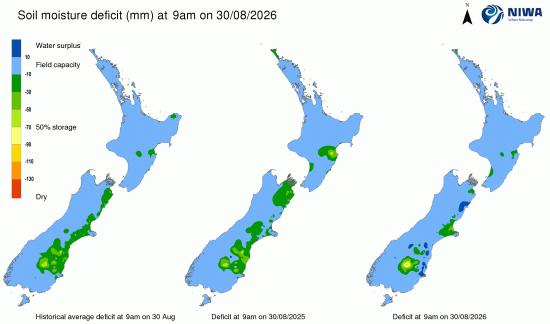
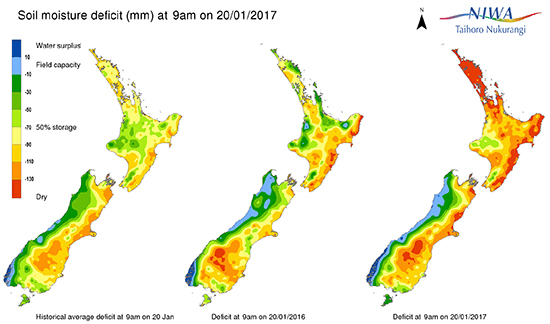
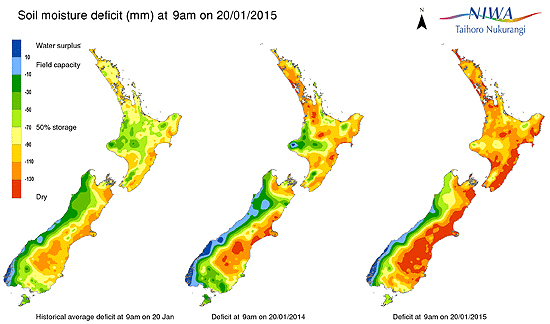
And here are the 2015 and 2017 maps for easy reference:
The easiest place to stay up with event risk today is by following our Economic Calendar here ».
We welcome your comments below. If you are not already registered, please register to comment
Remember we welcome robust, respectful and insightful debate. We don't welcome abusive or defamatory comments and will de-register those repeatedly making such comments. Our current comment policy is here.