
Here's our summary of key economic events overnight that affect New Zealand, with news the bounce-back in jobs growth is now very uncertain.
The US reports its non-farm payrolls report this weekend and analysts are expecting July jobs to have bounced back by +1.6 mln. That would mean that since March, 9 mln people have been re-employed of the 21.5 mln who lost their jobs in the period. The precursor ADP Employment Report was out today and analysts expected it to show the July bounceback at 1.5 mln. In the end however it was only a paltry +167,000 and a worrying portent for the non-farm payrolls release.
August kicks off the withdrawal of the special US$600 pandemic boost for joblessness and 870,000 workers will progressively lose that in this month. As many as 20 mln more will lose it next month. It's an income withdrawal that the US economy will notice.
The widely-watched ISM services PMI did provide a sentiment boost however, bouncing back with a second strong monthly expansion in July, one that was better than expected. But perhaps it is a jobless recovery? Certainly the employment subcategory suggests that with a further contraction within this result. Businesses are taking the new orders but don't believe the situation will last so aren't hiring.
In Canada, the Vancouver housing market is taking off again. July sales were +22% higher than in the same month a year ago. June sales were up almost +10% on the same basis. An influx of people from Hong Kong might be driving the resurgence. The same new impetus doesn't seem to be happening in Toronto.
China is moving faster to wean itself off its reliance on the US dollar as trade tensions mount. It is waiving transaction fees between the yuan and 12 currencies for three years in its onshore foreign exchange markets in an attempt to get traders to skip using the greenback. The NZ dollar is one currency that gets the waiver. The Australian currency does not. This mirrors what it is doing in tech.
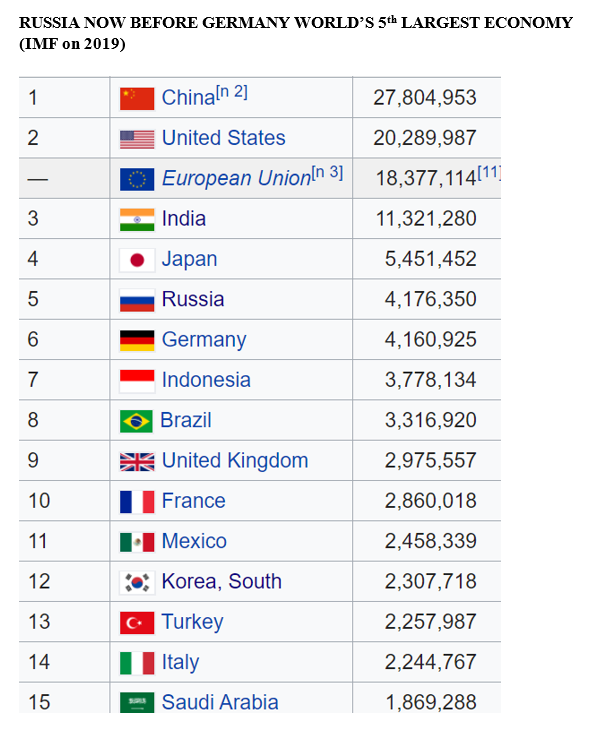
Indonesia’s economy suffered its sharpest downturn since the 1998 Asian financial crisis. In Q2-2020 their economy contracted by more than -5% in its first contraction since then. Millions are out of work there and social pressure can build quickly in the world's fourth largest country, one with a population more than ten times as large as its southern neighbour, Australia.
In Australia, new car sales were almost -12% lower in July than the same month a year ago (NZ = +3%) and year to date are running -19% behind (NZ = -12%). SUVs there claimed 50% of car sales (NZ = 70%).
The RBA has signaled it will be buying $500 mln in April 2023 bonds after the three-year bond rate held above the central bank's 0.25% target. It';s all part of official moves to keep interest rates low.
Another day, another new rise for iron ore prices which are now at a year-on-year high.
On Wall Street today, the S&P500 is up +0.5% so far in afternoon trade. Overnight, European markets rose a similar amount. Yesterday, Shanghai ended up less than +0.2%, Hong Kong was up +0.6% and Tokyo was down -0.3%. The ASX200 fell -0.6% as bank share took a beating. The NZX50 Capital Index was down a marginal -0.1%.
In Australia, there have now been 19,444 COVID-19 cases reported, another +715 overnight, and still very much concentrated in Victoria. There were +12 more in Sydney. Their death count is up to 247 (+15). Their recovery rate is now just over 56%. There are now 8262 active cases in Australia (+555) and almost all are community transfer.
The latest global compilation of COVID-19 data is here. The global tally is 18,609,000 and that is up +250,000 since this time yesterday. Global deaths reported now exceed 702,000 (+6,000).
A quarter of all reported cases globally are in the US, which is up +50,000 from this time yesterday to 4,938,000. US deaths are now just over 160,800 and a death rate of 486/mln (+4/mln). And the net number of people actively infected in the US rose overnight to 2,273,000.
The UST 10yr yield is up +3 bps today to now just on 0.54% and off its record low. Their 2-10 curve is unchanged at +42 bps. And their 1-5 curve is similar at +9 bps, while their 3m-10yr curve is a little steeper at +46 bps. The Aussie Govt 10yr yield is back up +4 bps at 0.85%. The China Govt 10yr is holding at 2.98%. And the NZ Govt 10 yr yield is also holding at its new lower level of just on 0.75%.
The gold price is higher yet again today, up +US$21 to US$2039/oz and a new record high. At one point it reached US$2056/oz overnight trading. The silver price is up proportionately more, up +3.8% overnight and that too was up +4.7% at one point earlier.
Oil prices are stable today. They are now just on US$42/bbl in the US and the international price is now just on US$45/bbl.
But the Kiwi dollar has firmer marginally against the US currency and now at 66.4 USc. Against the Australian dollar we are lower at 92.4 AUc. Against the euro we are down at 56.1 euro cents. That means our TWI-5 is now a little softer at 69.3.
The bitcoin price is up +4.1% today at US$11,674. The bitcoin rate is charted in the exchange rate set below.

The easiest place to stay up with event risk today is by following our Economic Calendar here ».
We welcome your comments below. If you are not already registered, please register to comment
Remember we welcome robust, respectful and insightful debate. We don't welcome abusive or defamatory comments and will de-register those repeatedly making such comments. Our current comment policy is here.