

Here's our summary of key economic events overnight that affect New Zealand with news rising activity in the world economy is driving up prices.
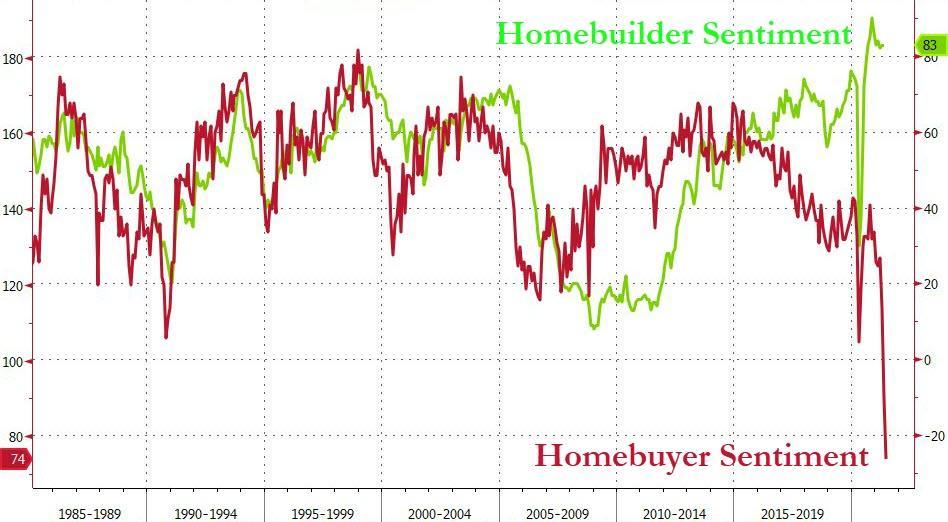
The latest US consumer sentiment survey for early June is generally positive, especially among middle and upper income households. And especially for future economic prospects rather than current conditions. Rising inflation remained a top concern of consumers.
This coming week, all eyes will be on the Federal Reserve as it meets, and reports on Thursday (NZT). Their attitude to inflation will be the big talking point.
Yesterday we noted that the USDA sees falling corn inventories worldwide. A key reason is that China is buying up big - and that is causing infrastructure clogging in their ports. Corn imports quadrupled in the first four months from a year earlier, while millet (sorghum) imports jumped five times in April from a year ago. Barley shipments are up too despite none now arriving from Australia. These port unloading delays add to rising raw material costs that Beijing is struggling to control.
They aren't managing to take the top off high prices for iron ore or coal either. Both rose again this week. And shipping costs turned up as week over the past week. Congestion at China's ports is having a ripple impact globally, but especially in the region. This backup is worse than the March 2021 Suez Canal blockage, and will take longer to clear some say.
Not rising however were vehicle sales in China in May. They sold 2.1 mln units in the month, down slightly from in April and -3% lower than for May 2020. This outcome ended a 13 month run of rising sales. But China is still far and away the largest market for vehicles, a quarter larger than the US. Meanwhile, the Chinese government has ordered car manufacturers to make sure 95% of every vehicle is recyclable by 2023.
China has passed a law to punish companies that respect laws in other countries that curb exploitation in their supply chains. It's new anti-sanction law also applies in Hong Kong, likely another reason some companies may decamp. It was a Chinese law that was developed in secret, and only announced yesterday once it had been passed.
In Germany, wholesale prices were up almost +10% in May from the same month a year ago. This is unusually high for German industry and they are hoping that, because the key driver is the cost of fuel (+47%), it will pass soon.
The Russian central bank raised its key interest rate by +50 bps to 5.5% overnight. It said more hikes would be needed to rein in high inflation, which is now running at 6.2% pa and is expected to shift higher. The rouble, which has lost two thirds of its value in the past ten years, fell another -1% in the past week but bounced slightly on the central bank move.
On Wall Street, the S&P500 is up +0.2% in mid afternoon trading and heading for a minor +0.4% weekly gain although that will be another record high. Overnight, European markets were up +0.8% across the board. Yesterday, the very large Tokyo market closed essentially unchanged but that locked in a -0.9% fall for the week. Hong Kong ended yesterday up +0.4% on the day to limit the weekly fall to -0.5%. Shanghai recorded a -0.6% retreat in Friday trading dragging the weekly change to a -0.2% dip. The ASX200 ended its Friday session up just +0.1% for a small weekly rise of +0.2%. And the NZX50 Capital Index was up +0.3% on the day which was also the weekly gain.
The UST 10yr yield starts today with its yield fall arrested, unchanged at 1.45%. The US 2-10 rate curve has flattened less, now at +131 bps. Their 1-5 curve is little-changed at +70 bps, while their 3m-10 year curve is stable as well at +145 bps. The Australian Govt ten year benchmark rate is up +1 bp at 1.47%. But the China Govt ten year bond is up +3 bps at 3.15%. But the New Zealand Govt ten year is down another -5 bps at 1.65%.
The price of gold starts today at US$1877/oz, and down -US$22 overnight.
Oil prices are still rising and start today +50c firmer at just over US$70.50/bbl in the US, while the international Brent price is just under US$72.50/bbl. These are now two year highs. And more oil rigs are starting to be brought back into production.
The Kiwi dollar opens today at its lowest in two months at 71.2 USc with an overnight fall of -¾c. Against the Australian dollar we have fallen less, to 92.5 AUc. Against the euro we are down to 58.9 euro cents. That means our TWI-5 starts today at 73 and -70 bps lower than this time last week.
The bitcoin price is now at US$36,799 and up a very minor +0.8% from this time yesterday. Volatility in the past 24 hours is moderate at +/- 2.6%.

The easiest place to stay up with event risk today is by following our Economic Calendar here ».

We welcome your comments below. If you are not already registered, please register to comment
Remember we welcome robust, respectful and insightful debate. We don't welcome abusive or defamatory comments and will de-register those repeatedly making such comments. Our current comment policy is here.