
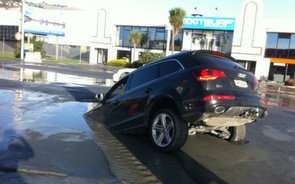
US insurance risk analysis firm EQECAT has estimated the September 4, February 22 and June 13 earthquakes in Christchurch could generate total insured losses of up to US$23 billion (NZ$28 billion).
Los Angeles-based EQECAT, which does catastrophe modeling for insurers and corporations globally, said the June 13 earthquake could generate fresh losses of up to US$3-5 billion, adding to estimated losses from the September 4 quake of US$4-6 billion and estimated losses from the February 22 quake of US$8-12 billion.
"Monday’s event—almost four months after February’s event—has likely caused from $3 to $5 Billion US in losses, with the incremental losses occurring to repaired structures and facilities," EQECAT said in this estimate.
The increased losses are expected to further stretch the New Zealand government's finances as it will bear much of the burden of again repairing public infrastructure such as roads, water pipes, schools and hospitals. The Christchurch City Council, which has just announced a 7.1% rates increase and a likely budget deficit, also faces further losses.
The latest quake may also delay the rebuild of Christchurch and further delay economic activity that the Treasury and the Reserve Bank are relying on to boost the economy next year. Any slowdown in the recovery may reduce inflationary pressures and allow the Reserve Bank to further delay any increase in the Official Cash Rate.
Most economists had been forecasting the RBNZ would start increasing the OCR from its current 2.5% level from December 8.
It may also delay the economic rebound and the resulting improvement in the government's deficit, which had been expected to return to surplus by 2014/15 from a deficit of NZ$16.4 billion or 8.4% of GDP this fiscal year to June 30.
'Some bloke overseas watching the telly'
In Parliament today Finance Minister Bill English told journalists the government had not seen any basis for such a large increase in insurance costs due to the aftershocks.
“The engineers are having a look now at whether there’s any new damage, but it does look as if most of the damage has occurred in places where there was already damage,” English said.
“These aren’t insurance assessments, these are an offshore consultant having a stab at what it might be from the pictures on TV, so I don’t think we should give it too much credibility,” he said.
In time, there would be some further estimates of costs.
“We would expect over the next few weeks the picture will become a bit clearer, but our focus at the moment is on all the information that is relevant to making decisions that are going to allow the rebuilding and the recovery to continue,” English said.
Meanwhile, English said concerns of whether there would be problems for people in other parts of New Zealand in terms of accessing insurance were one aspect of what was a very complex set of problems.
Answers needed to be found reasonably quickly, English said.
“The track record of these disasters around the world is that when you have the disaster the reinsurance industry reacts with a heightened sense of risk. They see it as higher risk in the near future, and then after a while that tails off," English said.
“This last earthquake has made it a bit more likely that the reinsurance industry will be jumpier in the short-term, but in the long-term that should settle down,” he said.
The government hoped reinsurers wouldn’t go as far as deciding New Zealand was too expensive to insure.
“I think we’ve all had a bit of a knee-jerk reaction to this last earthquake. But over time these things settle down. There’s no doubt that the series of earthquakes changed the perception of risk in New Zealand for the foreseeable future, and we’re all going to have to deal with that reality," English said.
(Updates with Finance Minister comments.)

We welcome your comments below. If you are not already registered, please register to comment
Remember we welcome robust, respectful and insightful debate. We don't welcome abusive or defamatory comments and will de-register those repeatedly making such comments. Our current comment policy is here.